

State agencies: audits.
Summary
Existing law requires all state and local agencies with an aggregate spending of $50,000,000 or more annually to consider establishing an ongoing audit function. This bill would require all state agencies with an aggregate spending of $50,000,000 or more annually to establish an ongoing audit function. Existing law requires any governing body, as defined, that oversees a state agency that performs or reviews internal audits to establish an audit committee. Existing law, the Bagley-Keene Open Meeting Act (Bagley-Keene Act) , requires that all meetings of a state body, as defined, be open and public, and all persons be permitted to attend any meeting of a state body, except as provided. Violation of the Bagley-Keene Act is a crime. This bill would extend the requirements of the Bagley-Keene Act to the internal audit committees established by any governing body if the governing body is subject to the Bagley-Keene Act. By expanding the scope of an existing crime, this bill would impose a state-mandated local program. Existing law generally requires all internal auditor operations of state agencies to meet specified criteria. If a state agency does not report to a governing body, existing law requires the internal auditor operations to, among other things, report audit findings and recommendations to the head or deputy head of the state agency and to the general counsel of the state agency, if applicable. If a state agency is overseen by a governing body, existing law requires the internal audit operations to, among other things, report audit findings and recommendations to the audit committee and general counsel of the governing body. This bill would require both of these types of state agencies to post audit findings and recommendations on its internet website within 5 days of reporting its audit findings and recommendations, as described above. The California Constitution requires the state to reimburse local agencies and school districts for certain costs mandated by the state. Statutory provisions establish procedures for making that reimbursement. This bill would provide that no reimbursement is required by this act for a specified reason.
Bill status
failed
3 of 5 stages cleared
Introduction
Feb 2021
Committee Review
Feb 2022
Assembly Passage
Apr 2021
Senate Passage
Governor
Introduced Feb 17, 2021
Last action Feb 1, 2022
Floor votes · Assembly Apr 22, 2021
How they voted
20–0
Passed · 2 other
Total votes 22
Apr 22, 2021
D
Democratic16
93% Yea
R
Republican6
83% Yea
Vote distribution
All Yea
All Nay
Mixed
No data
Full legislative history
Actions timeline
Total actions
10
Key actions
6
Committee
7
Feb 1, 2022
Lower · Passed
From committee: Filed with the Chief Clerk pursuant to Joint Rule 56.
lower
May 20, 2021
Lower · Passed
In committee: Held under submission.
lower
May 5, 2021
Committee
In committee: Set, first hearing. Referred to APPR. suspense file.
lower
Apr 26, 2021
Lower · Passed
From committee: Do pass and re-refer to Com. on APPR. (Ayes 20. Noes 0.) (April 22). Re-referred to Com. on APPR.
lower
Apr 22, 2021
Assembly · Passed
Assembly Vote: pass (20-0-2)
assembly
Apr 15, 2021
Lower · Passed
From committee: Do pass and re-refer to Com. on G.O. (Ayes 7. Noes 0.) (April 14). Re-referred to Com. on G.O.
lower
Feb 25, 2021
Committee
Referred to Coms. on A. & A.R. and G.O.
lower
Feb 18, 2021
Lower · Passed
From printer. May be heard in committee March 20.
lower
1 primary · 0 co-sponsors
Sponsors
Role
Legislator
Party
State
District
P
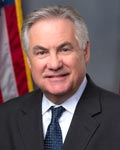
Jim Patterson
RRepublican
Ask Maddy
·
AI policy assistant
Ask Maddy about AB 884
Scope: CA
Hi! I can help you understand AB 884. What would you like to know?
Try one of these
i
Maddy answers using official bill text and legislative records. Always verify before sharing.
Sources cited inline