

Certificated school employees: probationary employees.
Summary
(1) Existing law requires a certificated employee of a school district or a county superintendent of schools with an average daily attendance of 250 pupils or more, who completes 2 consecutive school years and is reelected for the next succeeding school year to a position requiring certification, to become and be classified as a permanent employee of the school district or county superintendent of schools. Existing law authorizes the governing board of a school district having an average daily attendance of less than 250 pupils to classify as a permanent employee of the district any employee who, after having been employed by the school district for 3 complete consecutive school years in a position or positions requiring certification qualifications, is reelected for the next succeeding school year to a position requiring certification qualifications. If that classification is not made, existing law prohibits the employee from attaining permanent status and authorizes the employee to be reelected from year to year thereafter without becoming a permanent employee until a change in classification is made. This bill would, commencing July 1, 2023, require a certificated employee of a school district or a county superintendent of schools, regardless of the average daily attendance of the school district or county superintendent of schools, who completes 2 consecutive school years and is so reelected to become and be classified as a permanent employee, as provided. (2) Existing law requires a probationary employee who, in any one school year, has served for at least 75% of the number of days the regular schools of the school district in which the employee is employed are maintained to be deemed to have served a complete school year. Existing law also requires a probationary employee of an evening school who, in any one school year, has served for at least 75% of the number of days the evening schools of the school district in which the employee is employed are in session to be deemed to have served a complete school year. This bill would, commencing July 1, 2023, require a probationary employee employed in an assignment that is less than full time but at least 60% of the number of hours of a full-time assignment, and who, in any one school year, has served for at least 75% of the number of days required of the assignment in which the employee is employed to be deemed to have served a complete school year. The bill also would require a probationary employee of an adult education program to be deemed to have served a complete school year if the employee serves for at least 75% of the hours constituting a full-time equivalent position for adult education programs in the school district. The bill would specify that, to the extent the provisions of the bill conflict with any provision of a collective bargaining agreement entered into before July 1, 2023, by a public school employer and an exclusive bargaining representative, the provisions of the bill would not apply to the school district until the expiration or renewal of that collective bargaining agreement. (3) Existing law authorizes the governing board of a school district to employ certificated employees in programs and projects to perform services conducted under contract with public or private agencies, or categorically funded projects that are not required by federal or state law. Existing law prohibits service pursuant to that authorization from being included in computing the service required as a prerequisite to attainment of, or eligibility to, classification as a permanent employee unless the person served at least 75% of the number of days the regular schools of the school district are maintained, and the person is subsequently employed as a probationary employee in a position requiring certification qualifications. This bill would, commencing July 1, 2023, specify that these provisions do not apply to a teacher of classes for adults. (4) Existing law authorizes the establishment of regional occupational centers or programs to provide career technical education and technical training to pupils. Existing law requires instruction in those centers or programs to only be given by a qualified teacher holding a certificate, as provided, but prohibits service by a person as an instructor in classes conducted at regional occupational centers or programs from being included in computing the service required as a prerequisite to attainment of, or eligibility to, classification as a permanent employee of a school district. This bill would, commencing July 1, 2023, repeal that prohibition on the service by a person as an instructor in classes conducted at regional occupational centers or programs from being included in computing the service required as a prerequisite to attainment of, or eligibility to, classification as a permanent employee of a school district. (5) Existing law authorizes the dismissal of first- and 2nd-year probationary employees of a school district during the school year for unsatisfactory performance or for cause, pursuant to specified procedures. Existing law specifies that those provisions do not apply to probationary employees in a school district having an average daily attendance of less than 250 pupils. Existing law prohibits the governing board of a school district with an average daily attendance of less than 250 pupils from dismissing probationary employees during the school year, except for cause, pursuant to separate procedures. However, existing law authorizes the governing board of a school district having an average daily attendance of less than 250 pupils to elect to dismiss probationary employees pursuant to the procedures applicable to probationary employees of a school district having an average daily attendance of 250 or more pupils. This bill would, commencing July 1, 2023, delete the procedures specific to probationary employees of a school district with an average daily attendance of less than 250 pupils, thereby subjecting all probationary employees, regardless of the average daily attendance of the school district, to the same dismissal procedures. The bill would also delete obsolete references, update references, and make conforming and nonsubstantive changes.
Bill status
passed
3 of 5 stages cleared
Introduction
Feb 2022
Committee Review
Aug 2022
Assembly Passage
May 2022
Senate Passage
Governor
Introduced Feb 18, 2022
Last action Aug 11, 2022
Floor votes · Assembly May 26, 2022
How they voted
47–18
Passed · 13 other
Total votes 78
May 26, 2022
D
Democratic58
79% Yea
I
Independent1
0% Nay
R
Republican19
94% Nay
Vote distribution
All Yea
All Nay
Mixed
No data
Full legislative history
Actions timeline
Total actions
19
Key actions
8
Committee
10
Amendments
3
Aug 11, 2022
Upper · Passed
In committee: Held under submission.
upper
Aug 2, 2022
Committee
In committee: Referred to suspense file.
upper
Jun 22, 2022
Upper · Passed
From committee: Do pass and re-refer to Com. on APPR. (Ayes 4. Noes 1.) (June 22). Re-referred to Com. on APPR.
upper
Jun 13, 2022
Introduced
From committee chair, with author's amendments: Amend, and re-refer to committee. Read second time, amended, and re-referred to Com. on ED.
upper
Jun 8, 2022
Committee
Referred to Coms. on ED. and APPR.
upper
May 26, 2022
Assembly · Passed
Assembly Vote: pass (47-18-13)
assembly
May 25, 2022
Lower · Passed
Read third time. Passed. Ordered to the Senate. (Ayes 47. Noes 18. Page 5033.)
lower
May 19, 2022
Lower · Passed
From committee: Do pass. (Ayes 12. Noes 4.) (May 19).
lower
Apr 27, 2022
Committee
In committee: Set, first hearing. Referred to suspense file.
lower
Apr 6, 2022
Lower · Passed
In committee: Hearing postponed by committee.
lower
Apr 6, 2022
Committee
Re-referred to Com. on APPR.
lower
Apr 5, 2022
Lower · Passed
Read second time and amended.
lower
Apr 4, 2022
Introduced
From committee: Amend, and do pass as amended and re-refer to Com. on APPR. (Ayes 5. Noes 2.) (March 23).
lower
Mar 10, 2022
Committee
Referred to Com. on ED.
lower
Feb 19, 2022
Lower · Passed
From printer. May be heard in committee March 21.
lower
Feb 18, 2022
Introduced
Introduced. To print.
lower
1 primary · 2 co-sponsors
Sponsors
Role
Legislator
Party
State
District
P

Kevin McCarty
DDemocratic
Co
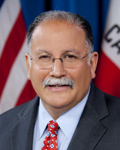
Jose Medina
DDemocratic
Co

Robert Rivas
DDemocratic
Ask Maddy
·
AI policy assistant
Ask Maddy about AB 2573
Scope: CA
Hi! I can help you understand AB 2573. What would you like to know?
Try one of these
i
Maddy answers using official bill text and legislative records. Always verify before sharing.
Sources cited inline