

Peace officers: disqualification from employment.
Summary
(1) Existing law defines persons who are peace officers and the entities authorized to appoint them. Existing law prescribes certain minimum standards for a person to be appointed as a peace officer, including moral character and physical and mental condition, and certain disqualifying factors for a person to be employed as a peace officer, including a felony conviction. This bill would disqualify a person from being a peace officer if the person has been discharged from the military for committing an offense that would have been a felony if committed in California or if the person has been certified as a peace officer and has had that certification revoked by the Commission on Peace Officer Standards and Training. (2) Existing law makes the personnel records of peace officers and custodial officers and specified other records confidential and limits the disclosure of those records except in investigations or proceedings concerning the conduct of peace officers or custodial officers, or an agency or department that employs those officers, conducted by a grand jury, a district attorney's office, or the Attorney General's office. This bill would include in the above exception investigations and proceedings by the commission. (3) Existing law establishes the Commission on Peace Officer Standards and Training to set minimum standards for the recruitment and training of peace officers and to develop training courses and curriculum. Existing law authorizes the commission to establish a professional certificate program and authorizes the commission to cancel a certificate that was awarded in error or obtained through misrepresentation or fraud, but otherwise prohibits the commission from canceling a certificate that has properly been issued. This bill would grant the commission the authority to investigate and determine the fitness of a person to serve as a peace officer in the state and to audit any law enforcement agency that employs peace officers without cause and at any time. The bill would authorize the commission to suspend, revoke, or cancel a certificate issued to a peace officer because the person is ineligible to be a peace officer or because the person has been subject to a sustained termination for serious misconduct, as defined, on or after January 1, 2022. The bill would make each law enforcement agency responsible for investigation, findings, and actions by the agency on allegations of serious misconduct and would give the commission access to the agency files. The bill would require the commission to be notified of and to review a peace officer's file after 3 allegations of serious misconduct within 5 years. The bill would establish the Peace Officer Standards Accountability Advisory Board, as specified, to make recommendations on the decertification of peace officers to the commission. The bill would require every law enforcement agency to notify the commission when a peace officer employed by that agency separates from employment. When a peace officer resigns or retires with a pending complaint, charge, or investigation of serious misconduct, the bill would require the law enforcement agency to complete the investigation into the serious misconduct within 90 days and report to the commission whether the complaint of serious misconduct was sustained, not sustained, unfounded, frivolous, or exonerated. The bill would require the commission to refer the files of peace officers whose termination for serious misconduct was sustained to the board to make a recommendation regarding the status of the officer's certificate and would require the commission to accept that recommendation or set forth the analysis and reasons for reaching a different result in writing. (4) By increasing the duties of local law enforcement agencies, this bill would impose a state-mandated local program. The California Constitution requires the state to reimburse local agencies and school districts for certain costs mandated by the state. Statutory provisions establish procedures for making that reimbursement. This bill would provide that, if the Commission on State Mandates determines that the bill contains costs mandated by the state, reimbursement for those costs shall be made pursuant to the statutory provisions noted above.
Bill status
failed
1 of 4 stages cleared
Introduction
Dec 2020
Committee Review
Floor Vote
Governor
Introduced Dec 7, 2020
Last action Feb 1, 2022
Floor votes
How they voted
No floor votes recorded yet.
Full legislative history
Actions timeline
Total actions
7
Key actions
2
Committee
4
Amendments
1
Feb 1, 2022
Lower · Passed
From committee: Filed with the Chief Clerk pursuant to Joint Rule 56.
lower
Jan 13, 2021
Committee
Re-referred to Com. on PUB. S.
lower
Jan 12, 2021
Introduced
From committee chair, with author's amendments: Amend, and re-refer to Com. on PUB. S. Read second time and amended.
lower
Jan 11, 2021
Committee
Referred to Com. on PUB. S.
lower
Dec 8, 2020
Lower · Passed
From printer. May be heard in committee January 7.
lower
1 primary · 0 co-sponsors
Sponsors
Role
Legislator
Party
State
District
P
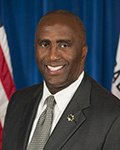
Jim Cooper
DDemocratic
Ask Maddy
·
AI policy assistant
Ask Maddy about AB 17
Scope: CA
Hi! I can help you understand AB 17. What would you like to know?
Try one of these
i
Maddy answers using official bill text and legislative records. Always verify before sharing.
Sources cited inline