

Local educational agencies: meetings: online public participation.
Summary
Existing law, the Ralph M. Brown Act requires, with specified exceptions, that all meetings of a legislative body of a local agency, as those terms are defined, be open and public and that all persons be permitted to attend and participate. The act contains specified provisions regarding the timelines for posting an agenda and providing for the ability of the public to directly address the legislative body on any item of interest to the public. The act generally requires all regular and special meetings of the legislative body be held within the boundaries of the territory over which the local agency exercises jurisdiction, subject to certain exceptions. The act allows for meetings to occur via teleconferencing subject to certain requirements, particularly that the legislative body notice each teleconference location of each member that will be participating in the public meeting, that each teleconference location be accessible to the public, that members of the public be allowed to address the legislative body at each teleconference location, that the legislative body post an agenda at each teleconference location, and that at least a quorum of the legislative body participate from locations within the boundaries of the local agency's jurisdiction. Executive Order No. N-29-20 suspends the Ralph M. Brown Act's requirements for teleconferencing during the COVID-19 pandemic provided that notice and accessibility requirements are met, the public members are allowed to observe and address the legislative body at the meeting, and that a legislative body of a local agency has a procedure for receiving and swiftly resolving requests for reasonable accommodation for individuals with disabilities, as specified. This bill would require, in addition to the requirements of the Ralph M. Brown Act, the governing board of a school district, a county board of education, and the governing body of a charter school to make any public meeting of the board or body accessible electronically online to all members of the public seeking to attend and ensure the opportunity for the members of the public participating electronically to comment on agenda items in the same manner as a person attending a meeting in person. By imposing additional duties on local educational agencies, the bill would impose a state-mandated local program. The California Constitution requires local agencies, for the purpose of ensuring public access to the meetings of public bodies and the writings of public officials and agencies, to comply with a statutory enactment that amends or enacts laws relating to public records or open meetings and contains findings demonstrating that the enactment furthers the constitutional requirements relating to this purpose. This bill would make legislative findings to that effect. The California Constitution requires the state to reimburse local agencies and school districts for certain costs mandated by the state. Statutory provisions establish procedures for making that reimbursement. This bill would provide that no reimbursement is required by this act for a specified reason.
Bill status
failed
1 of 4 stages cleared
Introduction
Feb 2021
Committee Review
Floor Vote
Governor
Introduced Feb 19, 2021
Last action Feb 1, 2022
Floor votes
How they voted
No floor votes recorded yet.
Full legislative history
Actions timeline
Total actions
6
Key actions
2
Committee
3
Feb 1, 2022
Lower · Passed
From committee: Filed with the Chief Clerk pursuant to Joint Rule 56.
lower
Mar 11, 2021
Committee
Referred to Com. on ED.
lower
Feb 20, 2021
Lower · Passed
From printer. May be heard in committee March 22.
lower
Feb 19, 2021
Introduced
Introduced. To print.
lower
1 primary · 0 co-sponsors
Sponsors
Role
Legislator
Party
State
District
P
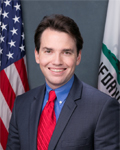
Kevin Kiley
RRepublican
Ask Maddy
·
AI policy assistant
Ask Maddy about AB 1419
Scope: CA
Hi! I can help you understand AB 1419. What would you like to know?
Try one of these
i
Maddy answers using official bill text and legislative records. Always verify before sharing.
Sources cited inline