

Public contracts: California Lithium Economy Act.
Summary
Existing law, the Buy Clean California Act, requires the Department of General Services to establish and publish a maximum acceptable global warming potential for categories of eligible materials, in accordance with specified requirements. Existing law further requires the department to review the maximum acceptable global warming potential for each category of eligible materials and adjust that number based on specified criteria. Existing law requires an awarding authority, as defined, to require a successful bidder for a contract for an eligible product, to submit a current Environmental Product Declaration, developed in accordance with specified standards, for that type of product. Existing law further requires an awarding authority to include in a specification for a bid for an eligible project, as defined, that the facility-specific global warming potential for any eligible materials does not exceed the maximum global warming potential for that material determined by the department. Existing law also prohibits a successful bidder from installing any eligible materials on an eligible project until that bidder submits an Environmental Product Declaration to the awarding authority for that project. Existing law defines "awarding authority" for purposes of the act to include state departments and entities subject to the State Contract Act, the Regents of the University of California, and the Trustees of the California State University. Existing law also defines "eligible materials" for purposes of the act to mean carbon steel rebar, flat glass, mineral wood board insulation, and structural steel. This bill, entitled the California Lithium Economy Act, would revise the definition of "eligible materials" to include lithium, commencing January 1, 2023. The bill would require an awarding authority, by January 1, 2025, to require the successful bidder for a contract that includes electric vehicles to be provided as part of that contract, to disclose the sources of lithium used in the manufacture of the electric vehicles' batteries. The bill would also require, by January 1, 2035, that at least 35% of the lithium used in electric vehicle batteries pursuant to a contract under the act be produced in California. The bill would include related findings and declarations.
Bill status
failed
1 of 4 stages cleared
Introduction
Feb 2021
Committee Review
Floor Vote
Governor
Introduced Feb 19, 2021
Last action Feb 1, 2022
Floor votes
How they voted
No floor votes recorded yet.
Full legislative history
Actions timeline
Total actions
7
Key actions
0
Committee
4
Feb 1, 2022
Assembly · Reported by committee
From committee: Filed with the Chief Clerk pursuant to Joint Rule 56.
Jan 31, 2022
Assembly · Failed
Died pursuant to Art. IV, Sec. 10(c) of the Constitution.
Jan 3, 2022
Assembly · Reported by committee
In committee: Hearing postponed by committee.
Mar 11, 2021
Assembly · Referred to committee
Referred to Coms. on A. & A.R. and NAT. RES.
Feb 20, 2021
Assembly · Reported by committee
From printer. May be heard in committee March 22.
Feb 19, 2021
Assembly · Introduced
Introduced. To print.
1 primary · 0 co-sponsors
Sponsors
Role
Legislator
Party
State
District
P
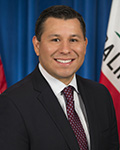
Eduardo Garcia
DDemocratic
Ask Maddy
·
AI policy assistant
Ask Maddy about AB 1397
Scope: CA
Hi! I can help you understand AB 1397. What would you like to know?
Try one of these
i
Maddy answers using official bill text and legislative records. Always verify before sharing.
Sources cited inline