

Residential care facilities for the elderly: electronic monitoring.
Summary
The California Residential Care Facilities for the Elderly Act (act) requires the State Department of Social Services to license, inspect, and regulate residential care facilities for the elderly and imposes criminal penalties on a person who violates the act or who willfully or repeatedly violates any rule or regulation adopted under the act. The act enumerates specific rights and liberties for residents that are to be posted inside the facility and personally provided to each resident. These rights include, among others, being granted a reasonable level of personal privacy in accommodations, medical treatment, personal care and assistance, visits, communications, telephone conversations, use of the internet, and meetings of resident and family groups. This bill would enact the Electronic Monitoring in Residential Care Facilities for the Elderly Act to authorize the use of electronic monitoring devices either inside a resident's room by a resident or in certain areas of a facility by the facility under specified conditions. For the use of a personal electronic monitoring device inside a resident's room by a resident, the bill would require, among other things, the resident or the resident's representative, as defined, to provide the facility with a completed notification and consent form, as specified, that includes the consent of the resident's roommate, if any. The bill would also require the resident or the resident's representative to post a sign at the entrance to the resident's room stating that the room is monitored electronically. For the use of a facility electronic monitoring device, the bill would require the facility to, among other things, post signage at all entrances and exits that provides notice of electronic monitoring, archive the electronic monitoring digital data for 365 days, and provide the department access to the data upon 24 hours' notice. By expanding the duties of licensed facilities under the act with regard to authorizing residents and facilities to conduct electronic monitoring under these conditions, the bill would expand an existing crime, thereby imposing a state-mandated local program. The bill would make it a misdemeanor to knowingly hamper, obstruct, tamper with, or destroy a personal electronic monitoring device or a facility electronic monitoring device or the recordings made therefrom, except as provided. The bill would make it a felony to knowingly hamper, obstruct, tamper with, or destroy a personal electronic monitoring device or a facility electronic monitoring device or the recordings made therefrom in the commission of, or in the attempt to conceal the commission of, a felony. By creating new crimes, the bill would impose a state-mandated local program. The California Constitution requires the state to reimburse local agencies and school districts for certain costs mandated by the state. Statutory provisions establish procedures for making that reimbursement. This bill would provide that no reimbursement is required by this act for a specified reason.
Bill status
failed
1 of 4 stages cleared
Introduction
Feb 2021
Committee Review
Floor Vote
Governor
Introduced Feb 19, 2021
Last action Feb 1, 2022
Floor votes
How they voted
No floor votes recorded yet.
Full legislative history
Actions timeline
Total actions
7
Key actions
3
Committee
4
Feb 1, 2022
Lower · Passed
From committee: Filed with the Chief Clerk pursuant to Joint Rule 56.
lower
Apr 7, 2021
Lower · Passed
In committee: Hearing postponed by committee.
lower
Mar 4, 2021
Committee
Referred to Coms. on HUM. S. and P. & C.P.
lower
Feb 20, 2021
Lower · Passed
From printer. May be heard in committee March 22.
lower
Feb 19, 2021
Introduced
Introduced. To print.
lower
1 primary · 0 co-sponsors
Sponsors
Role
Legislator
Party
State
District
P
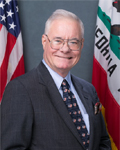
Randy Voepel
RRepublican
Ask Maddy
·
AI policy assistant
Ask Maddy about AB 1300
Scope: CA
Hi! I can help you understand AB 1300. What would you like to know?
Try one of these
i
Maddy answers using official bill text and legislative records. Always verify before sharing.
Sources cited inline