

State of emergency: Governor's powers: notice of executive action: audit of emergency fund expenditures.
Summary
Existing law, the California Emergency Services Act (CESA) , among other things, authorizes the Governor to proclaim a state of emergency in an area affected or likely to be affected thereby if (1) the Governor finds that certain conditions exist and (2) the Governor either is requested to do so by specified local officials or finds that local authority is inadequate to cope with the emergency. Upon the proclamation of a state of emergency, CESA authorizes the Governor to exercise various, specified powers, including the power to promulgate, issue, and enforce orders and regulations that the Governor deems necessary and to suspend any regulatory statute, statute prescribing the procedure for conduct of state business, or the orders, rules, or regulations of any state agency, as provided. CESA also authorizes the Governor to suspend certain local laws under specified circumstances. This bill would require the Governor to immediately notify in writing the Speaker of the Assembly and the President pro Tempore of the Senate of a proclamation of a state of emergency or promulgating or issuing an order or regulation pursuant to these provisions. The bill would require the Governor to provide to the Speaker of the Assembly, the President pro Tempore of the Senate, and certain committees of the Legislature a monthly report on specified information relating to requests by local government for the Governor to proclaim a state of emergency. The bill would also require the Governor to immediately provide notification in writing to the governing body of each city and county affected by a suspension of a statute, order, rule, regulation, or local law, as described above, that only applies to those cities and counties. CESA establishes the Office of Emergency Services (CalOES) in the office of the Governor and provides that the office is responsible for the state's emergency and disaster response services for natural, technological, or manmade disasters and emergencies. This bill would require CalOES, during a state of emergency, to provide certain committees of the Legislature an update every 60 days on the goals and objectives of the emergency response. CESA authorizes the Governor to expend any appropriation for support of CESA to carry out its provisions and to make expenditures from any legally available fund in order to deal with actual or threatened conditions of a state of emergency. Existing law, the California Disaster Assistance Act (CDAA) , which is administered by the Director of Emergency Services, provides for the allocation of funds to state and local agencies and to eligible private nonprofit organizations for specified purposes and in accordance with specified requirements, including, among others, that a local agency make application to the director for state financial assistance within 60 days after the date of the proclamation of a local emergency. Existing law establishes the Disaster Assistance Fund and continuously appropriates moneys in that fund for purposes of CDAA. Existing law creates the California State Auditor's Office, which is independent of the executive branch and legislative control, to examine and report annually upon the financial statements prepared by the executive branch and to perform other related assignments, including performance audits, that are mandated by statute. Existing law establishes, within the State Treasury, the State Audit Fund, which is a continuously appropriated fund, for the expenses of the California State Auditor. This bill would require the Governor to immediately notify in writing certain committees of the Legislature of any expenditure of state or federal emergency response funds, and would require the California State Auditor's Office, upon appropriation by the Legislature, to conduct annual performance audits of any expenditure of state or federal disaster emergency response funds. The bill would define "state or federal emergency response funds" to mean any moneys appropriated by the Legislature or provided by the federal government that are expended in response to a state of emergency, expressly including moneys expended pursuant to the above-described authority under CESA and the CDAA or any appropriation by the Legislature for purposes of emergency response and recovery. This bill would require the Director of Emergency Services to provide to the Speaker of the Assembly, the President pro Tempore of the Senate, and certain committees of the Legislature a monthly report on specified information relating to applications by local agencies for state financial assistance pursuant to the CDAA. This bill would also make various nonsubstantive changes to CESA. This bill would declare that it is to take effect immediately as an urgency statute.
Bill status
died
1 of 4 stages cleared
Introduction
Feb 2021
Committee Review
Floor Vote
Governor
Introduced Feb 18, 2021
Last action Feb 1, 2022
Floor votes
How they voted
No floor votes recorded yet.
Full legislative history
Actions timeline
Total actions
10
Key actions
3
Committee
5
May 20, 2021
Lower · Passed
From committee: Do pass. (Ayes 16. Noes 0.) (May 20).
lower
May 5, 2021
Committee
In committee: Set, first hearing. Referred to APPR. suspense file.
lower
Apr 20, 2021
Lower · Passed
From committee: Do pass and re-refer to Com. on APPR. (Ayes 7. Noes 0.) (April 19). Re-referred to Com. on APPR.
lower
Mar 4, 2021
Committee
Referred to Com. on E.M.
lower
Feb 19, 2021
Lower · Passed
From printer. May be heard in committee March 21.
lower
1 primary · 0 co-sponsors
Sponsors
Role
Legislator
Party
State
District
P
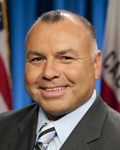
Freddie Rodriguez
DDemocratic
Ask Maddy
·
AI policy assistant
Ask Maddy about AB 1123
Scope: CA
Hi! I can help you understand AB 1123. What would you like to know?
Try one of these
i
Maddy answers using official bill text and legislative records. Always verify before sharing.
Sources cited inline