

Sales and use taxes: exemption: lease of solar electric generation systems: Greenhouse Gas Reduction Fund: transfer.
Summary
Existing sales and use tax laws impose taxes on retailers measured by the gross receipts from the sale of tangible personal property sold at retail in this state, or on the storage, use, or other consumption in this state of tangible personal property purchased from a retailer for storage, use, or other consumption in this state. The Sales and Use Tax Law defines a "sale" and "purchase" to include the lease of tangible personal property for consideration, except for tangible personal property leased in substantially the same form as acquired by the lessor, as to which the lessor has paid sales tax reimbursement or has paid use tax measured by the purchase price of the property. Under existing law, in the case of a lease that is a "sale" or "purchase," the granting of possession by the lessor to the lessee is a continuing sale in this state by the lessor, and the possession of the property by a lessee is a continuing purchase for use in this state by the lessee, as respects any period of time the leased property is situated in this state. If tax has not been paid based on the purchase price, existing law generally requires use tax to apply to that lease that is a "sale" or "purchase," measured by the rentals payable. The Sales and Use Tax Law also provides various exemptions from those taxes, including a partial exemption from those taxes, on and after January 1, 2018, and before July 1, 2030, from the sale of, and the storage, use, or other consumption of, qualified tangible personal property purchased for use by a qualified person, as defined, to be used primarily in the generation or production, as defined, or storage and distribution, as defined, of electric power. Existing law provides that the partial exemption also applies to leases of qualified tangible personal property classified as "continuing sales" and "continuing purchases," thereby exempting from tax a lease that is a "sale" or "purchase," measured by the rentals payable, provided the lessee is a qualified person and the tangible personal property is used in specified activity, including in the generation or production, or storage and distribution, of electric power. This bill, on and after January 1, 2022, and before July 1, 2030, would provide that this partial exemption also applies to the rentals payable pursuant to the leases of tangible personal property provided the lessee is a resident leasing a solar electric generation system that meets or exceeds the compliance requirements of equipment used for purposes of complying with specified state building standards and the tangible personal property is used in specified activities. The Bradley-Burns Uniform Local Sales and Use Tax Law authorizes counties and cities to impose local sales and use taxes in conformity with the Sales and Use Tax Law, and existing laws authorize districts, as specified, to impose transactions and use taxes in accordance with the Transactions and Use Tax Law, which generally conforms to the Sales and Use Tax Law. Exemptions from state sales and use taxes are automatically incorporated into the local tax laws. This bill would specify that this exemption does not apply to local sales and use taxes or transactions and use taxes. Existing law requires all moneys, except for fines and penalties, collected by the State Air Resources Board from the auction or sale of allowances for greenhouse gas emissions as part of a market-based compliance mechanism established pursuant to the California Global Warming Solutions Act of 2006 to be deposited in the Greenhouse Gas Reduction Fund and to be available upon appropriation by the Legislature. Existing law requires the California Department of Tax and Fee Administration, no later than each May 1 following calendar years 2018 to 2030, inclusive, to provide to the Joint Legislative Budget Committee and to the Department of Finance a report of the revenue value of the total dollar amount of specified sales and use tax exemptions, including the above-described exemption, taken for the immediately preceding calendar year. Existing law requires an amount equal to the revenue value of the total dollar amount, as reported by the department, with the concurrence of the Department of Finance, to be transferred from the Greenhouse Gas Reduction Fund to the General Fund no later than each June 30 next following the calendar year, as specified. This bill would include the revenue value of the total dollar amount of exemptions provided by this bill taken for the immediately preceding calendar year in the report by the department and in the amount to be transferred from the Greenhouse Gas Reduction Fund to the General Fund. Existing law requires any bill authorizing a new tax expenditure under the Sales and Use Taw Law to contain, among other things, specific goals, purposes, and objectives that the tax expenditure will achieve, detailed performance indicators, and data collection requirements. This bill also would include additional information required for any bill authorizing a new tax expenditure.
Bill status
failed
1 of 4 stages cleared
Introduction
Feb 2021
Committee Review
Floor Vote
Governor
Introduced Feb 18, 2021
Last action Feb 1, 2022
Floor votes
How they voted
No floor votes recorded yet.
Full legislative history
Actions timeline
Total actions
5
Key actions
2
Committee
3
Feb 1, 2022
Lower · Passed
From committee: Filed with the Chief Clerk pursuant to Joint Rule 56.
lower
Mar 4, 2021
Committee
Referred to Com. on REV. & TAX.
lower
Feb 19, 2021
Lower · Passed
From printer. May be heard in committee March 21.
lower
1 primary · 0 co-sponsors
Sponsors
Role
Legislator
Party
State
District
P
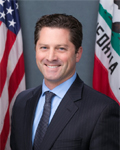
Jordan Cunningham
RRepublican
Ask Maddy
·
AI policy assistant
Ask Maddy about AB 1108
Scope: CA
Hi! I can help you understand AB 1108. What would you like to know?
Try one of these
i
Maddy answers using official bill text and legislative records. Always verify before sharing.
Sources cited inline