

Environmental Justice Community Resilience Hubs Program.
Summary
The California Global Warming Solutions Act of 2006 establishes the State Air Resources Board as the state agency responsible for monitoring and regulating sources emitting greenhouse gases. The act requires the state board to ensure that statewide greenhouse gas emissions are reduced to at least 40% below the statewide greenhouse gas emissions limit, as defined, no later than December 31, 2030. The act requires the state board to adopt rules and regulations in an open public process to achieve the maximum technologically feasible and cost-effective greenhouse gas emission reductions. The state board is authorized to include market-based compliance mechanisms to comply with the regulations. The implementing regulations adopted by the state board provide for the direct allocation of greenhouse gas allowances to electrical corporations pursuant to a market-based compliance mechanism. Under existing law, the Public Utilities Commission (PUC) has regulatory authority over electrical corporations. Existing law authorizes the PUC to allocate 15% of the revenues received by the electrical corporations from that allocation of allowances for clean energy and energy efficiency projects established pursuant to statute that are administered by electrical corporations. Existing law requires the PUC to direct the balance of the revenues to be credited directly to the residential, small business, and emissions-intensive trade-exposed retail customers of the electrical corporations, as specified. Beginning with the fiscal year commencing July 1, 2022, and ending with the fiscal year ending June 30, 2027, except as provided, this bill would require the PUC to annually allocate 5% of the revenues received by the electrical corporations from that allocation of greenhouse gas allowances to the Environmental Justice Community Resilience Hubs Program, which would require each electrical corporation to award those allocated revenues to a single third-party administrator, selected by the commission, that will award competitive grants to owners of critical community institutions, meeting eligibility criteria established by the PUC, for building upgrade projects that demonstrate community engagement in all phases, demonstrate multistakeholder partnerships, reflect the geographic diversity of the state, and are installed at critical community institutions. The bill would require the PUC to select a third-party administrator by no later than March 1, 2023, and require that the program be operational and begin processing applications by no later than July 1, 2023. The bill would require that the program be jointly operated among all the participating electrical corporations and be consistent across the utility territories. The bill would require the third-party administrator ensure that program moneys from each utility are used only for projects located in the service territory of that utility from which the moneys are received and to provide technical assistance to program applicants. The bill would prohibit more than 10% of those allocated revenues from being used for administration, technical assistance, and outreach. The bill would require the PUC to establish requirements relating to hiring, wages, apprenticeship programs, and workforce standards for the program. Under existing law, a violation of any order, decision, rule, direction, demand, or requirement of the PUC is a crime. Because a violation of a PUC action implementing this bill's requirements would be a crime, the bill would impose a state-mandated local program. The California Constitution requires the state to reimburse local agencies and school districts for certain costs mandated by the state. Statutory provisions establish procedures for making that reimbursement. This bill would provide that no reimbursement is required by this act for a specified reason.
Bill status
failed
1 of 4 stages cleared
Introduction
Feb 2021
Committee Review
Floor Vote
Governor
Introduced Feb 18, 2021
Last action Feb 1, 2022
Floor votes
How they voted
No floor votes recorded yet.
Full legislative history
Actions timeline
Total actions
13
Key actions
5
Committee
8
Amendments
3
Feb 1, 2022
Lower · Passed
From committee: Filed with the Chief Clerk pursuant to Joint Rule 56.
lower
May 20, 2021
Lower · Passed
In committee: Hearing postponed by committee.
lower
May 12, 2021
Committee
In committee: Set, first hearing. Referred to APPR. suspense file.
lower
Apr 29, 2021
Lower · Passed
From committee: Do pass and re-refer to Com. on APPR. (Ayes 8. Noes 3.) (April 28). Re-referred to Com. on APPR.
lower
Apr 22, 2021
Committee
Re-referred to Com. on NAT. RES.
lower
Apr 21, 2021
Introduced
From committee chair, with author's amendments: Amend, and re-refer to Com. on NAT. RES. Read second time and amended.
lower
Apr 15, 2021
Committee
Re-referred to Com. on NAT. RES.
lower
Apr 14, 2021
Lower · Passed
Read second time and amended.
lower
Apr 13, 2021
Introduced
From committee: Amend, and do pass as amended and re-refer to Com. on NAT. RES. (Ayes 8. Noes 3.) (April 7).
lower
Mar 4, 2021
Committee
Referred to Coms. on U. & E. and NAT. RES.
lower
Feb 19, 2021
Lower · Passed
From printer. May be heard in committee March 21.
lower
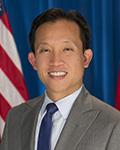
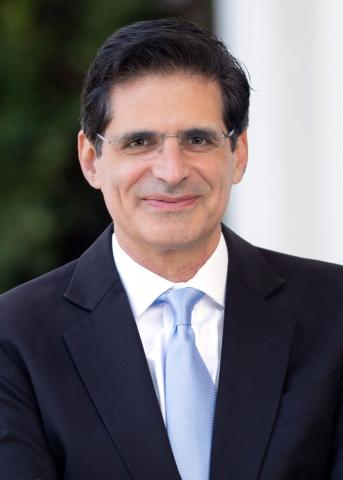
1 primary · 1 co-sponsor
Sponsors
Ask Maddy
·
AI policy assistant
Ask Maddy about AB 1087
Scope: CA
Hi! I can help you understand AB 1087. What would you like to know?
Try one of these
i
Maddy answers using official bill text and legislative records. Always verify before sharing.
Sources cited inline