

Healing arts: therapists and counselors: licensing.
Summary
(1) Existing law provides for the licensure and regulation of marriage and family therapists under the Licensed Marriage and Family Therapist Act, of clinical social workers under the Clinical Social Worker Practice Act, and of professional clinical counselors under the Licensed Professional Clinical Counselor Act by the Board of Behavioral Sciences. Existing law prescribes requirements for an applicant for licensure as a marriage and family therapist, clinical social worker, or professional clinical counselor who holds a valid license in good standing by a corresponding authority in any state or country, including that the applicant's education is substantially equivalent, as specified, and that the applicant's supervised experience is substantially equivalent as determined by the board. Existing law requires the board to determine substantially equivalency for these purposes based on specified standards for an applicant who has held a license for less than 4 years. This bill would revise and recast requirements for an applicant who holds a license in another jurisdiction of the United States as a marriage and family therapist, clinical social worker, or professional clinical counselor at the highest level of independent clinical practice that has been current, active, and unrestricted for at least 2 years. The bill would delete the requirement that the applicant's education is substantially equivalent and instead would require the applicant's degree that qualified the person for licensure is a master's degree or, if applicable, a doctoral degree, obtained from an accredited or approved institution. The bill would delete a requirement for the applicant to pass a clinical licensing examination set forth in regulations adopted by the board, and would impose specified coursework requirements on those applicants, including coursework in California cultures and social and psychological implications of socioeconomic position. The bill would also require, on or after January 1, 2021, all applicants holding out-of-state licenses, regardless of how long they have held the out-of-state license, to complete specified coursework or training in suicide risk assessment and intervention. The bill would make conforming and other nonsubstantive changes. (2) Existing law requires that, with respect to an applicant for licensure as a marriage and family therapist, clinical social worker, or professional clinical counselor who does not qualify for licensure as described above, education and experience that the applicant gained outside of the state to be accepted for specified licensure or registration requirements if that education or experience is substantially equivalent, subject to certain standards. This bill would revise those requirements by requiring the amount of time that the applicant held an active license in good standing in another state or country to be accepted as qualifying supervised experience at a specified rate and up to a maximum of a specified amount of hours. The bill would also exempt an applicant who obtained a license or registration in another state or country from the clinical examination if certain conditions are met. The bill would also revise the requirements to determine whether education is substantially equivalent for these purposes by, among other changes, requiring coursework to be from an accredited or approved institution or continuing education provider, on or after January 1, 2021, and for the applicant to complete specified coursework or applied experience in suicide risk assessment and intervention. This bill would incorporate additional changes to Section 4980.03 of the Business and Professions Code proposed by AB 1651 to be operative only if this bill and AB 1651 are enacted and this bill is enacted last. This bill would incorporate additional changes to Section 4980.81 of the Business and Professions Code proposed by SB 786 to be operative only if this bill and SB 786 are enacted and this bill is enacted last.
Bill status
signed
all 5 stages cleared
Introduction
Feb 2019
Committee Review
Aug 2019
Senate Passage
May 2019
Assembly Passage
Sep 2019
Signed into Law
Sep 2019
Introduced Feb 22, 2019
Signed Sep 27, 2019
Floor votes · Senate May 6, 2019 · Assembly Sep 3, 2019
How they voted
35–0
Passed
Total votes 35
May 6, 2019
D
Democratic27
100% Yea
R
Republican8
100% Yea
Vote distribution
All Yea
All Nay
Mixed
No data
Full legislative history
Actions timeline
Total actions
28
Key actions
9
Committee
6
Amendments
3
Sep 27, 2019
Signed into law
Approved by the Governor.
legislature
Sep 4, 2019
Upper · Passed
Assembly amendments concurred in. (Ayes 40. Noes 0. Page 2530.) Ordered to engrossing and enrolling.
upper
Sep 3, 2019
Introduced
In Senate. Concurrence in Assembly amendments pending.
upper
Sep 3, 2019
Lower · Passed
Read third time. Passed. (Ayes 77. Noes 0. Page 2959.) Ordered to the Senate.
lower
Aug 22, 2019
Lower · Passed
Read third time and amended.
lower
Aug 14, 2019
Lower · Passed
From committee: Do pass. (Ayes 18. Noes 0.) (August 14).
lower
Jul 10, 2019
Lower · Passed
From committee: Do pass as amended and re-refer to Com. on APPR. (Ayes 19. Noes 0.) (July 9).
lower
May 16, 2019
Committee
Referred to Com. on B. & P.
lower
May 6, 2019
Upper · Passed
Read third time. Passed. (Ayes 38. Noes 0. Page 961.) Ordered to the Assembly.
upper
Apr 29, 2019
Upper · Passed
From committee: Be ordered to second reading pursuant to Senate Rule 28.8.
upper
Apr 8, 2019
Upper · Passed
From committee: Do pass and re-refer to Com. on APPR. (Ayes 9. Noes 0. Page 599.) (April 8). Re-referred to Com. on APPR.
upper
Mar 14, 2019
Committee
Referred to Com. on B., P. & E.D.
upper
Feb 22, 2019
Introduced
Introduced. To Com. on RLS. for assignment. To print.
upper
1 primary · 4 co-sponsors
Sponsors
Role
Legislator
Party
State
District
P
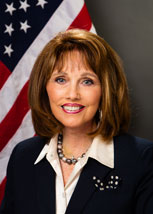
Patricia C. Bates
RRepublican
Co
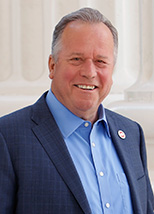
Bill Dodd
DDemocratic
Co
Jim Patterson
RRepublican
Co

Ling Ling Chang
RRepublican
Co
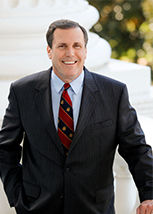
Scott Wilk
RRepublican
Ask Maddy
·
AI policy assistant
Ask Maddy about SB 679
Scope: CA
Hi! I can help you understand SB 679. What would you like to know?
Try one of these
i
Maddy answers using official bill text and legislative records. Always verify before sharing.
Sources cited inline