

Beverage Container Recycling Act of 2020.
Summary
(1) Existing law, the Used Mattress Recovery and Recycling Act, requires a mattress recycling organization, comprised of manufacturers of mattresses sold in the state, to develop and submit to the Department of Resources Recycling and Recovery for approval a plan, including a budget to implement the plan, for the recovery and recycling of used mattresses. The act requires the organization to submit annual reports to the department and subjects the organization to audits, if necessary. The act requires the organization to reimburse the department for costs for implementing and enforcing the act. Under the act, a retailer is prohibited from selling, distributing, or offering for sale a mattress in the state unless the retailer is in compliance with the act, and a manufacturer, renovator, or distributor is prohibited from selling, offering for sale, or importing a mattress, or selling or distributing a mattress to a distributor or retailer, unless the manufacturer, renovator, or distributor is in compliance with the act. A violation of the act may be subject to an administrative civil penalty. This bill would require distributors of beverage containers in the state to form a beverage container stewardship organization. The organization would be required to develop and submit a plan and budget for the recovery and recycling of empty beverage containers similar to that described in the Used Mattress Recovery and Recycling Act, and would require the organization to establish a stewardship fee, to be paid by distributor members of the organization, to assist in covering the costs of implementing the program. The act would require the organization to reimburse the department for the department's costs of enforcement. The bill would impose similar administrative civil penalties for a violation of these provisions. (2) The California Beverage Container Recycling and Litter Reduction Act, which is administered by the Department of Resources Recycling and Recovery, is established to promote beverage container recycling, and provides for the payment, collection, and distribution of certain payments and fees based on minimum refund values established for beverage containers. The act requires the department to annually designate convenience zones statewide and requires at least one certified recycling center or location within every convenience zone, as defined, that accepts all types of empty beverage containers and pays the refund value, if any, at one location. The act authorizes the Director of Resources Recycling and Recovery to exempt, if certain conditions are met, an individual convenience zone from the requirement that it have at least one certified recycling center or location and limits the total number of exemptions the director may grant to 35% of the total number of convenience zones identified pursuant to the act. For purposes of the act, "supermarket" is defined as a full-line, self-service retail store with gross annual sales of $2,000,000, or more, and that sells specified food items. A violation of the act is an infraction. This bill, for purposes of defining a "supermarket," would increase the minimum gross annual sales to $4,000,000 and make conforming changes. The bill, until December 31, 2023, would increase the limit on the total number of exemptions the director may grant to 50%. (3) This bill, commencing January 1, 2024, would revise and recast the provisions of the California Beverage Container Recycling and Litter Reduction Act, which would be renamed the Beverage Container Recycling Program, and would include wine and distilled spirits as beverages under the program. The bill would specify a refund value for beverage containers and would require the Department of Resources Recycling and Recovery to provide recommendations to the Legislature on ways to increase the aggregate recycling rate if the recycling rate for beverage containers drops below a certain threshold. The bill would require the beverage container stewardship organization, as a part of its stewardship plan described above, to establish processes for the payment and collection of minimum refund values by the organization. The bill would require the organization to, among other things, designate convenience zones in the state to provide for the convenient redemption of beverage containers by consumers, establish an incentive payment to be paid by the organization to recycling centers for empty beverage containers redeemed by the recycling center, establish a payment to be paid by the organization to a processor to help ensure the processor, recycling center, or dropoff or collection program is not operating at a loss, establish procedures and funding for the recycling of empty beverage containers collected pursuant to curbside collection programs, and establish procedures for a consumer to redeem empty beverage containers if no certified recycling center is established in a convenience zone. By increasing the scope of various crimes, this bill would impose a state-mandated local program. The bill would require the beverage container stewardship organization to retain refund values not redeemed and to use those moneys for the administration of the beverage container stewardship program and for specified purposes relating to the recycling of beverage containers. The bill would repeal certain annual disbursements that are made by the department under the act, and would limit moneys received by the department under the program to penalties for violating these provisions and charges to fund the department's administration of the program. (4) This bill would also update cross references and make other clarifying and conforming changes. (5) The California Constitution requires the state to reimburse local agencies and school districts for certain costs mandated by the state. Statutory provisions establish procedures for making that reimbursement. This bill would provide that no reimbursement is required by this act for a specified reason.
Bill status
died
3 of 5 stages cleared
Introduction
Feb 2019
Committee Review
Jan 2020
Senate Passage
Jan 2020
Assembly Passage
Governor
Introduced Feb 20, 2019
Last action Feb 3, 2020
Floor votes · Senate Jan 29, 2020
How they voted
38–0
Passed · 1 other
Total votes 39
Jan 29, 2020
D
Democratic29
100% Yea
R
Republican10
90% Yea
Vote distribution
All Yea
All Nay
Mixed
No data
Full legislative history
Actions timeline
Total actions
18
Key actions
4
Committee
4
Amendments
1
Jan 29, 2020
Senate · Passed
Senate Vote: pass (38-0-1)
senate
Jan 23, 2020
Upper · Passed
Read second time and amended. Ordered to second reading.
upper
Jan 23, 2020
Upper · Passed
From committee: Do pass as amended. (Ayes 5. Noes 1. Page 3141.) (January 23).
upper
Jan 15, 2020
Upper · Passed
From committee: Do pass and re-refer to Com. on APPR. (Ayes 4. Noes 1. Page 3099.) (January 15). Re-referred to Com. on APPR.
upper
Jan 6, 2020
Committee
Re-referred to Com. on EQ.
upper
Feb 28, 2019
Committee
Referred to Com. on RLS.
upper
Feb 20, 2019
Introduced
Introduced. Read first time. To Com. on RLS. for assignment. To print.
upper
1 primary · 0 co-sponsors
Sponsors
Role
Legislator
Party
State
District
P
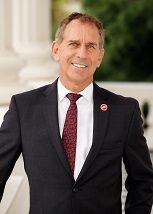
Bob Wieckowski
DDemocratic
Ask Maddy
·
AI policy assistant
Ask Maddy about SB 372
Scope: CA
Hi! I can help you understand SB 372. What would you like to know?
Try one of these
i
Maddy answers using official bill text and legislative records. Always verify before sharing.
Sources cited inline