

The Golden State Energy Act.
Summary
(1) Under existing law, the Public Utilities Commission has regulatory authority over public utilities, including electrical corporations and gas corporations. Existing law authorizes the commission to fix just and reasonable rates and charges for public utilities. Existing law authorizes the commission to petition a court to appoint a receiver when the commission determines, after notice and hearing, that a water or sewer system corporation is unable or unwilling to adequately serve its ratepayers, has been actually or effectively abandoned by its owners, or is unresponsive to the commission's rules or orders. This bill would authorize the commission to petition a court to appoint a receiver to assume possession of Pacific Gas and Electric Company's property and to operate its electrical and gas systems if the commission determines in a proceeding that the appointment of a receiver is warranted pursuant to the processes or procedures set forth in a specified commission investigation. The bill would authorize a court to appoint such a receiver and would require the receiver to control and operate Pacific Gas and Electric Company upon such terms and conditions as the court prescribes. This bill would authorize the Governor, or the Governor's designee, to incorporate Golden State Energy as a nonprofit public benefit corporation for the purpose of owning, controlling, operating, or managing electrical and gas services for its ratepayers and for the benefit of all Californians. The bill would establish a 9-member board of directors for Golden State Energy and would provide for the appointment of the initial board members, as provided. The bill would require the initial board to amend Golden State Energy's bylaws to include procedures for the transition to a board consisting of 6 board members who are elected by Golden State Energy's customers, as specified, and 3 board members who are appointed, as provided. This bill would expressly provide that Golden State Energy is a nonprofit public benefit corporation, subject to all statutory provision and regulatory authority of the commission as an electrical corporation and gas corporation, except as specified. The bill would require the commission, upon a specified event occurring, to initiate a proceeding to modify the rules and processes that apply to Pacific Gas and Electric Company as necessary to reflect the differences in Golden State Energy's capital structure to ensure continued regulation of rates, electrical and gas safety, wildfire mitigation, climate change mitigation and adaption, public purpose programs, and any other commission requirements applicable to an electrical corporation or gas corporation. This bill would require Golden State Energy, in each general rate case or attrition year adjustment application, to apply for a revenue requirement sufficient to pay for operations and maintenance costs, pay for administrative and general expenses, service debt, pay the costs of commission approved capital expenditures not funded from debt, and fund and maintain necessary financial and operating reserves. The bill would require the commission, in each Golden State Energy general rate case or attrition year adjustment, to consider, modify if necessary, and adopt a general rate case revenue requirement adequate to furnish and maintain efficient, just and reasonable service, instrumentalities, equipment, and facilities to promote the safety, health, comfort, and convenience of Golden State Energy's customers, employees, and the public, and to authorize Golden State Energy to issue debt as necessary to maintain and operate its assets consistent with the applicable revenue requirement. Existing law authorizes a public utility to issue stocks and stock certificates or other evidence of interest or ownership, and bonds, notes, and other evidence of indebtedness for specified purposes, including for the acquisition of property. This bill would authorize Golden State Energy to additionally issue debt to facilitate the acquisition of the property, as defined, of Pacific Gas and Electric Company, as specified. Existing law prohibits electrical corporations and gas corporations from recovering fines and penalties through rates approved by the commission. This bill would exclude Golden State Energy from that prohibition. Existing law authorizes electrical corporations and gas corporations to use eminent domain to acquire any property necessary for the construction and maintenance of their electric or gas plants. This bill would authorize Golden State Energy to commence an eminent domain action to acquire Pacific Gas and Electric Company if the commission determines that Pacific Gas and Electric Company's certificate of public convenience and necessity for the provision of electrical or gas service should be revoked pursuant to any processes or procedures adopted by the commission in a specified commission investigation. The bill would authorize Golden State Energy to take possession of Pacific Gas and Electric Company upon deposit in court, and prompt release, of an amount determined by the court to be the probable amount of just compensation. Existing law provides mechanisms for electrical corporations to recover costs and expenses arising from covered wildfires, as defined, and establishes the Wildfire Fund to pay eligible claims arising from a covered wildfire. Existing law specifies the funding sources for the fund, which include, among other sources, contributions from electrical corporations and revenues generated from a specified charge imposed on the ratepayers of an electrical corporation. This bill would authorize Golden State Energy to similarly participate in the fund following the closing of its acquisition of Pacific Gas and Electric Company, as specified. The Bergeson-Peace Infrastructure and Economic Development Bank Act establishes the California Infrastructure and Economic Development Bank (I-Bank) in the Governor's Office of Business and Economic Development. Existing law, among other things, authorizes the I-Bank to make loans, issue bonds, and provide financial assistance for various types of projects that qualify as economic development or public development facilities. This bill would specify that the financing of energy and project costs on behalf of Golden State Energy is in the public interest and eligible for financing by the I-Bank or by a special purpose trust, as specified. The bill would authorize the I-Bank to issue bonds and loan the proceeds to Golden State Energy, as specified. The bill would specify that bonds or other indebtedness issued pursuant to this financing do not constitute a debt or liability of the state or of any political subdivision of the state other than the I-Bank or the special purpose trust, and are payable solely from the funds of, and any security provided by, Golden State Energy. This bill would provide that any and all Golden State Energy indebtedness, their transfer, and the payments or income therefrom are at all times free from income taxation of every kind by the state. Existing law prohibits a public utility from purchasing or acquiring, any part of the capital stock of any other public utility without having been first authorized to do so by the commission, as specified. Existing law prohibits a person or corporation from merging, acquiring, or controlling, either directly or indirectly, any public utility organized and doing business in this state without first securing authorization to do so from the commission. This bill would exempt the acquisition of Pacific Gas and Electric Company by Golden State Energy from the above prohibitions if Golden State Energy, or its subsidiary, agrees to assume, take assignment of, and be bound by all collective bargaining agreements and related obligations, assume any obligations for funding under pension plans then in effect, and, in the event the transfer is made as part of Pacific Gas and Electric Company's and PG&E Corporation's bankruptcy cases, adopt and be bound by the terms and provisions set forth in a specified reorganization plan. (2) Under existing law, a violation of the Public Utilities Act or any order, decision, rule, direction, demand, or requirement of the commission is a crime. Because certain of the above requirements would be a part of the act, and because a violation of an action of the commission implementing the above requirements would be a crime, the bill would impose a state-mandated local program. The California Constitution requires the state to reimburse local agencies and school districts for certain costs mandated by the state. Statutory provisions establish procedures for making that reimbursement. This bill would provide that no reimbursement is required by this act for a specified reason.
Bill status
signed
all 5 stages cleared
Introduction
Feb 2019
Committee Review
Jun 2020
Senate Passage
Apr 2019
Assembly Passage
Jun 2020
Signed into Law
Jul 2020
Introduced Feb 19, 2019
Signed Jul 1, 2020
Floor votes · Senate Apr 25, 2019 · Assembly Jun 15, 2020
How they voted
34–0
Passed · 1 other
Total votes 35
Apr 25, 2019
D
Democratic27
96% Yea
R
Republican8
100% Yea
Vote distribution
All Yea
All Nay
Mixed
No data
Full legislative history
Actions timeline
Total actions
34
Key actions
12
Committee
9
Amendments
4
Jul 1, 2020
Signed into law
Approved by the Governor.
legislature
Jun 29, 2020
Upper · Passed
Assembly amendments concurred in. (Ayes 30. Noes 8. Page 3896.) Ordered to engrossing and enrolling.
upper
Jun 29, 2020
Upper · Passed
From committee: That the Assembly amendments be concurred in. (Ayes 9. Noes 3. Page 3913.)
upper
Jun 24, 2020
Upper · Passed
From committee: Be re-referred to Com. on E., U. & C. pursuant to Senate Rule 29.10(d). (Ayes 5. Noes 0. Page 3813.) Re-referred to Com. on E., U. & C.
upper
Jun 18, 2020
Committee
Re-referred to Com. on RLS. pursuant to Senate Rule 29.10(d).
upper
Jun 16, 2020
Introduced
In Senate. Concurrence in Assembly amendments pending.
upper
Jun 15, 2020
Lower · Passed
Read third time. Passed. (Ayes 57. Noes 17. Page 4891.) Ordered to the Senate.
lower
Jun 11, 2020
Lower · Passed
Read third time and amended.
lower
Jun 10, 2020
Lower · Passed
Read second time and amended. Ordered to second reading.
lower
Jun 10, 2020
Lower · Passed
From committee: Do pass as amended. (Ayes 10. Noes 3.) (June 10).
lower
Jun 9, 2020
Lower · Passed
From committee: Do pass and re-refer to Com. on APPR. (Ayes 12. Noes 2.) (June 9). Re-referred to Com. on APPR.
lower
May 9, 2019
Committee
Referred to Com. on U. & E.
lower
Apr 25, 2019
Upper · Passed
Read third time. Passed. (Ayes 37. Noes 0. Page 820.) Ordered to the Assembly.
upper
Apr 22, 2019
Upper · Passed
From committee: Be ordered to second reading pursuant to Senate Rule 28.8.
upper
Mar 27, 2019
Upper · Passed
From committee: Do pass and re-refer to Com. on APPR. (Ayes 13. Noes 0. Page 464.) (March 27). Re-referred to Com. on APPR.
upper
Feb 28, 2019
Committee
Referred to Com. on E., U. & C.
upper
Feb 19, 2019
Introduced
Introduced. Read first time. To Com. on RLS. for assignment. To print.
upper
1 primary · 3 co-sponsors
Sponsors
Role
Legislator
Party
State
District
P
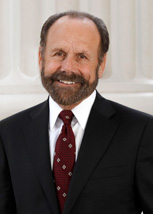
Jerry Hill
DDemocratic
Co
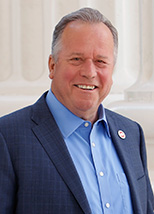
Bill Dodd
DDemocratic
Co

Chris Holden
DDemocratic
Co

Mike McGuire
DDemocratic
Ask Maddy
·
AI policy assistant
Ask Maddy about SB 350
Scope: CA
Hi! I can help you understand SB 350. What would you like to know?
Try one of these
i
Maddy answers using official bill text and legislative records. Always verify before sharing.
Sources cited inline