

Industrial hemp.
Summary
Existing federal law, the Agricultural Act of 2014, authorizes an institution of higher education, as defined, or a state department of agriculture, as defined, to grow or cultivate industrial hemp under an agricultural pilot program, as defined, under certain conditions. Existing federal law, the Agricultural Marketing Act of 1946, as amended by the Agriculture Improvement Act of 2018, requires a state desiring to have primary regulatory authority over the production of industrial hemp in the state to submit to the United States Secretary of Agriculture, through the state department of agriculture, a plan, with specified contents, under which the state monitors and regulates hemp production. Existing state law regulates the cultivation and testing of industrial hemp, as defined, and regulates the activities of seed breeders to develop seed cultivars through seed development plans, as defined. Existing law creates the Industrial Hemp Advisory Board. Existing state law requires an entity that is either a grower of industrial hemp for commercial purposes or a seed breeder that develops varieties of industrial hemp for sale or research to register with the county agricultural commissioner of the county in which it intends to cultivate industrial hemp and to annually renew its registration. Existing state law exempts an established agricultural research institution, as defined, from these registration requirements. Existing state law requires the Department of Food and Agriculture to establish a registration fee and appropriate renewal fee to be paid by registrants. Under existing state law, these fees are deposited in the Department of Food and Agriculture Fund and continuously appropriated to the department for the administration and enforcement of this registration program and other provisions regulating the cultivation of industrial hemp. Existing state law requires a county agricultural commissioner to transmit information collected pursuant to these provisions to the department. Under existing state law, a violation of these provisions is a misdemeanor. Under existing state law, these provisions are operative only to the extent authorized by federal law, as set forth in an opinion of the Attorney General. Before enactment of the federal Agriculture Improvement Act of 2018, an opinion of the Attorney General issued pursuant to existing state law concluded that industrial hemp may only be grown pursuant to these provisions to the extent authorized by the federal Agricultural Act of 2014. Existing law, the Control, Regulate and Tax Adult Use of Marijuana Act (AUMA) , added by Proposition 64 at the November 8, 2016, statewide general election, revised some provisions of state law regarding industrial hemp. This bill would revise the provisions regulating the cultivation and testing of industrial hemp to conform with the requirements for a state plan under the federal Agricultural Marketing Act of 1946, as amended by the federal Agriculture Improvement Act of 2018, by, among other things, revising the definition of "industrial hemp," and replacing the terms "seed breeder," "seed cultivar," and "seed development plan" with the defined terms "hemp breeder," "cultivar," and "variety development plan," respectively. The bill would expand and change the membership of the Industrial Hemp Advisory Board, as specified. The bill would apply the registration requirements to growers of industrial hemp for noncommercial as well as commercial purposes. Upon approval of a state plan, as specified, the bill would apply certain registration and regulatory requirements to established agricultural research institutions, including submission of research plans, as defined, to county agricultural commissioners before cultivating hemp. The bill would impose new requirements on the department and county agricultural commissioners for the handling and transmittal of registration information, impose new testing requirements, provide new enforcement procedures to be operative as of the effective date of an approved state plan, as defined, and impose new conditions on eligibility to participate in the industrial hemp program, as defined. By expanding registration requirements, including payment of registration fees, to some growers of industrial hemp for agricultural or academic research purposes, the bill would establish a new source of revenue for a continuously appropriated fund, thus making an appropriation. This bill would require the Secretary of Food and Agriculture, in consultation with the Governor and the Attorney General, to develop and submit a state plan to the United States Secretary of Agriculture, as provided, on or before May 1, 2020. This bill would specify consequences for a violation of its provisions according to the frequency of prior violations and whether the violation was negligent, grossly negligent, reckless, or intentional. By imposing new registration requirements on some growers of industrial hemp for agricultural or academic research purposes, the violation of which would be a misdemeanor, this bill would impose a state-mandated local program. AUMA authorizes the Legislature to amend certain provisions of AUMA to further the purposes and intent of AUMA with a 2/3 vote of the membership of the Legislature. This bill would amend AUMA by modifying the definition of "established agricultural research institution" and imposing certain registration and other requirements on these institutions, as of the date on which a state plan for California is approved pursuant to the federal Agricultural Marketing Act of 1946, as amended by the federal Agricultural Improvement Act of 2018. This bill would declare that its provisions further the purposes and intent of AUMA. By increasing the duties of county agricultural commissioners who would enforce certain of these new provisions, this bill would impose a state-mandated local program. The California Constitution requires the state to reimburse local agencies and school districts for certain costs mandated by the state. Statutory provisions establish procedures for making that reimbursement. This bill would provide that no reimbursement is required by this act for specified reasons.
Bill status
signed
all 5 stages cleared
Introduction
Jan 2019
Committee Review
Aug 2019
Senate Passage
May 2019
Assembly Passage
Sep 2019
Signed into Law
Oct 2019
Introduced Jan 23, 2019
Signed Oct 12, 2019
Floor votes · Senate May 22, 2019 · Assembly Sep 10, 2019
How they voted
31–0
Passed · 3 other
Total votes 34
May 22, 2019
D
Democratic26
100% Yea
R
Republican8
62% Yea
Vote distribution
All Yea
All Nay
Mixed
No data
Full legislative history
Actions timeline
Total actions
31
Key actions
10
Committee
7
Amendments
4
Oct 12, 2019
Signed into law
Approved by the Governor.
legislature
Sep 11, 2019
Upper · Passed
Assembly amendments concurred in. (Ayes 40. Noes 0. Page 2865.) Ordered to engrossing and enrolling.
upper
Sep 10, 2019
Introduced
In Senate. Concurrence in Assembly amendments pending.
upper
Sep 10, 2019
Lower · Passed
Read third time. Passed. (Ayes 76. Noes 1. Page 3262.) Ordered to the Senate.
lower
Sep 5, 2019
Lower · Passed
Read third time and amended.
lower
Aug 30, 2019
Lower · Passed
From committee: Do pass. (Ayes 17. Noes 1.) (August 30).
lower
Jul 3, 2019
Lower · Passed
From committee: Do pass and re-refer to Com. on APPR. (Ayes 11. Noes 0.) (July 3). Re-referred to Com. on APPR.
lower
Jun 3, 2019
Committee
Referred to Com. on AGRI.
lower
May 22, 2019
Upper · Passed
Read third time. Passed. (Ayes 35. Noes 0. Page 1221.) Ordered to the Assembly.
upper
May 17, 2019
Upper · Passed
Read second time and amended. Ordered to second reading.
upper
May 17, 2019
Upper · Passed
From committee: Do pass as amended. (Ayes 6. Noes 0. Page 1090.) (May 16).
upper
Apr 22, 2019
Upper · Passed
From committee: Do pass and re-refer to Com. on APPR. (Ayes 4. Noes 0. Page 748.) (April 22). Re-referred to Com. on APPR.
upper
Apr 3, 2019
Committee
Re-referred to Com. on AGRI.
upper
Jan 31, 2019
Committee
Referred to Com. on RLS.
upper
Jan 23, 2019
Introduced
Introduced. Read first time. To Com. on RLS. for assignment. To print.
upper
1 primary · 3 co-sponsors
Sponsors
Role
Legislator
Party
State
District
P

Scott Wilk
RRepublican
Co
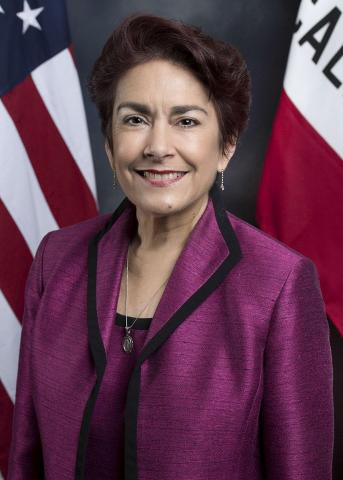
Anna Caballero
DDemocratic
Co

Cathleen Galgiani
DDemocratic
Co

Cecilia Aguiar-Curry
DDemocratic
Ask Maddy
·
AI policy assistant
Ask Maddy about SB 153
Scope: CA
Hi! I can help you understand SB 153. What would you like to know?
Try one of these
i
Maddy answers using official bill text and legislative records. Always verify before sharing.
Sources cited inline