

Student financial aid: Chafee grant awards.
Summary
Existing law establishes the Student Aid Commission as the state agency primarily responsible for the administration and coordination of student financial aid programs at California postsecondary educational institutions. Existing federal law establishes the Chafee Educational and Training Vouchers Program for purposes of providing financial aid to current and former foster youth who are attending qualifying postsecondary educational institutions. Existing law provides that the Student Aid Commission, through an interagency agreement with the State Department of Social Services, currently operates the program in California. Existing law authorizes the commission or the department, for the fiscal years 2018–19 to 2020–21, inclusive, to expend up to $80,000, of any moneys appropriated by the Legislature to expand the Chafee Educational and Training Vouchers Program age eligibility of former foster youth up to 26 years of age, for outreach to newly eligible former foster youth who are at least 23 years of age, but are not yet 26 years of age. Commencing with the 2021–22 award year, this bill would authorize the commission to make initial award offers of up to 200% of total state and federal program funding available for all awards, with the number of initial award offers and the amount of the award to be determined based on the historical rate of award acceptance. The bill would require the commission to make award offers contingent upon available funding. The bill would authorize the commission to adjust or withdraw offers to ensure that awards do not exceed available program funding. The bill would also require the commission to advise award offer recipients that offers may be withdrawn or adjusted before payment and that awards are payable to eligible students only if funding is available. This bill would impose certain requirements on a student who fails to demonstrate satisfactory academic progress, as defined by the institution where the student is enrolled, to maintain Chafee grant eligibility, and would take away Chafee grant eligibility from a student who fails to demonstrate satisfactory academic progress, as specified. The bill would require that institutions provide an appeal process in writing and reinstate the student's Chafee grant when certain conditions are met. The bill would also provide that a student who loses Chafee eligibility and subsequently is not enrolled for one or more terms shall regain eligibility upon reenrollment. The bill would require the California Community Colleges and the California State University, and would request the University of California, to provide all Chafee grant recipients, upon release of the first payment, with information regarding available support services on campus and the process for completing an educational plan and, in that notification, to strongly encourage Chafee grant recipients to avail themselves of those services if they have not already done so. To the extent that the bill would impose new duties on community college districts, it would constitute a state-mandated local program. This bill would limit the duration of receipt of a Chafee award to 5 years, which would not be required to be consecutive. The bill would prohibit an institution from requiring any other eligibility criteria for a Chafee grant than those described in this bill and in specified federal law. The California Constitution requires the state to reimburse local agencies and school districts for certain costs mandated by the state. Statutory provisions establish procedures for making that reimbursement. This bill would provide that, if the Commission on State Mandates determines that the bill contains costs mandated by the state, reimbursement for those costs shall be made pursuant to the statutory provisions noted above.
Bill status
signed
all 5 stages cleared
Introduction
Jan 2019
Committee Review
Aug 2019
Senate Passage
May 2019
Assembly Passage
Sep 2019
Signed into Law
Oct 2019
Introduced Jan 22, 2019
Signed Oct 4, 2019
Floor votes · Senate May 23, 2019 · Assembly Sep 10, 2019
How they voted
34–0
Passed
Total votes 34
May 23, 2019
D
Democratic26
100% Yea
R
Republican8
100% Yea
Vote distribution
All Yea
All Nay
Mixed
No data
Full legislative history
Actions timeline
Total actions
33
Key actions
11
Committee
6
Amendments
4
Oct 4, 2019
Signed into law
Approved by the Governor.
legislature
Sep 10, 2019
Assembly · Passed
Assembly Vote: pass (71-0)
assembly
Sep 10, 2019
Upper · Passed
Assembly amendments concurred in. (Ayes 40. Noes 0. Page 2784.) Ordered to engrossing and enrolling.
upper
Sep 9, 2019
Introduced
In Senate. Concurrence in Assembly amendments pending.
upper
Sep 9, 2019
Lower · Passed
Read third time. Passed. (Ayes 79. Noes 0. Page 3178.) Ordered to the Senate.
lower
Sep 5, 2019
Lower · Passed
Read third time and amended.
lower
Sep 3, 2019
Lower · Passed
Read second time and amended. Ordered to second reading.
lower
Aug 30, 2019
Lower · Passed
From committee: Do pass as amended. (Ayes 18. Noes 0.) (August 30).
lower
Jun 12, 2019
Lower · Passed
From committee: Do pass as amended and re-refer to Com. on APPR. (Ayes 11. Noes 0.) (June 11).
lower
Jun 3, 2019
Committee
Referred to Com. on HIGHER ED.
lower
May 23, 2019
Upper · Passed
Read third time. Passed. (Ayes 38. Noes 0. Page 1271.) Ordered to the Assembly.
upper
May 16, 2019
Upper · Passed
From committee: Do pass. (Ayes 6. Noes 0. Page 1090.) (May 16).
upper
Apr 10, 2019
Upper · Passed
From committee: Do pass and re-refer to Com. on APPR. (Ayes 7. Noes 0. Page 649.) (April 10). Re-referred to Com. on APPR.
upper
Jan 31, 2019
Committee
Referred to Com. on ED.
upper
Jan 22, 2019
Introduced
Introduced. Read first time. To Com. on RLS. for assignment. To print.
upper
1 primary · 12 co-sponsors
Sponsors
Role
Legislator
Party
State
District
P
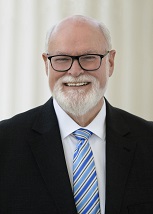
Jim Beall
DDemocratic
Co

Anthony Portantino
DDemocratic
Co
BM
Brian Maienschein
DDemocratic
Co
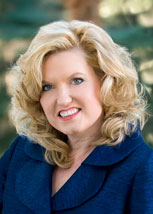
Cathleen Galgiani
DDemocratic
Co

Connie M. Leyva
DDemocratic
Co
Freddie Rodriguez
DDemocratic
Co
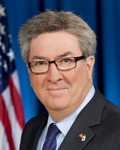
Ken Cooley
DDemocratic
Co

Mark Stone
DDemocratic
Co
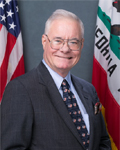
Randy Voepel
RRepublican
Co
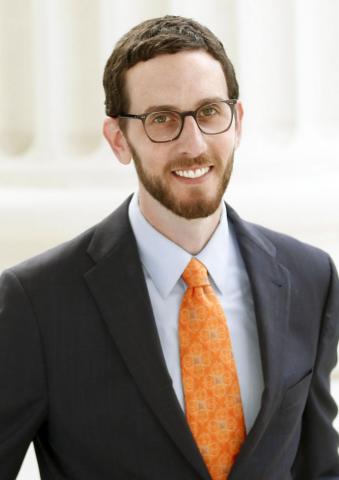
Scott Wiener
DDemocratic
Co
Scott Wilk
RRepublican
Ask Maddy
·
AI policy assistant
Ask Maddy about SB 150
Scope: CA
Hi! I can help you understand SB 150. What would you like to know?
Try one of these
i
Maddy answers using official bill text and legislative records. Always verify before sharing.
Sources cited inline