

COVID-19 emergency: tenancies.
Summary
(1) Existing law permits the Governor to proclaim a state of emergency during conditions of disaster or of extreme peril to the safety of persons and property, including epidemics. Existing law provides that the proclamation takes effect immediately, affords specified powers to the Governor, and terminates upon further proclamation by the Governor. The Governor proclaimed a state of emergency March 4, 2020, related to the COVID-19 pandemic. An executive order issued by the Governor on March 27, 2020, and extended on May 29, 2020, prohibits the eviction of residential tenants during the pendency of a state of emergency, except as specified. Under the executive order, this protection is effective through July 28, 2020. Existing law establishes a procedure, known as an unlawful detainer action, that a landlord must follow in order to evict a tenant. Existing law provides that a tenant is subject to such an action if the tenant continues to possess the property without permission of the landlord in specified circumstances, including when the tenant has violated the lease by defaulting on rent or failing to perform a duty under the lease. Existing law, the Tenant Protection Act of 2019, prohibits, with certain exceptions, an owner of residential real property from increasing the gross rental rate for a dwelling or unit more than 5% plus the percentage change in the cost of living, as defined, or 10%, whichever is lower, of the lowest gross rental rate charged for the immediately preceding 12 months, subject to specified conditions. This bill would authorize an owner of real property and a tenant to sign and execute a tenant-owner COVID-19 eviction relief agreement that, during a state of emergency related to the COVID-19 pandemic, and unspecified additional days, would allow the tenant to defer the tenant's unpaid rent, and would prohibit the owner from serving a notice terminating the tenancy or filing a complaint for unlawful detainer for that unpaid rent or during the state of emergency, unless an exception applies. The agreement would require the tenant to repay the unpaid rent to the state as installments in accordance with a specified repayment schedule, or ahead of the repayment schedule, during taxable years beginning on or after January 1, 2024, and before January 1, 2034. The bill would require the owner of real property to offer the tenant a signed copy of the agreement, along with a specified notice, prior to executing the tenant-owner COVID-19 eviction relief agreement, and would make related changes. The bill would require the owner of real property to obtain a signed acknowledgment of receipt from the tenant if the tenant declines the offer. If the tenant does not respond to the offer, the bill would require the owner to confirm, under penalty of perjury, that the owner hand-delivered or mailed the offer. By expanding the crime of perjury, the bill would impose a state-mandated local program. This bill would void any demand for the payment of unpaid rent accrued, or any notice to terminate tenancy served, beginning on March 4, 2020, upon the declaration of the state of emergency related to the COVID-19 pandemic, and until the state of emergency is terminated, as provided. The bill would, during the state of emergency, prohibit an owner of real property from demanding payment of unpaid rent, serving a notice terminating tenancy, or filing a complaint for unlawful detainer, among other things, unless the owner includes a signed acknowledgment of receipt or a sworn confirmation of a rejected offer for a tenant-owner COVID-19 eviction relief agreement. This bill would grant a tenant who has entered into a COVID-19 eviction relief agreement an affirmative defense in any unlawful detainer action brought by the owner. The bill would also stay any eviction action where a party to the eviction action produces a signed COVID-19 eviction relief agreement. (2) Existing law authorizes the Franchise Tax Board to require any person to withhold for income tax purposes an amount of a taxpayer's income, as specified, that reasonably represents the amount of tax due, as determined by the board. Existing law also provides for the collection of various debts by the Franchise Tax Board, including fines, state or local penalties, bail, forfeitures, restitution fines, restitution orders, and other amounts imposed by specified state courts and delinquent tax debt due to the federal Internal Revenue Service. This bill would require the Franchise Tax Board to calculate the repayment installments of unpaid rent, and would authorize a tenant to apply for reduction or forgiveness of repayment installments depending on the taxpayer's income. The bill would require specified persons to withhold the amount of each installment from each tenant's income during taxable years beginning on or after January 1, 2024, and before January 1, 2034, as provided. The bill would require the Franchise Tax Board to transfer these moneys to the Treasurer to be deposited in the General Fund. This bill would specify that any deferment or repayment of rent authorized under these provisions is not included when determining the lowest gross rental rate for purposes of the Tenant Protection Act of 2019. (3) Existing law, the Personal Income Tax Law, and the Corporation Tax Law, impose taxes upon taxable income, and in conformity with federal income tax law, generally defines "gross income" for purposes of those laws as income from whatever source derived, except as specifically excluded, and provides various exclusions from gross income. Existing law authorizes various credits against the taxes imposed by those laws. Existing law establishes the continuously appropriated Tax Relief and Refund Account in the General Fund and provides that payments required to be made to taxpayers or other persons from the Personal Income Tax Fund are to be paid from that account, including any amount allowable as an earned income tax credit in excess of any tax liabilities. This bill, for taxable years beginning on or after January 1, 2024, and before January 1, 2034, would exclude from gross income the gross amount of unpaid rent in a signed and executed tenant-owner COVID-19 eviction relief agreement that is reduced or forgiven by the Franchise Tax Board, as described above. This bill would allow a credit against those taxes for each taxable year beginning on or after January 1, 2024, and before January 1, 2034, to a qualified taxpayer who is an owner of real property, as specified, in an amount equal to the gross amount of unpaid rent deferred by the qualified taxpayer in a signed and executed tenant-owner COVID-19 eviction relief agreement between the qualified taxpayer and a tenant that meets the requirements described above, or in an amount equal to the gross amount of unpaid rent deferred plus inflation of at least 2% if the qualified taxpayer is a small business owner. The bill would require the qualified taxpayer to register with the Franchise Tax Board, and would require the board to approve the reservation, as specified. The bill would authorize the qualified taxpayer to claim the credit in any taxable year beginning on or after January 1, 2024, and before January 1, 2034, of the qualified taxpayer's choosing, or to sell the credit to an unrelated party, subject to specified conditions. If the amount allowable as a credit exceeds the qualified taxpayer's tax liability for the taxable year, the bill would authorize the qualified taxpayer to choose whether to be refunded the balance from the Tax Relief and Refund Account upon appropriation by the Legislature or to carry over the balance to reduce the taxpayer's tax liability in the following taxable years, as provided. The bill would require the Director of Finance to make certain adjustments relating to the General Fund and the operation of the provisions of the bill. (4) The California Constitution requires the state to reimburse local agencies and school districts for certain costs mandated by the state. Statutory provisions establish procedures for making that reimbursement. This bill would provide that no reimbursement is required by this act for a specified reason.
Bill status
passed
3 of 5 stages cleared
Introduction
Feb 2020
Committee Review
Aug 2020
Senate Passage
Jun 2020
Assembly Passage
Governor
Introduced Feb 21, 2020
Last action Aug 20, 2020
Floor votes · Senate Jun 26, 2020
How they voted
28–9
Passed · 3 other
Total votes 40
Jun 26, 2020
D
Democratic29
96% Yea
R
Republican11
81% Nay
Vote distribution
All Yea
All Nay
Mixed
No data
Full legislative history
Actions timeline
Total actions
36
Key actions
8
Committee
12
Aug 20, 2020
Lower · Passed
August 20 hearing: Held in committee and under submission.
lower
Aug 12, 2020
Lower · Passed
From committee: Do pass and re-refer to Com. on APPR. (Ayes 7. Noes 3.) (August 12). Re-referred to Com. on APPR.
lower
Jul 27, 2020
Lower · Passed
July 30 hearing postponed by committee.
lower
Jul 9, 2020
Lower · Passed
July 22 hearing postponed by committee.
lower
Jun 29, 2020
Committee
Referred to Com. on JUD.
lower
Jun 26, 2020
Upper · Passed
Read third time. Passed. (Ayes 28. Noes 9. Page 3872.) Ordered to the Assembly.
upper
Jun 23, 2020
Upper · Passed
From committee: Do pass. (Ayes 5. Noes 2. Page 3809.) (June 23).
upper
Jun 22, 2020
Upper · Passed
From committee: Do pass and re-refer to Com. on APPR. (Ayes 5. Noes 0. Page 3801.) (June 22). Re-referred to Com. on APPR.
upper
Jun 18, 2020
Committee
Re-referred to Com. on GOV. & F.
upper
Jun 17, 2020
Committee
Re-referred to Com. on RLS.
upper
May 27, 2020
Upper · Passed
From committee: Do pass and re-refer to Com. on APPR. (Ayes 10. Noes 0. Page 3604.) (May 27). Re-referred to Com. on APPR.
upper
May 11, 2020
Committee
Re-referred to Com. on HOUSING.
upper
Mar 12, 2020
Committee
Referred to Coms. on GOV. & F., JUD., and HOUSING.
upper
Feb 21, 2020
Introduced
Introduced. To Com. on RLS. for assignment. To print.
upper
1 primary · 3 co-sponsors
Sponsors
Role
Legislator
Party
State
District
P
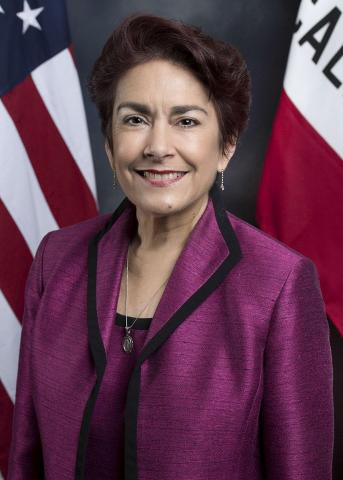
Anna Caballero
DDemocratic
Co

Robert M. Hertzberg
DDemocratic
Co

Steve Bradford
DDemocratic
Co

Toni Atkins
DDemocratic
Ask Maddy
·
AI policy assistant
Ask Maddy about SB 1410
Scope: CA
Hi! I can help you understand SB 1410. What would you like to know?
Try one of these
i
Maddy answers using official bill text and legislative records. Always verify before sharing.
Sources cited inline