

CalWORKs: homeless assistance.
Summary
Existing federal law provides for allocation of federal funds through the federal Temporary Assistance for Needy Families (TANF) block grant program to eligible states. Existing state law provides for the California Work Opportunity and Responsibility to Kids (CalWORKs) program, under which, through a combination of state and county funds and federal funds received through the TANF program, each county provides cash assistance and other benefits to qualified low-income families. Existing law entitles a family to receive an allowance for specified nonrecurring special needs after a family has used all available liquid resources in excess of $100, as specified, with the exception of funds deposited in a certain restricted account. This bill would except homeless assistance from that $100 liquid resources limit. Under existing law, a family is considered homeless for the purpose of establishing eligibility for homeless assistance benefits if, among other things, the family has received a notice to pay rent or quit. Existing law requires the family to demonstrate that the eviction is the result of a verified financial hardship, as specified, and not other lease or rental violations, and that the family is experiencing a financial crisis that may result in homelessness if preventive assistance is not provided. This bill would eliminate the requirement for a family to demonstrate the reason for the eviction and the existence of the financial crisis. Existing law requires temporary shelter assistance to be granted or denied immediately upon the family's application for homeless assistance and requires the county welfare department to verify the family's homelessness within the first 3 working days. Under existing law, if the family meets the criteria of questionable homelessness established by the department, the county welfare department is required to refer the family to its early fraud prevention and detection unit, as specified. This bill would require the temporary shelter assistance to be granted or denied the same day as the family's application for homeless assistance. The bill would eliminate the requirement for the county welfare department to verify the family's homelessness within the first 3 working days, and instead would require the family, upon applying for homeless assistance, to provide a sworn statement that the family is homeless. The bill would specify that questionable homelessness means that there is reason to suspect that the family has permanent housing. Existing law authorizes a nonrecurring special needs benefit for permanent housing assistance to an eligible family to pay for the last month's rent and security deposits, if these payments are reasonable conditions of securing a residence. This bill would remove the reference to "reasonable" in requiring the payments to be conditions of securing a residence. Under existing law, a family that becomes homeless as a direct and primary result of a state or federally declared natural disaster is eligible for temporary and permanent homeless assistance. This bill would remove the requirement that the state or federally declared disaster be a natural disaster, thereby making the provision apply to any state or federally declared disaster. Under existing law, county welfare departments, and all other entities participating in the costs of the CalWORKs program, have the right in their share to any refunds resulting from payment of the permanent housing. This bill would eliminate that provision. Under existing law, a CalWORKs applicant who provides a sworn statement of past or present domestic abuse and who is fleeing their abuser is deemed to be homeless and is eligible for temporary homeless assistance, consisting of 2 periods of not more than 16 cumulative calendar days of temporary shelter assistance in a lifetime. This bill would require the 2nd 16-day period to continue to be available to the applicant when the applicant becomes a CalWORKs recipient during the first 16-day period. This bill would authorize the State Department of Social Services to implement and administer the bill's provisions through all-county letters or similar instructions until regulations are adopted. The bill would require the department to adopt emergency regulations no later than 18 months following the completion of all necessary automation to implement the bill. The bill would exempt the department from specific provisions of the Administrative Procedure Act relating to the adoption of emergency regulations, including the requirement for regulations to be reviewed by the Office of Administrative Law. This bill would become operative on July 1, 2021, or on the date the department notifies the Legislature that the Statewide Automated Welfare System can perform the necessary automation to implement the bill, whichever date is later, except that the individual changes imposed by the bill that result in a cost would become operative only if necessary funds are appropriated for these purposes in the annual Budget Act or another statute. Existing law continuously appropriates moneys from the General Fund to defray a portion of county costs under the CalWORKs program. This bill would, instead, provide that the continuous appropriation would not be made for purposes of implementing the bill. By expanding the duties of county welfare departments administering the CalWORKs program, the bill would impose a state-mandated local program. The California Constitution requires the state to reimburse local agencies and school districts for certain costs mandated by the state. Statutory provisions establish procedures for making that reimbursement. This bill would provide that, if the Commission on State Mandates determines that the bill contains costs mandated by the state, reimbursement for those costs shall be made pursuant to the statutory provisions noted above.
Bill status
signed
all 5 stages cleared
Introduction
Feb 2020
Committee Review
Aug 2020
Senate Passage
Jun 2020
Assembly Passage
Aug 2020
Signed into Law
Sep 2020
Introduced Feb 18, 2020
Signed Sep 25, 2020
Floor votes · Senate Jun 25, 2020 · Assembly Aug 26, 2020
How they voted
38–0
Passed
Total votes 38
Jun 25, 2020
D
Democratic28
100% Yea
R
Republican10
100% Yea
Vote distribution
All Yea
All Nay
Mixed
No data
Full legislative history
Actions timeline
Total actions
33
Key actions
12
Committee
8
Amendments
4
Sep 25, 2020
Signed into law
Approved by the Governor.
legislature
Aug 29, 2020
Upper · Passed
Assembly amendments concurred in. (Ayes 38. Noes 0. Page 4439.) Ordered to engrossing and enrolling.
upper
Aug 28, 2020
Introduced
In Senate. Concurrence in Assembly amendments pending.
upper
Aug 26, 2020
Lower · Passed
Read third time. Passed. (Ayes 74. Noes 0. Page 5223.) Ordered to the Senate.
lower
Aug 24, 2020
Lower · Passed
Read second time and amended. Ordered to second reading.
lower
Aug 20, 2020
Lower · Passed
From committee: Do pass as amended. (Ayes 18. Noes 0.) (August 20).
lower
Aug 3, 2020
Lower · Passed
From committee: Do pass and re-refer to Com. on APPR. with recommendation: To consent calendar. (Ayes 6. Noes 0.) (August 3). Re-referred to Com. on APPR.
lower
Jul 9, 2020
Lower · Passed
July 20 hearing postponed by committee.
lower
Jun 29, 2020
Committee
Referred to Com. on HUM. S.
lower
Jun 25, 2020
Upper · Passed
Read third time. Passed. (Ayes 40. Noes 0. Page 3842.) Ordered to the Assembly.
upper
Jun 18, 2020
Upper · Passed
Read second time and amended. Ordered to second reading.
upper
Jun 18, 2020
Upper · Passed
From committee: Do pass as amended. (Ayes 7. Noes 0. Page 3769.) (June 18).
upper
May 20, 2020
Upper · Passed
From committee: Do pass as amended and re-refer to Com. on APPR. (Ayes 7. Noes 0. Page 3560.) (May 19).
upper
Mar 23, 2020
Upper · Passed
March 23 hearing postponed by committee.
upper
Feb 27, 2020
Committee
Referred to Com. on HUMAN S.
upper
Feb 18, 2020
Introduced
Introduced. Read first time. To Com. on RLS. for assignment. To print.
upper
1 primary · 2 co-sponsors
Sponsors
Role
Legislator
Party
State
District
P
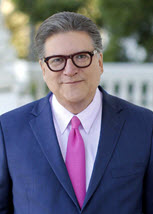
Robert M. Hertzberg
DDemocratic
Co
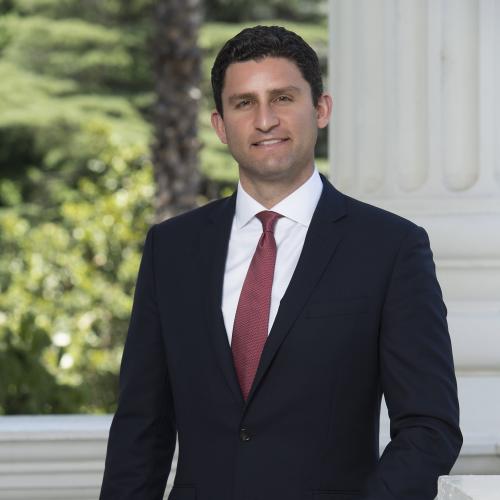
Jesse Gabriel
DDemocratic
Co
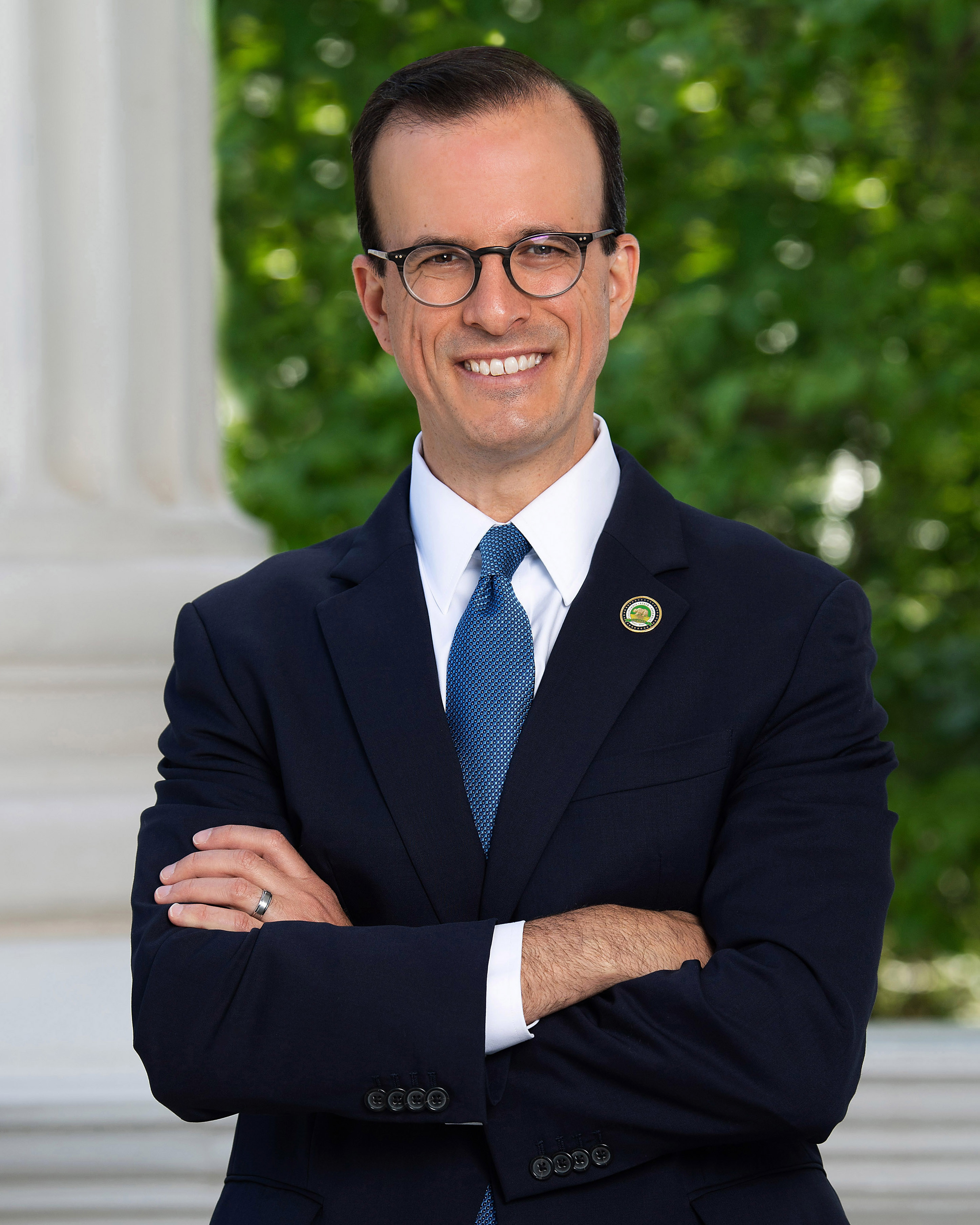
Marc Berman
DDemocratic
Ask Maddy
·
AI policy assistant
Ask Maddy about SB 1065
Scope: CA
Hi! I can help you understand SB 1065. What would you like to know?
Try one of these
i
Maddy answers using official bill text and legislative records. Always verify before sharing.
Sources cited inline