

Communications: Moore Universal Telephone Service Act and internet service providers.
Summary
Under existing law, the Public Utilities Commission has regulatory authority over public utilities, including telephone corporations. The Moore Universal Telephone Service Act requires the commission to annually designate a class of lifeline service necessary to meet minimum residential communications needs, including the ability to originate and receive calls and the ability to access electronic information service, to set the rates and charges for that service, to develop eligibility criteria for that service, and to assess the degree of achievement of universal service, including telephone penetration rates by income, ethnicity, and geography. Lifeline telephone service program rates are required to be set at no more than 50% of either the basic rate for measured service or the basic flat rate service, as applicable, exclusive of federally mandated end user access charges that are available to the residential subscriber. This bill would require the commission to evaluate the extent to which federal reductions in lifeline telephone service subsidies and the lack of access to reliable, affordable broadband service would result in rates limiting access to basic voice service. If the commission finds that federal reductions could result in the loss of basic voice services by increasing costs to California lifeline telephone service subscribers for those services, the bill would require the commission to adjust the state-level subsidies for those services in a manner that ensures that California lifeline telephone service subscribers retain affordable access to basic voice services, as specified. Existing law requires the commission to develop and implement performance reliability standards, for backup power systems installed on the property of residential and small commercial customers by a facilities-based provider of telephony services, with implementation dependent upon the commission determining that the benefits of the standards exceed the costs. Existing law requires the commission, in consultation with the Office of Emergency Services, to open an investigative or other appropriate proceeding to identify the need for telecommunications service systems not on the customer's premises to have backup electricity to enable telecommunications networks to function and to enable the customer to contact a public safety answering point operator during an electrical outage, to determine performance criteria for backup systems, and to determine whether specified recommended best practices for backup systems have been implemented by telecommunications service providers operating in California. If the commission determines it is in the public interest, the commission is required to develop and implement performance reliability standards. This bill would require the commission, in an existing or a new proceeding, to direct every internet service provider, to file an annual emergency operations plan containing certain information with the commission. Under existing law, a violation of the Public Utilities Act or any order, decision, rule, direction, demand, or requirement of the commission is a crime. Because the provisions of this bill would be a part of the act and because a violation of an order, decision, rule, direction, demand, or requirement of the commission implementing its requirements would be a crime, the bill would impose a state-mandated local program. The California Constitution requires the state to reimburse local agencies and school districts for certain costs mandated by the state. Statutory provisions establish procedures for making that reimbursement. This bill would provide that no reimbursement is required by this act for a specified reason. This bill would declare that it is to take effect immediately as an urgency statute.
Bill status
in committee
1 of 4 stages cleared
Introduction
Feb 2020
Committee Review
Floor Vote
Governor
Introduced Feb 18, 2020
Last action Jun 18, 2020
Floor votes
How they voted
No floor votes recorded yet.
Full legislative history
Actions timeline
Total actions
14
Key actions
3
Committee
4
Jun 18, 2020
Upper · Passed
June 18 hearing: Held in committee and under submission.
upper
Jun 2, 2020
Upper · Passed
From committee: Do pass as amended and re-refer to Com. on APPR. (Ayes 10. Noes 3. Page 3594.) (May 26).
upper
Mar 19, 2020
Upper · Passed
March 31 hearing postponed by committee.
upper
Feb 27, 2020
Committee
Referred to Com. on E., U. & C.
upper
Feb 18, 2020
Introduced
Introduced. Read first time. To Com. on RLS. for assignment. To print.
upper
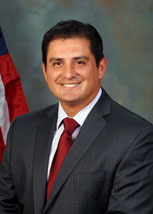
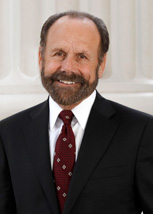
1 primary · 1 co-sponsor
Sponsors
Ask Maddy
·
AI policy assistant
Ask Maddy about SB 1058
Scope: CA
Hi! I can help you understand SB 1058. What would you like to know?
Try one of these
i
Maddy answers using official bill text and legislative records. Always verify before sharing.
Sources cited inline