

Victim compensation: use of excessive force by a peace officer.
Summary
Existing law provides for the compensation of victims and derivative victims of specified types of crimes by the California Victim Compensation Board from the Restitution Fund, a continuously appropriated fund, for specified losses suffered as a result of those crimes. Existing law defines various terms for purposes of these provisions, including "crime," which includes any public offense wherever it may take place that would constitute a misdemeanor or felony. This bill would revise the definition of "crime" to include any public offense described above regardless of whether any suspect is arrested for or charged with the commission of the crime. The bill would also include in the definition of "crime" the use of force by a peace officer that is beyond what is reasonable under the totality of the circumstances, and that causes the victim injury or death, regardless of whether the peace officer is arrested for or charged with the commission of a crime or a public offense. By expanding the types of crime for which compensation can be paid from a continuously appropriated fund, the bill would make an appropriation. Existing law specifies that a person is not eligible for compensation under specified conditions, including, among other things, if the board determines that denial of the claim for compensation is appropriate because of the nature of the victim's involvement in the events leading to the crime, or the involvement of the person whose injury or death gives rise to the application. If the victim is determined to have been involved in the events leading to the qualifying crime, existing law specifies the factors that the board may consider to mitigate that involvement including, among other things, that the victim's injuries were significantly more serious than reasonably could have been expected based on the victim's level of involvement, or that a third party interfered in a manner that was not reasonably foreseeable by the victim. This bill would recast the factors that may be considered in determining whether the victim was involved in the events leading to the qualifying crime. The bill would, notwithstanding those provisions, prohibit the board from denying an application based upon the victim's involvement in the crime if the claim is for injury or death that happened as a result of the use of excessive force by a peace officer. Existing law requires the board to deny an application if it finds that the victim failed to cooperate reasonably with a law enforcement agency in the apprehension and conviction of a criminal committing the crime. This bill would prohibit the board from determining that a victim failed to cooperate with law enforcement based upon their conduct with law enforcement at the scene of the crime or on a hospital following the crime, and specify that lack of cooperation shall not be found solely because a victim delayed in reporting the qualifying crime. The bill would, notwithstanding those provisions, prohibit the board from denying an application based solely upon the victim's failure to cooperate if the claim is for injury or death that happened as a result of the use of excessive force by a peace officer. The bill would prohibit the board from denying an application for a claim based on injuries or death as a result of the use of excessive force by a peace officer based solely on a police report, or the lack thereof, or based upon whether the peace officer was arrested or charged with a crime. The bill would, absent a police report, authorize these claims to be supported by other evidence. The bill would also prohibit the board from denying an application, in whole or in part, based solely upon the contents of a police report, or because a police report was not made by the victim, or based upon whether any suspect was arrested or charged with the qualifying crime. The bill would require the board to consider other evidence to establish that a qualifying crime occurred. This bill would declare that it is to take effect immediately as an urgency statute.
Bill status
passed
3 of 5 stages cleared
Introduction
Feb 2019
Committee Review
Aug 2020
Assembly Passage
May 2019
Senate Passage
Governor
Introduced Feb 19, 2019
Last action Aug 20, 2020
Floor votes · Assembly May 28, 2019
How they voted
52–8
Passed · 11 other
Total votes 71
May 28, 2019
D
Democratic54
90% Yea
I
Independent1
0% Nay
R
Republican16
50% Nay
Vote distribution
All Yea
All Nay
Mixed
No data
Full legislative history
Actions timeline
Total actions
30
Key actions
10
Committee
14
Amendments
4
Aug 20, 2020
Upper · Passed
In committee: Held under submission.
upper
Aug 17, 2020
Committee
In committee: Referred to APPR. suspense file.
upper
Aug 8, 2020
Upper · Passed
From committee: Do pass and re-refer to Com. on APPR. (Ayes 6. Noes 1.) (August 7). Re-referred to Com. on APPR.
upper
Jul 2, 2020
Committee
Re-referred to Com. on PUB. S.
upper
Jun 30, 2020
Committee
Re-referred to Com. on RLS.
upper
Jul 8, 2019
Upper · Passed
In committee: Set, second hearing. Hearing canceled at the request of author.
upper
Jun 24, 2019
Upper · Passed
In committee: Set, first hearing. Hearing canceled at the request of author.
upper
Jun 12, 2019
Committee
Re-referred to Com. on HEALTH.
upper
Jun 6, 2019
Committee
Referred to Com. on RLS.
upper
May 28, 2019
Lower · Passed
Read third time. Passed. Ordered to the Senate. (Ayes 59. Noes 10. Page 2036.)
lower
May 16, 2019
Lower · Passed
Read second time and amended. Ordered returned to second reading.
lower
May 16, 2019
Lower · Passed
From committee: Amend, and do pass as amended. (Ayes 14. Noes 0.) (May 16).
lower
May 15, 2019
Committee
In committee: Set, first hearing. Referred to APPR. suspense file.
lower
May 1, 2019
Committee
Re-referred to Com. on APPR.
lower
Apr 30, 2019
Lower · Passed
Read second time and amended.
lower
Apr 29, 2019
Lower · Passed
From committee: Amend, and do pass as amended and re-refer to Com. on APPR. (Ayes 11. Noes 2.) (April 23).
lower
Apr 10, 2019
Committee
Re-referred to Com. on HEALTH.
lower
Feb 28, 2019
Committee
Referred to Com. on HEALTH.
lower
Feb 20, 2019
Lower · Passed
From printer. May be heard in committee March 22.
lower
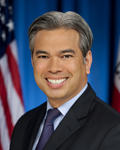
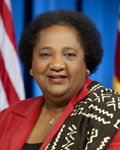
1 primary · 7 co-sponsors
Sponsors






Ask Maddy
·
AI policy assistant
Ask Maddy about AB 767
Scope: CA
Hi! I can help you understand AB 767. What would you like to know?
Try one of these
i
Maddy answers using official bill text and legislative records. Always verify before sharing.
Sources cited inline