

COVID-19: imminent hazard to employees: exposure: notification: serious violations.
Summary
(1) Existing law, the California Occupational Safety and Health Act of 1973 (OSHA) , requires the Division of Occupational Safety and Health, when, in its opinion, a place of employment, machine, device, apparatus, or equipment or any part thereof is in a dangerous condition, is not properly guarded, or is dangerously placed so as to constitute an imminent hazard to employees, to prohibit entry or use, as applicable, and to attach a conspicuous notice of that condition, as specified. OSHA requires that this prohibition be limited to the immediate area in which the imminent hazard exists. OSHA prohibits this notice from being removed except by an authorized representative of the division under certain conditions. OSHA makes a violation of this provision regarding dangerous conditions a crime. This bill would authorize the division, when, in its opinion, a place of employment, operation, or process, or any part thereof, exposes workers to the risk of infection with severe acute respiratory syndrome coronavirus 2 (SARS-CoV-2, also known as COVID-19) , so as to constitute an imminent hazard to employees, to prohibit the performance of that operation or process, or entry into that place of employment. The bill would require the division to provide a notice thereof to the employer, to be posted in a conspicuous place at the place of employment. The bill would require such a prohibition to be limited to the immediate area in which the imminent hazard exists, as specified. The bill would require such a prohibition to be issued in a manner so as not to materially interrupt the performance of critical governmental functions essential to ensuring public health and safety functions or the delivery of electrical power or water. By expanding the scope of a crime, the bill would impose a state-mandated local program. This COVID-19 imminent hazard provision would be repealed on January 1, 2023. (2) Existing law requires an employer to file a report of every occupational injury or occupational illness, as defined, of each employee that results in lost time beyond the date of the injury or illness, and that requires medical treatment beyond first aid, with the Department of Industrial Relations, on a form prescribed by the department. Existing law requires an employer to immediately report a serious occupational injury, illness, or death to the division by telephone or email, as specified. This bill would require a public or private employer or representative of the employer, except as specified, that receives a notice of potential exposure to COVID-19 to provide specified notifications to its employees within one business day of the notice of potential exposure. The bill would require the employer to provide prescribed notice to all employees, and the employers of subcontracted employees, who were on the premises at the same worksite as a qualifying individual, as defined, within the infectious period, as defined, that they may have been exposed to COVID-19. The bill would require notice to the exclusive representative, if any, of notified employees. The bill would require an employer to provide those employees and any exclusive representative with certain information regarding COVID-19-related benefits and options. The bill would require an employer to notify all employees, the employers of subcontracted employees, and any exclusive representative on the disinfection and safety plan that the employer plans to implement and complete per the guidelines of the federal Centers for Disease Control. The bill would require an employer to maintain records of notifications for at least 3 years. The bill would provide for a specified civil penalty for an employer that violates the notification requirements. The bill would define additional terms for its purposes. The bill would require an employer, if the employer or representative of the employer is notified of the number of cases that meet the definition of a COVID-19 outbreak, as defined, within 48 hours, to report prescribed information to the local public health agency in the jurisdiction of the worksite. The bill would require an employer that has an outbreak to continue to give notice to the local health department of any subsequent laboratory-confirmed cases of COVID-19 at the worksite. The bill would exempt a health facility, as defined, from this reporting requirement. The bill would require the State Department of Public Health to make specified information on outbreaks publicly available on its internet website, as specified. The bill would require local public health departments and the division to provide a link to this page on its internet websites. By requiring additional duties from local public health departments, this bill would impose a state-mandated local program. (3) OSHA creates a rebuttable presumption that a "serious violation" exists in a place of employment if the division demonstrates that there is a realistic possibility that death or serious physical harm could result from the actual hazard created by the violation. OSHA requires the division, before issuing a citation alleging that a violation is serious, to make a reasonable attempt to determine and consider certain facts. This OSHA requirement is satisfied if the division sends, at least 15 days before issuing such a citation, a standardized form containing descriptions of the alleged violation the division intends to cite as serious and clearly soliciting the prescribed information. OSHA permits an employer to rebut the presumption, as prescribed, and establishes inferences that may be drawn at hearing with regard to information provided by an employer in rebuttal. This bill would exempt a citation alleging a serious violation relating to SARS-CoV-2 from the precitation standardized form provision and the rebuttal at hearing provision. This exemption would be repealed on January 1, 2023. (4) The California Constitution requires the state to reimburse local agencies and school districts for certain costs mandated by the state. Statutory provisions establish procedures for making that reimbursement. This bill would provide that with regard to certain mandates no reimbursement is required by this act for a specified reason. With regard to any other mandates, this bill would provide that, if the Commission on State Mandates determines that the bill contains costs so mandated by the state, reimbursement for those costs shall be made pursuant to the statutory provisions noted above. (5) Existing constitutional provisions require that a statute that limits the right of access to the meetings of public bodies or the writings of public officials and agencies be adopted with findings demonstrating the interest protected by the limitation and the need for protecting that interest. This bill would make legislative findings to that effect.
Bill status
signed
all 5 stages cleared
Introduction
Feb 2019
Committee Review
Aug 2020
Assembly Passage
May 2019
Senate Passage
Aug 2020
Signed into Law
Sep 2020
Introduced Feb 15, 2019
Signed Sep 17, 2020
Floor votes · Senate Aug 30, 2020 · Assembly May 23, 2019
How they voted
23–8
Passed · 4 other
Total votes 35
Aug 30, 2020
D
Democratic26
88% Yea
R
Republican9
88% Nay
Vote distribution
All Yea
All Nay
Mixed
No data
Full legislative history
Actions timeline
Total actions
33
Key actions
14
Committee
14
Amendments
5
Sep 17, 2020
Signed into law
Approved by the Governor.
legislature
Aug 31, 2020
Lower · Passed
Senate amendments concurred in. To Engrossing and Enrolling. (Ayes 52. Noes 17. Page 5499.).
lower
Aug 31, 2020
Lower · Passed
From committee: That the Senate amendments be concurred in. (Ayes 5. Noes 2.) (August 31).
lower
Aug 30, 2020
Committee
Re-referred to Com. on L. & E. pursuant to Assembly Rule 77.2.
lower
Aug 30, 2020
Introduced
In Assembly. Concurrence in Senate amendments pending.
lower
Aug 30, 2020
Upper · Passed
Read third time. Passed. Ordered to the Assembly. (Ayes 26. Noes 9.).
upper
Aug 25, 2020
Upper · Passed
Read third time and amended. Ordered to second reading.
upper
Aug 20, 2020
Upper · Passed
Read second time and amended. Ordered returned to second reading.
upper
Aug 20, 2020
Upper · Passed
From committee: Amend, and do pass as amended. (Ayes 5. Noes 2.) (August 20).
upper
Aug 13, 2020
Committee
In committee: Referred to APPR. suspense file.
upper
Aug 6, 2020
Upper · Passed
From committee: Do pass and re-refer to Com. on APPR. (Ayes 4. Noes 1.) (August 5). Re-referred to Com. on APPR.
upper
Jul 2, 2020
Committee
Re-referred to Com. on L., P.E. & R.
upper
Jun 30, 2020
Committee
Re-referred to Com. on RLS.
upper
Jun 18, 2019
Upper · Passed
In committee: Set, first hearing. Hearing canceled at the request of author.
upper
Jun 6, 2019
Committee
Referred to Com. on JUD.
upper
May 23, 2019
Lower · Passed
Read third time. Passed. Ordered to the Senate. (Ayes 78. Noes 0. Page 1873.)
lower
May 16, 2019
Lower · Passed
From committee: Do pass. (Ayes 18. Noes 0.) (May 16).
lower
Apr 24, 2019
Committee
In committee: Set, first hearing. Referred to APPR. suspense file.
lower
Apr 2, 2019
Lower · Passed
From committee: Do pass and re-refer to Com. on APPR. with recommendation: To Consent Calendar. (Ayes 12. Noes 0.) (April 2). Re-referred to Com. on APPR.
lower
Mar 27, 2019
Lower · Passed
From committee: Do pass and re-refer to Com. on JUD. with recommendation: To Consent Calendar. (Ayes 8. Noes 0.) (March 26). Re-referred to Com. on JUD.
lower
Feb 28, 2019
Committee
Referred to Coms. on HUM. S. and JUD.
lower
Feb 19, 2019
Lower · Passed
From printer. May be heard in committee March 21.
lower
1 primary · 0 co-sponsors
Sponsors
Role
Legislator
Party
State
District
P
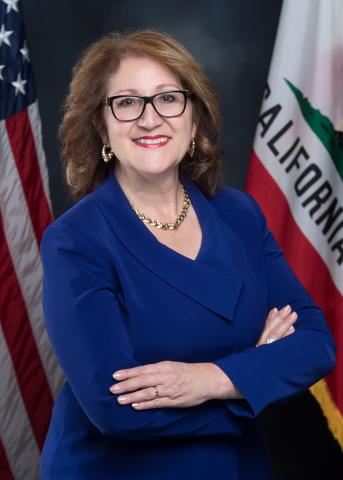
Eloise Reyes
DDemocratic
Ask Maddy
·
AI policy assistant
Ask Maddy about AB 685
Scope: CA
Hi! I can help you understand AB 685. What would you like to know?
Try one of these
i
Maddy answers using official bill text and legislative records. Always verify before sharing.
Sources cited inline