

Property tax assistance: eligibility.
Summary
The Gonsalves-Deukmejian-Petris Senior Citizens Property Tax Assistance Law authorizes individuals who meets specified criteria, including that they either be 62 years of age or older or blind or disabled, as defined, to file with the Franchise Tax Board a claim for assistance. That law authorizes assistance in an amount equal to a percentage, determined as provided, of either the property taxes accrued and paid by the claimant on their residential dwelling or, with respect to a claimant renting their residence, the applicable statutory property tax equivalent. That law prohibits assistance if the claimant's gross household income exceeds $35,251, adjusted as provided. That law requires a claim for assistance under these provisions, and a specified additional declaration applicable in the case of assistance used to pay delinquent property taxes, to be under penalty of perjury. This bill, until December 1, 2025, would recast these provisions as the Gonsalves-Deukmejian-Petris Property Tax Assistance Law and authorize any individual, without regard to age, blindness, or disability, who otherwise meets the above-described criteria to file a claim for assistance. The bill would decrease the maximum gross household income for a claimant to qualify for assistance from $35,251 to $30,000, adjusted as provided, until December 1, 2025, and would thereafter repeal this requirement. The bill would also make various conforming changes. The bill would make specified findings and declarations regarding the objectives, goals, and purposes of the expanded property tax assistance provided under its provisions. In this regard, the bill would require the Legislative Analyst to review the effectiveness of this property tax assistance and authorize the Legislative Analyst to collect specified data from the Franchise Tax Board and specified other state governmental entities. By expanding eligibility for property tax assistance under these provisions, thereby expanding the scope of the crime of perjury, this bill would impose a state-mandated local program. The California Constitution requires the state to reimburse local agencies and school districts for certain costs mandated by the state. Statutory provisions establish procedures for making that reimbursement. This bill would provide that no reimbursement is required by this act for a specified reason.
Bill status
failed
1 of 4 stages cleared
Introduction
Feb 2019
Committee Review
Floor Vote
Governor
Introduced Feb 12, 2019
Last action Feb 3, 2020
Floor votes
How they voted
No floor votes recorded yet.
Full legislative history
Actions timeline
Total actions
8
Key actions
0
Committee
4
Feb 3, 2020
Assembly · Failed
From committee: Filed with the Chief Clerk pursuant to Joint Rule 56.
Jan 31, 2020
Assembly · Failed
Died pursuant to Art. IV, Sec. 10(c) of the Constitution.
Apr 22, 2019
Assembly · Referred to committee
Re-referred to Com. on REV. & TAX.
Mar 18, 2019
Assembly · Reported by committee
In committee: Hearing for testimony only.
Feb 21, 2019
Assembly · Referred to committee
Referred to Com. on REV. & TAX.
Feb 13, 2019
Assembly · Reported by committee
From printer. May be heard in committee March 15.
1 primary · 0 co-sponsors
Sponsors
Role
Legislator
Party
State
District
P
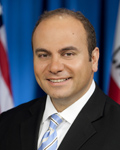
Adrin Nazarian
DDemocratic
Ask Maddy
·
AI policy assistant
Ask Maddy about AB 492
Scope: CA
Hi! I can help you understand AB 492. What would you like to know?
Try one of these
i
Maddy answers using official bill text and legislative records. Always verify before sharing.
Sources cited inline