

The California Cannabis Research Program.
Summary
(1) If the Regents of the University of California accept the responsibility, existing law requires the University of California to establish the California Cannabis Research Program, also sometimes referred to as the California Marijuana Research Program or the Center for Medicinal Cannabis Research, in order to develop and conduct studies intended to ascertain the general medical safety and efficacy of cannabis, among other duties. Existing law, the Control, Regulate and Tax Adult Use of Marijuana Act (AUMA) , an initiative statute approved by the voters at the November 8, 2016, statewide general election as Proposition 64, among other things, establishes the California Cannabis Tax Fund as a continuously appropriated fund consisting of specified taxes, interest, penalties, and other amounts imposed by AUMA. AUMA requires, after other specified disbursements are made from the fund, the Controller to disburse $2,000,000 to the University of California San Diego Center for Medicinal Cannabis Research. This bill would specify that the program is hosted by the Center for Medicinal Cannabis Research. The bill would authorize the program to cultivate cannabis for its use in research, pursuant to applicable federal and state laws and regulations. The bill would expand the purview of the program, which is funded by the California Cannabis Tax Fund, to include the study of naturally occurring constituents of cannabis and synthetic compounds and to require the program to develop and conduct studies to examine the effects of cannabis, cannabinoids, and related constituents, and other behavioral health outcomes. The bill would also authorize the controlled clinical trials to focus on examining testing methods for detecting harmful contaminants in cannabis, including mold and bacteria. The bill would require funds from the California Cannabis Tax Fund to be used only as authorized by the AUMA. Existing law authorizes the program to solicit, apply for, and accept funds from foundations, private individuals, and all other funding sources that can be used to expand the scope or timeframe of the cannabis studies. Existing law prohibits the program from accepting funds that are offered with any conditions other than that the funds be used to study the efficacy and safety of cannabis as part of medical treatment. Existing law requires that a donor be advised that funds given for these purposes will be used to study both the possible benefits and detriments of cannabis and that the donor will have no control over the use of the funds. This bill would delete the requirement that a donor be given this advisement. Existing law requires the program to report to the Legislature every 6 months detailing the progress of the studies. This bill would, instead, require the program to report to the Legislature every 24 months. (2) This bill would declare that it is to take effect immediately as an urgency statute.
Bill status
signed
all 5 stages cleared
Introduction
Feb 2019
Committee Review
Aug 2019
Assembly Passage
Apr 2019
Senate Passage
Sep 2019
Signed into Law
Oct 2019
Introduced Feb 7, 2019
Signed Oct 12, 2019
Floor votes · Senate Sep 5, 2019 · Assembly Apr 11, 2019
How they voted
36–0
Passed · 1 other
Total votes 37
Sep 5, 2019
D
Democratic28
100% Yea
R
Republican9
88% Yea
Vote distribution
All Yea
All Nay
Mixed
No data
Full legislative history
Actions timeline
Total actions
23
Key actions
10
Committee
8
Amendments
3
Oct 12, 2019
Signed into law
Approved by the Governor.
legislature
Sep 9, 2019
Lower · Passed
Senate amendments concurred in. To Engrossing and Enrolling. (Ayes 79. Noes 0. Page 3138.).
lower
Sep 6, 2019
Introduced
In Assembly. Concurrence in Senate amendments pending. May be considered on or after September 8 pursuant to Assembly Rule 77.
lower
Sep 5, 2019
Upper · Passed
Read third time. Urgency clause adopted. Passed. Ordered to the Assembly. (Ayes 39. Noes 0. Page 2587.).
upper
Aug 30, 2019
Upper · Passed
From committee: Do pass. (Ayes 7. Noes 0.) (August 30).
upper
Aug 12, 2019
Committee
In committee: Referred to APPR. suspense file.
upper
Jun 18, 2019
Upper · Passed
In committee: Set, first hearing. Hearing canceled at the request of author.
upper
Jun 10, 2019
Upper · Passed
From committee: Amend, and do pass as amended and re-refer to Com. on APPR. (Ayes 9. Noes 0.) (June 3).
upper
Apr 24, 2019
Committee
Referred to Com. on B., P. & E.D.
upper
Apr 11, 2019
Lower · Passed
Read third time. Urgency clause adopted. Passed. Ordered to the Senate. (Ayes 72. Noes 0. Page 1189.).
lower
Apr 3, 2019
Lower · Passed
From committee: Do pass. To Consent Calendar. (Ayes 17. Noes 0.) (April 3).
lower
Mar 26, 2019
Lower · Passed
From committee: Do pass and re-refer to Com. on APPR. (Ayes 20. Noes 0.) (March 26). Re-referred to Com. on APPR.
lower
Feb 15, 2019
Committee
Referred to Com. on B. & P.
lower
Feb 8, 2019
Lower · Passed
From printer. May be heard in committee March 10.
lower
1 primary · 3 co-sponsors
Sponsors
Role
Legislator
Party
State
District
P
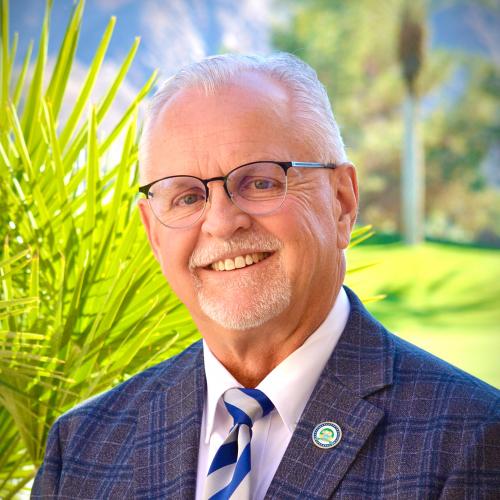
Tom Lackey
RRepublican
Co
JW
Jim Wood
DDemocratic
Co
Ken Cooley
DDemocratic
Co

Scott Wilk
RRepublican
Ask Maddy
·
AI policy assistant
Ask Maddy about AB 420
Scope: CA
Hi! I can help you understand AB 420. What would you like to know?
Try one of these
i
Maddy answers using official bill text and legislative records. Always verify before sharing.
Sources cited inline