

Peace officers: deadly force.
Summary
Existing law authorizes a peace officer to make an arrest pursuant to a warrant or based upon probable cause, as specified. Under existing law, an arrest is made by the actual restraint of the person or by submission to the custody of the arresting officer. Existing law authorizes a peace officer to use reasonable force to effect the arrest, to prevent escape, or to overcome resistance. Existing law does not require an officer to retreat or desist from an attempt to make an arrest because of resistance or threatened resistance of the person being arrested. Under existing law, a homicide committed by a peace officer is justifiable when necessarily committed in arresting a person who has committed a felony and the person is fleeing or resisting such arrest. Existing case law deems such a homicide to be a seizure under the Fourth Amendment of the Constitution of the United States, and as such, requires the actions to be reasonable. This bill would redefine the circumstances under which a homicide by a peace officer is deemed justifiable to include when the officer reasonably believes, based on the totality of the circumstances, that deadly force is necessary to defend against an imminent threat of death or serious bodily injury to the officer or to another person, or to apprehend a fleeing person for a felony that threatened or resulted in death or serious bodily injury, if the officer reasonably believes that the person will cause death or serious bodily injury to another unless the person is immediately apprehended. The bill would also affirmatively prescribe the circumstances under which a peace officer is authorized to use deadly force to effect an arrest, to prevent escape, or to overcome resistance.
Bill status
signed
all 5 stages cleared
Introduction
Feb 2019
Committee Review
Jul 2019
Assembly Passage
May 2019
Senate Passage
Jul 2019
Signed into Law
Aug 2019
Introduced Feb 6, 2019
Signed Aug 19, 2019
Floor votes · Senate Jul 8, 2019 · Assembly May 29, 2019
How they voted
30–1
Passed · 3 other
Total votes 34
Jul 8, 2019
D
Democratic26
100% Yea
R
Republican8
50% Yea
Vote distribution
All Yea
All Nay
Mixed
No data
Full legislative history
Actions timeline
Total actions
20
Key actions
7
Committee
8
Aug 19, 2019
Signed into law
Approved by the Governor.
legislature
Jul 10, 2019
Lower · Passed
In Assembly. Ordered to Engrossing and Enrolling.
lower
Jul 8, 2019
Upper · Passed
Read third time. Passed. Ordered to the Assembly. (Ayes 34. Noes 3. Page 1990.).
upper
Jun 18, 2019
Upper · Passed
From committee: Do pass. (Ayes 6. Noes 0.) (June 18).
upper
Jun 12, 2019
Committee
Referred to Com. on PUB. S.
upper
May 29, 2019
Lower · Passed
Read third time. Passed. Ordered to the Senate. (Ayes 68. Noes 0. Page 2068.)
lower
May 24, 2019
Committee
Re-referred to Com. on RLS.
lower
Apr 10, 2019
Lower · Passed
From committee: Do pass and re-refer to Com. on RLS. (Ayes 6. Noes 2.) (April 9). Re-referred to Com. on RLS.
lower
Mar 28, 2019
Committee
Re-referred to Com. on PUB. S.
lower
Feb 15, 2019
Committee
Referred to Com. on PUB. S.
lower
Feb 7, 2019
Lower · Passed
From printer. May be heard in committee March 9.
lower
1 primary · 11 co-sponsors
Sponsors
Role
Legislator
Party
State
District
P

Shirley N. Weber
DDemocratic
Co

Anthony Rendon
DDemocratic
Co

Chris Holden
DDemocratic
Co

Holly J. Mitchell
DDemocratic
Co

Jose Medina
DDemocratic
Co

Kevin McCarty
DDemocratic
Co

Mark Stone
DDemocratic
Co

Nancy Skinner
DDemocratic
Co
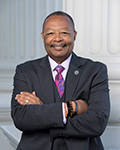
Reggie Jones-Sawyer
DDemocratic
Co

Steve Bradford
DDemocratic
Co
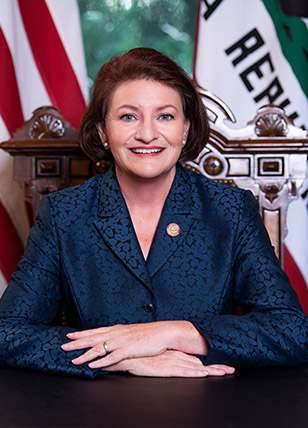
Toni Atkins
DDemocratic

Ask Maddy
·
AI policy assistant
Ask Maddy about AB 392
Scope: CA
Hi! I can help you understand AB 392. What would you like to know?
Try one of these
i
Maddy answers using official bill text and legislative records. Always verify before sharing.
Sources cited inline