

Foster care.
Summary
(1) Existing law generally provides for the placement of foster youth in various placement settings, and governs the provision of child welfare services, which is defined to mean public social services that are directed toward the accomplishment of specified purposes, including protecting and promoting the welfare of all children, preventing the unnecessary separation of children from their families, and restoring to their families children who have been removed. Existing federal law, the Family First Prevention Services Act of 2018 (federal FFPSA) , among other things, provides states with an option to use federal funds under Title IV of the federal Social Security Act to provide mental health and substance abuse prevention and treatment services and in-home parent skill-based programs to a child who is a candidate for foster care or a child in foster care who is a pregnant or parenting foster youth, as specified. This bill would, among other things, state the intent of the Legislature to exercise the option afforded to states in the federal FFPSA to receive federal financial participation for the above-described prevention services that are provided for a candidate for foster care or a pregnant or parenting foster youth, and the allowable costs for the proper and efficient administration of the program. The bill would authorize a county, or Indian tribe, consortium of tribes, or tribal organization that has entered into an agreement with the state regarding the care and custody of Indian children to elect to provide those prevention services, as prescribed. The bill would require the State Department of Social Services to have oversight of those prevention services and to seek all necessary federal approvals to obtain federal financial participation for those prevention services. (2) Existing law, the California Community Care Facilities Act, provides for the licensing and regulation of community care facilities, including short-term residential therapeutic programs, by the State Department of Social Services, and defines short-term residential therapeutic program as a residential facility licensed by the department and operated by any public agency or private organization that provides an integrated program of specialized and intensive care and supervision, services and supports, treatment, and short-term, 24-hour care and supervision to children, including foster children. A violation of the act is a misdemeanor. The federal FFPSA, among other things, prohibits foster care maintenance payments to be made on behalf of a child placed in a qualified residential treatment program, among other childcare institutions, unless a court assesses the placement within 30 days of the placement being made and the program meets specified requirements, including the utilization of a trauma-informed treatment model, the participation of family members in the child's treatment program, and the provision of registered or licensed nursing staff and discharge planning and postdischarge supports and services. The federal FFPSA also requires, in the case of placement in a qualified residential treatment program, an assessment and determination by a qualified individual of which placement would best meet the needs of the child, and documentation in the child's case plan of these assessments, among other things. This bill would make various changes to provisions relating to the licensing of, and the placement of foster youth in, short-term residential therapeutic programs in order to conform those provisions to the above-described federal FFPSA requirements, including requiring each county to designate an individual or individuals to serve as a qualified individual, requiring county social workers and probation officers to include certain information in specified social studies, reports, and case plans, and establishing a process for the juvenile court to review the placement of a dependent child, ward, or nonminor dependent in a short-term residential therapeutic program. By creating requirements for short-term residential therapeutic programs, the violation of which is a crime, and by imposing new duties on county officials, the bill would impose a state-mandated local program. (3) The bill would authorize the department to implement, interpret, or make specific the provisions of this act through all-county letters or similar written instructions from the department until regulations are adopted. (4) The California Constitution requires the state to reimburse local agencies and school districts for certain costs mandated by the state. Statutory provisions establish procedures for making that reimbursement. This bill would provide that with regard to certain mandates no reimbursement is required by this act for specified reasons. With regard to any other mandates, this bill would provide that, if the Commission on State Mandates determines that the bill contains costs so mandated by the state, reimbursement for those costs shall be made pursuant to the statutory provisions noted above.
Bill status
in committee
1 of 4 stages cleared
Introduction
Feb 2020
Committee Review
Floor Vote
Governor
Introduced Feb 21, 2020
Last action May 7, 2020
Floor votes
How they voted
No floor votes recorded yet.
Full legislative history
Actions timeline
Total actions
5
Key actions
0
Committee
3
May 7, 2020
Assembly · Reported by committee
From committee: Do pass and re-refer to Com. on APPR. with recommendation: To Consent Calendar. (Ayes 8. Noes 0.) (May 7). Re-referred to Com. on APPR.
Apr 24, 2020
Assembly · Referred to committee
Referred to Com. on HUM. S.
Feb 22, 2020
Assembly · Reported by committee
From printer. May be heard in committee March 23.
Feb 21, 2020
Assembly · Introduced
Introduced. To print.
1 primary · 0 co-sponsors
Sponsors
Role
Legislator
Party
State
District
P
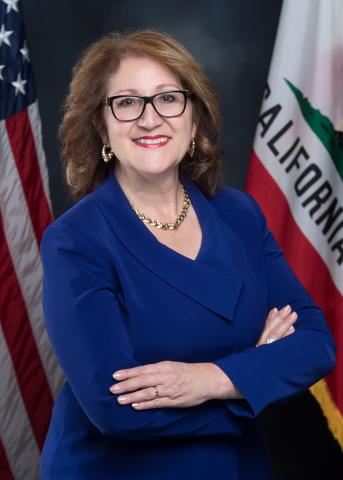
Eloise Reyes
DDemocratic
Ask Maddy
·
AI policy assistant
Ask Maddy about AB 3272
Scope: CA
Hi! I can help you understand AB 3272. What would you like to know?
Try one of these
i
Maddy answers using official bill text and legislative records. Always verify before sharing.
Sources cited inline