

Community colleges: College and Career Access Pathways partnerships.
Summary
Existing law authorizes the governing board of a community college district to enter into a College and Career Access Pathways (CCAP) partnership with the governing board of a school district or the governing body of a charter school with the goal of developing seamless pathways from high school to community college for career technical education or preparation for transfer, improving high school graduation rates, or helping high school pupils achieve college and career readiness. Existing law requires the partnership agreement to outline the terms of the partnership, as specified, and to establish protocols for information sharing, joint facilities use, and parental consent for high school pupils to enroll in community college courses. Existing law requires the governing board of each district, at an open public meeting of that board, to present the dual enrollment partnership agreement as an informational item, as a condition of, and before adopting, a CCAP partnership agreement. Existing law requires the governing board of each district, at a subsequent open public meeting of that board, to take comments from the public and approve or disapprove the proposed agreement. Existing law authorizes a community college district participating in a CCAP partnership to assign priority for enrollment and course registration to a pupil seeking to enroll in a community college course that is required for the pupil's CCAP partnership program that is equivalent to the priority assigned to a pupil attending a middle college high school and consistent with specified middle college high school provisions. Existing law repeals these provisions on January 1, 2022. This bill would require those protocols described above to require a high school pupil participating under a CCAP partnership to submit only one parental consent form and principal recommendation, and would require the Chancellor of the California Community Colleges, on or before July 31, 2020, to revise the special part-time student application process to allow a pupil to complete one application, for the duration of the pupil's participation under the CCAP partnership. The bill would eliminate the requirement imposed on the governing board of each district entering into a CCAP partnership agreement to present the dual enrollment partnership agreement as an informational item at a separate open public meeting of that board before taking public comment and acting to approve or disapprove the proposed agreement. The bill would provide that units completed by a pupil pursuant to a CCAP agreement may count towards determining a pupil's registration priority for enrollment and course registration at a community college. The bill would require the CCAP partnership agreement to include a plan, instead of a certification, by the participating community college district to ensure specified conditions are met. The bill would extend the operation of the CCAP partnership provisions until January 1, 2027. This bill would incorporate additional changes to Section 76004 of the Education Code proposed by SB 586 to be operative only if this bill and SB 586 are enacted and this bill is enacted last.
Bill status
signed
all 5 stages cleared
Introduction
Dec 2018
Committee Review
Jun 2019
Assembly Passage
May 2019
Senate Passage
Sep 2019
Signed into Law
Oct 2019
Introduced Dec 3, 2018
Signed Oct 4, 2019
Floor votes · Senate Sep 10, 2019 · Assembly May 28, 2019
How they voted
37–0
Passed
Total votes 37
Sep 10, 2019
D
Democratic28
100% Yea
R
Republican9
100% Yea
Vote distribution
All Yea
All Nay
Mixed
No data
Full legislative history
Actions timeline
Total actions
28
Key actions
14
Committee
8
Amendments
9
Oct 4, 2019
Signed into law
Approved by the Governor.
legislature
Sep 11, 2019
Lower · Passed
Senate amendments concurred in. To Engrossing and Enrolling. (Ayes 78. Noes 0. Page 3401.).
lower
Sep 10, 2019
Introduced
In Assembly. Concurrence in Senate amendments pending. May be considered on or after September 12 pursuant to Assembly Rule 77.
lower
Sep 10, 2019
Upper · Passed
Read third time. Passed. Ordered to the Assembly. (Ayes 40. Noes 0. Page 2765.).
upper
Sep 6, 2019
Upper · Passed
Read third time and amended. Ordered to second reading.
upper
Aug 30, 2019
Upper · Passed
Read second time and amended. Ordered returned to second reading.
upper
Aug 30, 2019
Upper · Passed
From committee: Amend, and do pass as amended. (Ayes 7. Noes 0.) (August 30).
upper
Jun 24, 2019
Committee
In committee: Referred to APPR. suspense file.
upper
Jun 12, 2019
Upper · Passed
From committee: Do pass and re-refer to Com. on APPR. with recommendation: To Consent Calendar. (Ayes 7. Noes 0.) (June 12). Re-referred to Com. on APPR.
upper
Jun 6, 2019
Committee
Referred to Com. on ED.
upper
May 28, 2019
Lower · Passed
Read third time. Passed. Ordered to the Senate. (Ayes 76. Noes 0. Page 2032.)
lower
May 16, 2019
Lower · Passed
Read second time and amended. Ordered returned to second reading.
lower
May 16, 2019
Lower · Passed
From committee: Amend, and do pass as amended. (Ayes 18. Noes 0.) (May 16).
lower
Apr 24, 2019
Committee
In committee: Set, first hearing. Referred to APPR. suspense file.
lower
Apr 11, 2019
Lower · Passed
From committee: Do pass and re-refer to Com. on APPR. with recommendation: To Consent Calendar. (Ayes 6. Noes 0.) (April 10). Re-referred to Com. on APPR.
lower
Mar 11, 2019
Committee
Re-referred to Com. on ED.
lower
Mar 7, 2019
Lower · Passed
Read second time and amended.
lower
Mar 6, 2019
Lower · Passed
From committee: Amend, and do pass as amended and re-refer to Com. on ED. (Ayes 11. Noes 0.) (March 5).
lower
Jan 17, 2019
Committee
Referred to Coms. on HIGHER ED. and ED.
lower
Dec 4, 2018
Lower · Passed
From printer. May be heard in committee January 3.
lower
1 primary · 2 co-sponsors
Sponsors
Role
Legislator
Party
State
District
P

Chris Holden
DDemocratic
Co

Cecilia Aguiar-Curry
DDemocratic
Co
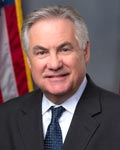
Jim Patterson
RRepublican
Ask Maddy
·
AI policy assistant
Ask Maddy about AB 30
Scope: CA
Hi! I can help you understand AB 30. What would you like to know?
Try one of these
i
Maddy answers using official bill text and legislative records. Always verify before sharing.
Sources cited inline