

False campaign speech and online platform disclosures.
Summary
Existing law, until January 1, 2023, prohibits a person, committee, or other entity, within 60 days of an election at which a candidate for elective office will appear on the ballot, from distributing with actual malice materially deceptive audio or visual media of the candidate with the intent to injure the candidate's reputation or to deceive a voter into voting for or against the candidate, unless the media includes a disclosure stating that the media has been manipulated. This bill, until January 1, 2025, would prohibit a committee, within 60 days of an election at which a candidate or measure will appear on the ballot, from distributing, with actual malice, a false material statement of fact relating to the candidate or measure with the intent to deceive a voter into voting for or against the candidate or measure. The bill would authorize a person to seek injunctive or other equitable relief, and general or special damages, and would authorize the court to award a prevailing party reasonable attorney's fees and costs. The Political Reform Act of 1974 provides for the comprehensive regulation of campaign financing and activities by the Fair Political Practices Commission. Under the act, political advertisements on online platforms are required to contain certain disclosure statements. This bill would require an online platform to maintain and make available for online public inspection a description of the audience requested by the committee and the types of personal information, as defined, used by the online platform to target the advertisement, including use by the online platform of characteristics such as age, gender, race, or other protected classifications under law. The online platform's chief executive officer, chief financial officer, chief operating officer, chief privacy officer, or the equivalent position of any of these officers, if applicable, would be required to personally certify, under penalty of perjury, that to their knowledge the online platform has correctly disclosed all activity under this law. By expanding the crime of perjury, the bill would impose a state-mandated local program. In addition, because a violation of the act is subject to criminal penalties, the bill would impose a state-mandated local program by expanding the act's criminal penalties. The California Constitution requires the state to reimburse local agencies and school districts for certain costs mandated by the state. Statutory provisions establish procedures for making that reimbursement. This bill would provide that no reimbursement is required by this act for a specified reason. The Political Reform Act of 1974, an initiative measure, provides that the Legislature may amend the act to further the act's purposes upon a 23 vote of each house of the Legislature and compliance with specified procedural requirements. This bill would declare that it furthers the purposes of the act.
Bill status
in committee
1 of 4 stages cleared
Introduction
Feb 2020
Committee Review
Floor Vote
Governor
Introduced Feb 21, 2020
Last action Jul 28, 2020
Floor votes
How they voted
No floor votes recorded yet.
Full legislative history
Actions timeline
Total actions
6
Key actions
0
Committee
3
Jul 28, 2020
Assembly · Referred to committee
Re-referred to Com. on E. & R.
Jun 29, 2020
Assembly · Referred to committee
Referred to Com. on E. & R.
Feb 22, 2020
Assembly · Reported by committee
From printer. May be heard in committee March 23.
Feb 21, 2020
Assembly · Introduced
Introduced. To print.
1 primary · 0 co-sponsors
Sponsors
Role
Legislator
Party
State
District
P
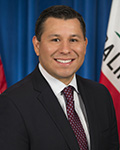
Eduardo Garcia
DDemocratic
Ask Maddy
·
AI policy assistant
Ask Maddy about AB 2885
Scope: CA
Hi! I can help you understand AB 2885. What would you like to know?
Try one of these
i
Maddy answers using official bill text and legislative records. Always verify before sharing.
Sources cited inline