

Sanctuary State Contracting Act.
Summary
Existing law, subject to certain exceptions, prohibits state and local law enforcement agencies, including school police and security departments, from using money or personnel to investigate, interrogate, detain, detect, or arrest persons for immigration enforcement purposes, as specified, and, subject to certain exceptions, proscribes other activities or conduct in connection with immigration enforcement by law enforcement agencies. Existing law requires, by October 1, 2018, the Attorney General, in consultation with the appropriate stakeholders, to publish model policies limiting assistance with immigration enforcement to the fullest extent possible for use by public schools, public libraries, health facilities operated by the state or a political subdivision of the state, and courthouses, among others. Existing law requires, among others, all public schools, health facilities operated by the state or a political subdivision of the state, and courthouses to implement the model policy, or an equivalent policy. Existing law also requires law enforcement agencies to report to the Department of Justice (DOJ) annually regarding transfers of persons to immigration authorities and requires the Attorney General to publish guidance, audit criteria, and training recommendations regarding state and local law enforcement databases, for purposes of limiting the availability of information for immigration enforcement, as specified. This bill, the Sanctuary State Contracting Act, would, subject to specified exceptions, prohibit a state agency from entering into a new, amended, or extended contract or agreement with any person that appears on a list published by the Department of General Services (DGS) of persons that DGS determines provide data broker or extreme vetting services to a federal immigration agency. The bill would define various terms for these purposes. The bill would require DGS to develop or contract to develop the list no later than January 1, 2022, and to update it every 180 days thereafter, in accordance with specified requirements, including providing a person proposed to be included on the list with notice and an opportunity to provide comment, as provided. If the person certifies under penalty of perjury that the person does not provide data broker or extreme vetting services to a federal immigration agency, the bill would prohibit DGS from including that person on the list. The bill would authorize DOJ to initiate, and require it to receive and investigate, all complaints regarding violations of these provisions and require DOJ to issue written findings regarding alleged violations and notify any affected state agency. The bill would make a violation of its provisions subject to specified civil and criminal penalties. By expanding the scope of the crime of perjury, and by imposing additional criminal penalties for violation of these provisions, this bill would impose a state-mandated local program. The California Constitution requires the state to reimburse local agencies and school districts for certain costs mandated by the state. Statutory provisions establish procedures for making that reimbursement. This bill would provide that no reimbursement is required by this act for a specified reason.
Bill status
in committee
1 of 4 stages cleared
Introduction
Feb 2020
Committee Review
Floor Vote
Governor
Introduced Feb 20, 2020
Last action May 5, 2020
Floor votes
How they voted
No floor votes recorded yet.
Full legislative history
Actions timeline
Total actions
5
Key actions
1
Committee
3
May 5, 2020
Committee
Re-referred to Com. on A. & A.R.
lower
Apr 24, 2020
Committee
Referred to Com. on A. & A.R.
lower
Feb 21, 2020
Lower · Passed
From printer. May be heard in committee March 22.
lower
1 primary · 0 co-sponsors
Sponsors
Role
Legislator
Party
State
District
P
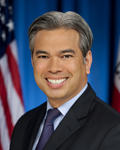
Rob Bonta
DDemocratic
Ask Maddy
·
AI policy assistant
Ask Maddy about AB 2597
Scope: CA
Hi! I can help you understand AB 2597. What would you like to know?
Try one of these
i
Maddy answers using official bill text and legislative records. Always verify before sharing.
Sources cited inline