

The parent and child relationship.
Summary
(1) The Uniform Parentage Act defines the parent and child relationship as the legal relationship existing between a child and the child's parents, and provides rebuttable presumptions as to the parentage of a child born under the circumstances of conception through assisted reproduction using donated ova, sperm, or both. The act defines "assisted reproduction" for these purposes to mean conception by any means other than sexual intercourse. This bill would establish that a provider of an embryo for use in assisted reproduction to an intended parent who is not the provider's spouse or nonmarital partner is treated in law as if the provider is not the natural parent of a child thereby conceived unless the court finds satisfactory evidence that the provider and the intended parent intended for the provider to be a parent. If a donated embryo includes ova or sperm from a person other than a provider of the embryo, the bill would require that person's consent to the donation unless the person has executed a writing to consent, waive, or relinquish their right to the embryo, or as otherwise ordered by a court of law. (2) Existing law permits a proceeding to be brought for the purpose of having a child under 18 years of age declared free from the custody and control of either or both parents when the child's parent or parents have been convicted of a felony of a nature that proves the unfitness of the parent or parents to have future custody and control of the child. Existing law authorizes the court to consider the parent's criminal record prior to the felony conviction for these purposes. This bill instead would require the court to consider the parent's criminal record, and would not restrict that consideration to the period prior to the felony conviction. Existing law authorizes specified individuals to provide the court with a written recommendation of the proper disposition to be made in the best interest of the child, and specifies the contents of that report. This bill would recast and revise those provisions and would add to the required contents of the report a summary of the child's past and current living circumstances and residence history, a background summary regarding each nonagency party to the case, and a recommendation whether granting or denying the petition would serve the child's best interest. The bill would require each party to cooperate with the investigation. (3) Existing law authorizes an adoption request for the adoption of a nondependent minor to be filed with the court in the county in which one of specified criteria applies and sets forth those individuals who may file an adoption request. Under existing law, an order of adoption is required to contain the child's adopted name, but not the name of the child before the adoption. This bill would add to the list of persons authorized to file an adoption request a person named in a court order terminating parental rights as the child's legal guardian or prospective adoptive parent. The bill would require the adoption order to include both the child's adopted name and the name of the child before the adoption. The bill would replace references to an adoption petition and refer instead to an adoption request. (4) Existing law declares that some adoptive children may benefit from contact with birth relatives, as specified, after being adopted, and that postadoption contact agreements are intended to ensure children of an achievable level of continuing contact when contact is beneficial to the children and the agreements are voluntarily executed by the parties. Existing law requires the Judicial Council to adopt rules of court and forms for motions to enforce, terminate, or modify postadoption contact agreements. This bill would specify the party responsible for filing the executed postadoption contact agreement with the court prior to the finalization of the adoption, in the case of agency adoptions, independent adoptions, and stepparent adoptions. If the responsible person or entity fails to file the executed postadoption contact agreement with the court prior to the finalization of the adoption, the bill would authorize any party to file the executed agreement in the court that finalized the adoption, as specified. The bill would make related conforming changes. (5) Under existing law, when a parent is seeking to relinquish a child for adoption, the department or agency is required to ask the child and the child's parent or custodian whether the child is, or may be, a member of, or eligible for membership in an Indian tribe or whether the child has been identified as a member of an Indian organization, and, if so, to obtain specified additional information and notify the Indian tribe of the right to intervene in the proceeding on its own behalf or on behalf of a tribal member relative of the child. Existing law specifies procedures under which an Indian child may be relinquished for adoption, in compliance with the federal Indian Child Welfare Act (ICWA) . Existing department regulations require an adoption agency to inform all parents of the option to place a holding period on the filing of a signed relinquishment, during which time the parent is permitted to revoke the relinquishment. This bill would codify those regulations and would further require the agency, if the child is, or may be, a member of, or eligible for membership in, a tribal organization, to hold the signed relinquishment form until it is determined, as specified, whether the child is subject to the ICWA, in which case the agency would be required to void the relinquishment and inform the parent that they may proceed with relinquishment of the Indian child in accordance with the applicable provisions of existing law or request the return of the Indian child, as specified. By imposing additional requirements on county adoption agencies, the bill would create a state-mandated local program. (6) Existing law provides, for purposes of intestate succession, that adoption severs the parent-child relationship. This bill would except from that requirement a final adoption order that provides otherwise. (7) The California Constitution requires the state to reimburse local agencies and school districts for certain costs mandated by the state. Statutory provisions establish procedures for making that reimbursement. This bill would provide that, if the Commission on State Mandates determines that the bill contains costs mandated by the state, reimbursement for those costs shall be made pursuant to the statutory provisions noted above.
Bill status
in committee
1 of 4 stages cleared
Introduction
Feb 2020
Committee Review
Floor Vote
Governor
Introduced Feb 18, 2020
Last action May 11, 2020
Floor votes
How they voted
No floor votes recorded yet.
Full legislative history
Actions timeline
Total actions
9
Key actions
0
Committee
6
May 11, 2020
Assembly · Reported by committee
In committee: Set, first hearing. Hearing canceled at the request of author.
May 5, 2020
Assembly · Referred to committee
Re-referred to Com. on JUD.
Mar 17, 2020
Assembly · Reported by committee
In committee: Hearing postponed by committee.
Mar 12, 2020
Assembly · Referred to committee
Re-referred to Com. on JUD.
Feb 24, 2020
Assembly · Referred to committee
Referred to Com. on JUD.
Feb 19, 2020
Assembly · Reported by committee
From printer. May be heard in committee March 20.
1 primary · 0 co-sponsors
Sponsors
Role
Legislator
Party
State
District
P
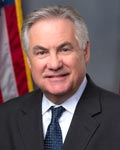
Jim Patterson
RRepublican
Ask Maddy
·
AI policy assistant
Ask Maddy about AB 2390
Scope: CA
Hi! I can help you understand AB 2390. What would you like to know?
Try one of these
i
Maddy answers using official bill text and legislative records. Always verify before sharing.
Sources cited inline