

Transportation electrification: electric vehicle charging ports.
Summary
Existing law, enacted as part of the Clean Energy and Pollution Reduction Act of 2015, requires the Public Utilities Commission (PUC) , in consultation with the State Energy Resources Conservation and Development Commission (Energy Commission) and the State Air Resources Board, to direct electrical corporations to file applications for programs and investments to accelerate widespread transportation electrification to reduce dependence on petroleum, meet air quality standards, achieve the goals set forth in the Charge Ahead California Initiative, and reduce emissions of greenhouse gases to 40% below 1990 levels by 2030 and to 80% below 1990 levels by 2050. Existing law requires the Energy Commission, working with the state board and the PUC, to prepare, at least once every 2 years, a statewide assessment of the electrical vehicle charging infrastructure needed to support the levels of electric vehicle adoption required for the state to meet certain goals. This bill would additionally require the PUC to direct electrical corporations to file applications for programs and investments to accelerate widespread transportation electrification to meet the goal of installing at least 1,000,000 electric vehicle charging ports by December 31, 2030. The bill would require the statewide assessment prepared by the Energy Commission to include as a goal the installation of at least 1,000,000 electric vehicle charging ports by December 31, 2030. Under existing law, a violation of the Public Utilities Act, or any order, decision, rule, direction, demand, or requirement of the PUC, is a crime. Because the provisions of the bill would be included in the act and would require action by the PUC, a violation of which would be a crime, the bill would impose a state-mandated local program. The California Constitution requires the state to reimburse local agencies and school districts for certain costs mandated by the state. Statutory provisions establish procedures for making that reimbursement. This bill would provide that no reimbursement is required by this act for a specified reason.
Bill status
in committee
1 of 4 stages cleared
Introduction
Feb 2020
Committee Review
Floor Vote
Governor
Introduced Feb 10, 2020
Last action May 5, 2020
Floor votes
How they voted
No floor votes recorded yet.
Full legislative history
Actions timeline
Total actions
5
Key actions
0
Committee
3
May 5, 2020
Assembly · Referred to committee
Re-referred to Com. on U. & E.
Apr 24, 2020
Assembly · Referred to committee
Referred to Com. on U. & E.
Feb 11, 2020
Assembly · Reported by committee
From printer. May be heard in committee March 12.
1 primary · 0 co-sponsors
Sponsors
Role
Legislator
Party
State
District
P
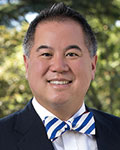
Phil Ting
DDemocratic
Ask Maddy
·
AI policy assistant
Ask Maddy about AB 2145
Scope: CA
Hi! I can help you understand AB 2145. What would you like to know?
Try one of these
i
Maddy answers using official bill text and legislative records. Always verify before sharing.
Sources cited inline