

Forced or Involuntary Sterilization Compensation Program.
Summary
(1) Existing law prohibits sterilization of a person with developmental disabilities without the person's consent, if the person has the ability to consent to sterilization, as defined, unless a limited conservator authorized to consent to the sterilization of an adult with a developmental disability is appointed and obtains court authorization to consent to the sterilization, as specified. Existing law prohibits sterilization for the purpose of birth control in county jails and state prison facilities, as specified. Existing law establishes a procedure for the compensation of victims and derivative victims of certain crimes by the California Victim Compensation Board from the Restitution Fund, a continuously appropriated fund consisting of General Fund moneys, for specified losses suffered as a result of those crimes. Existing law sets forth eligibility requirements and specified limits on the amount of compensation the board may award, and requires applications for compensation to be verified under penalty of perjury. Under existing law, certain property is exempt from enforcement of money judgments, including benefits from a disability or health insurance policy or program. This bill would establish the Forced or Involuntary Sterilization Compensation Program, to be administered by the California Victim Compensation Board for the purpose of providing victim compensation to survivors of state-sponsored sterilization conducted pursuant to eugenics laws that existed in California between 1909 and 1979 and to survivors of coerced sterilizations of people in prisons after 1979. The bill would require the board, in consultation with community-based organizations, to conduct outreach to locate qualified recipients, as defined, disclose a coerced sterilization to that person if the person was sterilized while imprisoned, notify that person of the process to apply for victim compensation, and review and verify all applications for victim compensation, as specified. The bill would require the board to keep confidential and not disclose to the public a record pertaining to a person's application for victim compensation or the board's verification of the application. The bill would exempt victim compensation payments from, among other things, being considered taxable income for state tax purposes or being subject to enforcement of a money judgment, as specified. The bill would provide that these provisions would become operative only upon an appropriation to the board, the State Department of State Hospitals, the State Department of Developmental Services, and the Department of Corrections and Rehabilitation for the purpose of implementing the program. The bill would also require the board and departments to post a notice on their internet websites once the appropriation described above is made to inform the public of the operative date of the program. (2) Existing law provides that information and records obtained in the course of providing specified mental health and developmental services are confidential, but allows the disclosure of the information and records under specified circumstances. This bill would additionally authorize the State Department of Developmental Services and the State Department of State Hospitals to disclose the above-described information and records to authorized employees of the board for the purposes of verifying the identity and eligibility of individuals claiming compensation under the Forced or Involuntary Sterilization Compensation Program, or to an attorney for a person who was sterilized or alleges a person was sterilized. The bill would require the board to maintain the confidentiality of the information and records received from the departments. (3) Existing constitutional provisions require that a statute that limits the right of access to the meetings of public bodies or the writings of public officials and agencies be adopted with findings demonstrating the interest protected by the limitation and the need for protecting that interest. This bill would make legislative findings to that effect.
Bill status
failed
1 of 4 stages cleared
Introduction
Feb 2019
Committee Review
Floor Vote
Governor
Introduced Feb 22, 2019
Last action Feb 3, 2020
Floor votes
How they voted
No floor votes recorded yet.
Full legislative history
Actions timeline
Total actions
14
Key actions
3
Committee
7
May 16, 2019
Lower · Passed
In committee: Held under submission.
lower
May 1, 2019
Committee
In committee: Set, first hearing. Referred to APPR. suspense file.
lower
Apr 24, 2019
Lower · Passed
From committee: Do pass and re-refer to Com. on APPR. (Ayes 8. Noes 0.) (April 23). Re-referred to Com. on APPR.
lower
Apr 23, 2019
Committee
Re-referred to Com. on PUB. S.
lower
Mar 27, 2019
Committee
Re-referred to Com. on PUB. S.
lower
Mar 25, 2019
Committee
Referred to Com. on PUB. S.
lower
Feb 23, 2019
Lower · Passed
From printer. May be heard in committee March 25.
lower
Feb 22, 2019
Introduced
Introduced. To print.
lower
1 primary · 2 co-sponsors
Sponsors
Role
Legislator
Party
State
District
P
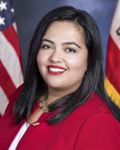
Wendy Carrillo
DDemocratic
Co

Buffy Wicks
DDemocratic
Co

Rebecca Bauer-Kahan
DDemocratic
Ask Maddy
·
AI policy assistant
Ask Maddy about AB 1764
Scope: CA
Hi! I can help you understand AB 1764. What would you like to know?
Try one of these
i
Maddy answers using official bill text and legislative records. Always verify before sharing.
Sources cited inline