

Personal income taxes: earned income credit.
Summary
The Personal Income Tax Law, beginning on or after January 1, 2015, in modified conformity with federal income tax laws, allows an earned income tax credit against personal income tax and a payment from the Tax Relief and Refund Account for an allowable credit in excess of tax liability to an eligible individual that is equal to that portion of the earned income tax credit allowed by federal law as determined by the earned income tax credit adjustment factor, as specified. The law provides that the amount of the credit is calculated as a percentage of the eligible individual's earned income and is phased out above a specified amount as income increases and provides alternative calculation factors under specified circumstances. Existing law, for taxable years beginning on or after January 1, 2020, allows the earned income tax credit to an eligible individual who has, or whose spouse has, a qualifying child younger than 6 years old, as specified, if that individual includes on the tax return the federal individual taxpayer identification number of the eligible individual, eligible individual's spouse if married, and a qualifying child who is younger than 6 years old, as specified. Existing law limits the collection and use of taxpayer information and provides that any unauthorized use or inspection of this information is punishable as a misdemeanor. The Personal Income Tax Law allows a refundable young child tax credit against the taxes imposed under that law, for each taxable year beginning on or after January 1, 2019, to a qualified taxpayer in specified amount multiplied by the earned income tax credit adjustment factor, as provided, and requires amounts of this credit in excess of the qualified taxpayer's tax liability to be paid to the qualified taxpayer from the Tax Relief and Refund Account, a continuously appropriated fund. Existing law specifies that the earned income tax credit and young child tax credit are only operative for taxable years for which resources are authorized in the annual Budget Act for the Franchise Tax Board to oversee and audit returns associated with the earned income tax credit. This bill, for each taxable year beginning on or after January 1, 2019, and upon specified circumstances, including an appropriation by the Legislature for payments to taxpayers, would instead allow the taxpayer and the qualifying child to have a social security number or a federal individual taxpayer identification number in order to be eligible for the earned income tax credit, subject to specified requirements if a federal individual taxpayer number is used, including the provision of identifying documents to the Franchise Tax Board. The bill would provide that specified information and documents collected pursuant to this new requirement are subject to the limitation on the collection, use, and inspection described above and would prohibit the use of these documents as evidence of an individual's citizenship or immigration status, as provided. The bill would make a legislative finding and declaration that the retroactive application of the bill serves a public purpose and does not constitute a gift of public funds. By expanding the scope of a crime, this bill would impose a state-mandated local program. The California Constitution requires the state to reimburse local agencies and school districts for certain costs mandated by the state. Statutory provisions establish procedures for making that reimbursement. This bill would provide that no reimbursement is required by this act for a specified reason. Existing law establishes the continuously appropriated Tax Relief and Refund Account and provides that payments required to be made to taxpayers or other persons from the Personal Income Tax Fund are to be paid from that account, including any amount to be paid as an earned income tax credit in excess of any tax liabilities.
Bill status
passed
3 of 5 stages cleared
Introduction
Feb 2019
Committee Review
Jul 2019
Assembly Passage
May 2019
Senate Passage
Governor
Introduced Feb 22, 2019
Last action Jul 27, 2020
Floor votes · Assembly May 24, 2019
How they voted
51–16
Passed · 7 other
Total votes 74
May 24, 2019
D
Democratic57
89% Yea
I
Independent1
100% Nay
R
Republican16
93% Nay
Vote distribution
All Yea
All Nay
Mixed
No data
Full legislative history
Actions timeline
Total actions
20
Key actions
7
Committee
11
Jul 1, 2019
Upper · Passed
In committee: Set, first hearing. Hearing canceled at the request of author.
upper
Jun 11, 2019
Upper · Passed
In committee: Hearing postponed by committee.
upper
Jun 6, 2019
Committee
Referred to Com. on GOV. & F.
upper
May 24, 2019
Lower · Passed
Read third time. Passed. Ordered to the Senate. (Ayes 55. Noes 18. Page 1984.)
lower
May 16, 2019
Lower · Passed
From committee: Do pass. (Ayes 12. Noes 4.) (May 16).
lower
May 1, 2019
Committee
In committee: Set, first hearing. Referred to APPR. suspense file.
lower
Apr 25, 2019
Committee
Re-referred to Com. on APPR.
lower
Apr 23, 2019
Lower · Passed
From committee: Do pass and re-refer to Com. on APPR. (Ayes 7. Noes 2.) (April 22). Re-referred to Com. on APPR.
lower
Apr 8, 2019
Lower · Passed
In committee: Hearing for testimony only.
lower
Apr 2, 2019
Committee
Re-referred to Com. on REV. & TAX.
lower
Mar 14, 2019
Committee
Referred to Com. on REV. & TAX.
lower
Feb 23, 2019
Lower · Passed
From printer. May be heard in committee March 25.
lower
Feb 22, 2019
Introduced
Introduced. To print.
lower
1 primary · 3 co-sponsors
Sponsors
Role
Legislator
Party
State
District
P
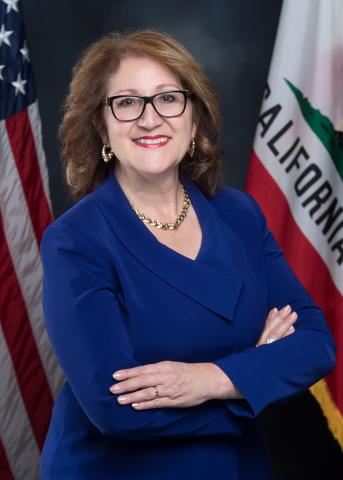
Eloise Reyes
DDemocratic
Co

David Chiu
DDemocratic
Co

Mike Gipson
DDemocratic
Co

Wendy Carrillo
DDemocratic
Ask Maddy
·
AI policy assistant
Ask Maddy about AB 1593
Scope: CA
Hi! I can help you understand AB 1593. What would you like to know?
Try one of these
i
Maddy answers using official bill text and legislative records. Always verify before sharing.
Sources cited inline