

Local government financing: juvenile justice.
Summary
Under existing law, there is established in each county treasury a Supplemental Law Enforcement Services Account (SLESA) to receive all amounts allocated to a county for specified purposes. In any fiscal year for which a county receives moneys to be expended for implementation, existing law requires the county auditor to allocate the moneys in the county's SLESA within 30 days of the deposit of those moneys into the fund. Existing law requires the moneys to be allocated in specified amounts, including, but not limited to, 50% to a county or city and county to implement a comprehensive multiagency juvenile justice plan, as specified. Existing law requires the juvenile justice plan to be developed by the local juvenile justice coordinating council in each county and city and county. Existing law requires the plan to be annually reviewed and updated by the council and submitted to the Board of State and Community Corrections. Existing law requires the multiagency juvenile justice plan to include certain components, including, but not limited to, a local juvenile justice action strategy that provides for a continuum of responses to juvenile crime and delinquency. Existing law also requires each council to annually report to their board of supervisors and the board information on the effectiveness of the programs and strategies funded under these provisions, and requires the board to annually report this information to the Governor and the Legislature and post it on its internet website. This bill would revise and recast required components of the multiagency juvenile justice plan to, among other things, additionally require a plan to include an assessment of existing community-based youth development services, identification and prioritization of areas of the community that face significant public safety risk from violence and crime, documentation of the effectiveness of the programs funded under these provisions, and a description of the target population funded under these provisions. The bill would require programs and strategies funded under these provisions to, among other things, be modeled on trauma-informed and youth development approaches and in collaboration with community-based organizations. The bill would require that at least 95% of the funds allocated under these provisions be distributed to community-based organizations and other public agencies or departments that are not law enforcement entities, as specified. The bill would require a council to include additional information in its annual report to the board of supervisors and the board relating to their programs, including data on participants, and would impose additional requirements on the board with respect to those annual reports, including, but not limited to, providing a statewide analysis of county spending. Existing law requires a juvenile justice coordinating council to consist of certain members, including, but not limited to, the chief probation officer, as chair, and a representative from the district attorney's office, the public defender's office, and the sheriff's department, among others. This bill would revise and recast those membership provisions, and instead require each Juvenile Justice Coordinating Council to, at a minimum, include 7 members and consist of at least 50% community representatives with the remainder of the seats allocated to government agencies. The bill would require a council to select 2 cochairs from amongst its members, as specified. The bill would require a council to meet no less than 3 times per year and announce its meetings at least 10 days in advance of a meeting.
Bill status
passed
3 of 5 stages cleared
Introduction
Feb 2019
Committee Review
Jul 2020
Assembly Passage
May 2019
Senate Passage
Governor
Introduced Feb 21, 2019
Last action Jul 2, 2020
Floor votes · Assembly May 28, 2019
How they voted
52–17
Passed · 8 other
Total votes 77
May 28, 2019
D
Democratic59
88% Yea
I
Independent1
100% Nay
R
Republican17
94% Nay
Vote distribution
All Yea
All Nay
Mixed
No data
Full legislative history
Actions timeline
Total actions
27
Key actions
1
Committee
10
Amendments
4
Jul 2, 2020
Senate · Referred to committee
Re-referred to Com. on PUB. S.
Jul 2, 2020
Senate · Referred to committee
Re-referred to Com. on RLS. pursuant to Senate Rule 29.10(c).
Jun 29, 2020
Senate · Amendment adopted
Read third time and amended. Ordered to second reading.
Aug 30, 2019
Senate · Reported by committee
From committee: Do pass. (Ayes 5. Noes 2.) (August 30).
Jul 8, 2019
Senate · Referred to committee
In committee: Referred to APPR. suspense file.
Jun 24, 2019
Senate · Amendment adopted
From committee: Amend, and do pass as amended and re-refer to Com. on APPR. (Ayes 4. Noes 1.) (June 19).
Jun 6, 2019
Senate · Referred to committee
Referred to Com. on L., P.E. & R.
May 28, 2019
Assembly · Passed
Read third time. Passed. Ordered to the Senate. (Ayes 54. Noes 18. Page 2041.)
May 16, 2019
Assembly · Amendment adopted
Read second time and amended. Ordered returned to second reading.
May 16, 2019
Assembly · Amendment adopted
From committee: Amend, and do pass as amended. (Ayes 13. Noes 5.) (May 16).
May 1, 2019
Assembly · Referred to committee
In committee: Set, first hearing. Referred to APPR. suspense file.
Apr 24, 2019
Assembly · Reported by committee
From committee: Do pass and re-refer to Com. on APPR. (Ayes 5. Noes 1.) (April 24). Re-referred to Com. on APPR.
Mar 26, 2019
Assembly · Referred to committee
Re-referred to Com. on P.E. & R.
Mar 25, 2019
Assembly · Referred to committee
Referred to Com. on P.E. & R.
Feb 22, 2019
Assembly · Reported by committee
From printer. May be heard in committee March 24.
1 primary · 0 co-sponsors
Sponsors
Role
Legislator
Party
State
District
P
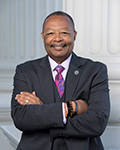
Reggie Jones-Sawyer
DDemocratic
Ask Maddy
·
AI policy assistant
Ask Maddy about AB 1007
Scope: CA
Hi! I can help you understand AB 1007. What would you like to know?
Try one of these
i
Maddy answers using official bill text and legislative records. Always verify before sharing.
Sources cited inline