

Public Utilities Commission: gas corporations: electrical corporations: safety.
Summary
Under existing law, the Public Utilities Commission has regulatory authority over public utilities, including electrical corporations and gas corporations. The Public Utilities Act requires the commission to investigate the cause of all accidents occurring upon the property of any public utility or directly or indirectly arising from or connected with its maintenance or operation, resulting in loss of life or injury to person or property and requiring, in the judgment of the commission, investigation by it, and authorizes the commission to make any order or recommendation with respect to the investigation that it determines to be just and reasonable. The California Constitution authorizes the commission to establish rules for all public utilities, subject to control by the Legislature. This bill would require the commission to adopt a commissionwide gas corporation and electrical corporation safety program that includes specified elements and would authorize the commission to adopt an organizationwide safety program for other public utilities and specified nonutilities that are also subject to the commission's regulatory jurisdiction. The bill would require gas corporations and electrical corporations to have effective programs to continually identify safety hazards and to analyze, assess, and mitigate or eliminate safety risks. The bill would specify the safety-related responsibilities with respect to gas corporations and electrical corporations of various entities within the commission. The bill would require the commission to perform a detailed safety management assessment for each gas corporation and electrical corporation not less often than every 5 years and would require the commission to take official notice of the safety management assessment in relevant proceedings, including general rate cases. The bill would require the commission, by March 1, 2018, to contract with one or more consultants to determine the effectiveness of its internal safety communications and decisionmaking processes and the incentives for staff in primarily safety-related roles compared to the incentives and opportunities for attorneys, administrative law judges, and staff in primarily nonsafety, energy-policy-related roles. Under existing law, a violation of the Public Utilities Act or any order, decision, rule, direction, demand, or requirement of the commission is a crime. Because the provisions of this bill placing additional safety duties upon gas corporations and electrical corporations would be a part of the act, the bill would impose a state-mandated local program by creating a new crime. Existing law requires the commission to appoint an executive director who is responsible for the commission's executive and administrative duties and to organize, coordinate, supervise, and direct the operations and affairs of the commission and expedite all matters within the commission's jurisdiction. Existing law authorizes the executive director to employ those officers, administrative law judges, experts, engineers, statisticians, accountants, inspectors, clerks, and employees as the executive director deems necessary to carry out the provisions of the Public Utilities Act or to perform the duties and exercise the powers conferred upon the commission by law. This bill would require the executive director to provide an engineer to each commissioner to advise him or her on the technical aspects of safety and the technical aspects of other topics within the jurisdiction of the commission. The California Constitution authorizes the commission to establish its own procedures, subject to statutory limitations or directions and constitutional requirements of due process. The Public Utilities Act requires the commission to determine whether a proceeding requires a hearing and, if so, to determine whether the matter requires a quasi-legislative, an adjudication, or a ratesetting hearing. For these purposes, quasi-legislative cases are cases that establish policy rulemakings and investigations which may establish rules affecting an entire industry. Existing law generally permits ex parte communications in quasi-legislative cases. The bill would require that any excess of formality in commission policy or administrative practice not be used to prevent commission staff from submitting findings and evidence relevant to safety into the quasi-legislative proceeding record or from presenting arguments to improve safety in quasi-legislative cases. Pursuant to its existing authority, the commission has issued an interim decision adopting a multiattribute approach and directing certain public utilities to take steps toward a more uniform risk management framework. This bill would void a specified order in that interim decision and direct the Safety and Enforcement Division and executive director of the commission to not implement that order. The California Constitution requires the state to reimburse local agencies and school districts for certain costs mandated by the state. Statutory provisions establish procedures for making that reimbursement. This bill would provide that no reimbursement is required by this act for a specified reason.
Bill status
in committee
1 of 4 stages cleared
Introduction
Feb 2017
Committee Review
Floor Vote
Governor
Introduced Feb 17, 2017
Last action Feb 1, 2018
Floor votes
How they voted
No floor votes recorded yet.
Full legislative history
Actions timeline
Total actions
16
Key actions
4
Committee
6
May 25, 2017
Upper · Passed
May 25 hearing: Held in committee and under submission.
upper
May 3, 2017
Upper · Passed
May 8 hearing postponed by committee.
upper
Apr 24, 2017
Upper · Passed
From committee: Do pass and re-refer to Com. on APPR. (Ayes 10. Noes 0. Page 806.) (April 24). Re-referred to Com. on APPR.
upper
Apr 17, 2017
Upper · Passed
April 18 hearing postponed by committee.
upper
Apr 5, 2017
Committee
Re-referred to Com. on E., U. & C.
upper
Mar 2, 2017
Committee
Referred to Com. on RLS.
upper
Feb 17, 2017
Introduced
Introduced. Read first time. To Com. on RLS. for assignment. To print.
upper
1 primary · 0 co-sponsors
Sponsors
Role
Legislator
Party
State
District
P
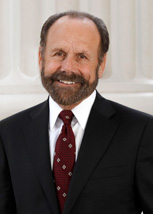
Jerry Hill
DDemocratic
Ask Maddy
·
AI policy assistant
Ask Maddy about SB 637
Scope: CA
Hi! I can help you understand SB 637. What would you like to know?
Try one of these
i
Maddy answers using official bill text and legislative records. Always verify before sharing.
Sources cited inline