

Veterinary medicine.
Summary
(1) Existing law, the Veterinary Medicine Practice Act, provides for the licensure and regulation of veterinarians and the practice of veterinary medicine by the Veterinary Medical Board. A violation of the act is a crime. The practice of veterinary medicine includes the diagnosing, prescribing, or administering of a drug, medicine, appliance, application, or treatment for the prevention, cure, or relief of a wound, fracture, bodily injury, or disease of animals. Existing law authorizes a registered veterinary technician or a veterinary assistant to administer a drug under the direct or indirect supervision of a licensed veterinarian when done pursuant to the order, control, and full professional responsibility of a licensed veterinarian. Existing law, the Pharmacy Law, authorizes a veterinarian to personally furnish any dangerous drug prescribed by the veterinarian to the patient provided that the drug is properly labeled, as specified. This bill, in nonemergency situations and outpatient settings, would require that each time a veterinarian prescribes, administers, dispenses, or furnishes a dangerous drug or prescription medicine, unless in conjunction with surgery during an anesthetic procedure or emergency services, the veterinarian offer to provide the client with a consultation that includes specified information. The bill would further require a veterinarian to provide along with the consultation pharmaceutical literature or written information, when available, if requested by the client. The bill would authorize a veterinarian to delegate the task of providing the consultation and literature or written information to a registered veterinary technician or veterinary assistant who is employed by and working under the supervision of the veterinarian. In every veterinary practice, the bill would require a poster notifying clients about specified consumer rights and the consultation, literature, and handout requirements. Because the violation of these requirements would be a crime, the bill would impose a state-mandated local program. (2) The Veterinary Medicine Practice Act requires the Veterinary Medical Board to make every effort to inspect at least 20% of veterinary premises on an annual basis. This bill would instead require the board to inspect at least 20% of veterinary premises on an annual basis and also inspect all new veterinary premises within one year of being issued a premises permit. (3) Under existing law, certain veterinarians and other persons are exempt from the Veterinary Medicine Practice Act. Under existing law, these exempt persons include students in the School of Veterinary Medicine of the University of California or the College of Veterinary Medicine of the Western University of Health Sciences who participate in diagnosis and treatment as part of their educational experience, as specified. This bill would additional exempt students of an American Veterinary Medical Association Council on Education accredited veterinary medical program who participate, as part of their formal curriculum, in diagnosis and treatment with direct supervision or in surgery with immediate supervision and who meet other specified requirements. For purposes of both this exemption and the exemption described above, the bill would also require a memorandum of understanding containing specified terms to be in place between the accredited veterinary program and any off-campus or distributive site that provides the formal curriculum. (4) The Veterinary Medicine Practice Act allows a person whose license or registration has been surrendered while under investigation, revoked or who has been placed on probation to petition the Veterinary Medical Board for reinstatement for modification of penalty after a period of not less than one year has elapsed from the effective date of the decision ordering the disciplinary action. This bill would extend that period to 3 years for petitions for reinstatement of a surrendered or revoked license and would extend that period to 2 years for petitions for early termination or modification of probation, unless otherwise authorized by the board in the revocation or surrender order or order imposing probation. (5) The California Constitution requires the state to reimburse local agencies and school districts for certain costs mandated by the state. Statutory provisions establish procedures for making that reimbursement. This bill would provide that no reimbursement is required by this act for a specified reason.
Bill status
in committee
1 of 4 stages cleared
Introduction
Feb 2017
Committee Review
Floor Vote
Governor
Introduced Feb 16, 2017
Last action Feb 1, 2018
Floor votes
How they voted
No floor votes recorded yet.
Full legislative history
Actions timeline
Total actions
13
Key actions
3
Committee
4
May 25, 2017
Upper · Passed
May 25 hearing: Held in committee and under submission.
upper
Apr 25, 2017
Upper · Passed
From committee: Do pass and re-refer to Com. on APPR. (Ayes 7. Noes 0. Page 825.) (April 24). Re-referred to Com. on APPR.
upper
Apr 4, 2017
Upper · Passed
April 17 hearing postponed by committee.
upper
Mar 2, 2017
Committee
Referred to Com. on B., P. & E.D.
upper
Feb 16, 2017
Introduced
Introduced. Read first time. To Com. on RLS. for assignment. To print.
upper
1 primary · 0 co-sponsors
Sponsors
Role
Legislator
Party
State
District
P
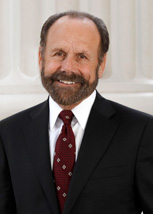
Jerry Hill
DDemocratic
Ask Maddy
·
AI policy assistant
Ask Maddy about SB 546
Scope: CA
Hi! I can help you understand SB 546. What would you like to know?
Try one of these
i
Maddy answers using official bill text and legislative records. Always verify before sharing.
Sources cited inline