

Public employees' retirement.
Summary
(1) The Public Employees' Retirement Law (PERL) creates the Public Employees' Retirement System (PERS) , which provides defined benefits to its members based on age at retirement, service credit, and final compensation. PERL vests the Board of Administration of PERS with management and control of the system. The California Public Employees' Pension Reform Act of 2013 (PEPRA) , on and after January 1, 2013, generally requires a public retirement system to modify its plan or plans to comply with the act. Under PEPRA, the term "new member" generally refers to a person who became a member of a public retirement system for the first time on or after January 1, 2013, and was not previously a member of a public retirement system, subject to specified exceptions. PERL requires a member who is incapacitated, as specified, to be retired for disability in accordance with certain provisions if that member meets specified requirements concerning service. Under PERL, the terms "disability" and "incapacity for performance of duty" are defined, as a basis of retirement, to mean disability of permanent or extended and uncertain duration, as determined by the board, except with respect to certain local safety members. This bill would redefine those terms to specify that the duration of the disability or incapacity must be expected to last at least 12 consecutive months or result in death. The bill also would revise and recast the definition of final compensation for local members. PERL allows a person who is retired for disability to work without reinstatement from retirement in certain circumstances. PEPRA supersedes PERL and prohibits a retired person from being employed by a public employer in the same retirement system without reinstatement from retirement. This bill would delete that superseded provision of PERL. Existing law prescribes industrial disability retirement benefits for state miscellaneous and industrial members of PERS who are subject to second tier benefits, as specified. Existing law further prescribes the nonindustrial disability retirement pension for those members and establishes a formula for computing this pension benefit. This bill would make these provisions applicable to state miscellaneous or state industrial members who became members on or after January 1, 2013, and who have elected a specified service retirement allowance. The bill would also revise the nonindustrial disability retirement formula. (2) PERL requires the board, by rule, to provide for conducting structured preretirement information seminars for the benefit of all members who have attained age 45. This bill would expand that provision to authorize the board to provide education, including structured preretirement information seminars, for the benefit of all members. (3) The Teachers' Retirement Law establishes the State Teachers' Retirement System (STRS) and creates the Defined Benefit Program of the State Teachers' Retirement Plan. The plan provides a defined benefit based on final compensation, credited service, and age at retirement, subject to certain variations. That law defines creditable service to mean any of specified activities performed for various employers. This bill would authorize a person who was employed by a school employer before January 1, 2018, in a position that includes activities meeting the definition of creditable service under the Teachers' Retirement Law, and whose service was reported to PERS, to continue to retain membership in PERS and have past and future service credited to PERS if that person was not enrolled in the State Teachers' Retirement Plan for that same service and is not otherwise excluded from PERS membership. The bill also would authorize a school member who performs creditable service under the Teachers' Retirement Law and has not yet retired, to elect to have all of that service and subsequent service subject to coverage by STRS and excluded from PERS coverage, if the member is not excluded from coverage by STRS, in accordance with certain requirements. (4) PERL defines "compensation earnable" by a member, excluding new members subject to PEPRA, to mean the payrate and special compensation, as defined, of the member or school member. Under PERL, the definition of special compensation includes a payment received for special skills, knowledge, abilities, work assignment, workdays or hours, or other work conditions. That law requires special compensation to be for services rendered during normal working hours, and the employer, when reporting this information to the board, is required to identify the pay period in which the special compensation was earned. This bill would require the employer, when reporting this information to the board, to identify each item of special compensation and the category under which that item is listed, as described in regulations promulgated by the board, and to report each item of special compensation separately from payrate. (5) Under existing law, the PERS board is required to annually transfer funds to separate supplemental state and school accounts to fund the purchasing power protection allowance of retirees, survivors, and beneficiaries of state or school employers. Existing law requires the amounts transferred to be the lesser of (1) the amount necessary to increase all monthly allowances paid by PERS to retirees, survivors, and beneficiaries of state or school employers to 75% of the purchasing power of the initial monthly allowances or (2) one and one-tenth percent of the net earnings on state or school member contributions, as determined by the board in accordance with a related provision. This bill would revise the second part of the above provision to delete the reference to net earnings. (6) Under PERL, if a member applies for a refund of accumulated contributions, elects an optional settlement, designates a beneficiary, or changes an existing beneficiary designation, the application, election, or designation is required to contain the signature of the current spouse of the member, unless a specified exception applies. This bill would specify that a spouse's signature is not required on a designation of the member's current spouse as the member's sole primary beneficiary on any lump-sum beneficiary designation, or, under other specified criteria, on the member's election of an optional settlement designating the member's spouse as the sole primary beneficiary. Existing law permits a member of PERS to elect from among several optional settlements for the purpose of structuring his or her retirement allowance, which may result in a reduction of the allowance paid to the member in relation to the payments to his or her beneficiary after the member's death. Existing law also authorizes a member who elects to receive specified optional settlements to elect to waive the provision for an increase to his or her allowance due to the death of his or her beneficiary and instead have his or her allowance based upon the waiver of this benefit. This bill would extend those optional settlements for members due to dissolution of marriage or legal separation in which the judgment dividing the community property awards total interest in PERS to the member, or in an annulment of the marriage in which a court confirms the annulment, or to a waiver of entitlement to the allowance by the nonspouse beneficiary. Existing law, applicable to PERS members who retire on or after January 1, 2018, establishes a retirement option called the Flexible Beneficiary Option 4. This option permits a PERS member to elect to have a retirement allowance paid until his or her death and thereafter to have a monthly allowance paid to his or her named beneficiary or beneficiaries for life. With this option, the member may select a monthly allowance payable to the named beneficiary or beneficiaries from either a specific dollar amount or a specific percentage of the member's allowance. This bill would authorize a court, upon receipt of documentation by the PERS board, to order the member to select this option to provide the nonmember spouse with a lifetime monthly allowance equal to the nonmember spouse's interest in PERS, as defined by court order and in compliance with specified family law provisions. The bill also would make related clarifying changes to other provisions related to optional settlements for PERS members. The Judges' Retirement System and the Judges' Retirement System II are administered by the board of PERS. Existing law permits a member of these retirement systems to select from various optional settlements for the purpose of structuring his or her retirement benefits and provides for adjustments due to dissolution of marriage, legal separation, or annulment. This bill would revise those provisions to clarify that the legal separation must be filed and the annulment must be confirmed by the court.
Bill status
signed
all 5 stages cleared
Introduction
Feb 2017
Committee Review
Jul 2017
Senate Passage
May 2017
Assembly Passage
Aug 2017
Signed into Law
Sep 2017
Introduced Feb 16, 2017
Signed Sep 11, 2017
Floor votes · Senate May 15, 2017 · Assembly Aug 24, 2017
How they voted
34–0
Passed · 1 other
Total votes 35
May 15, 2017
D
Democratic25
100% Yea
R
Republican10
90% Yea
Vote distribution
All Yea
All Nay
Mixed
No data
Full legislative history
Actions timeline
Total actions
23
Key actions
8
Committee
7
Sep 11, 2017
Signed into law
Approved by the Governor.
legislature
Aug 24, 2017
Assembly · Passed
Assembly Vote: pass (70-0-3)
assembly
Jul 19, 2017
Lower · Passed
From committee: Do pass. Ordered to consent calendar. (Ayes 16. Noes 0.) (July 19).
lower
Jul 6, 2017
Lower · Passed
From committee: Do pass and re-refer to Com. on APPR. with recommendation: To consent calendar. (Ayes 7. Noes 0.) (July 6). Re-referred to Com. on APPR.
lower
May 26, 2017
Committee
Referred to Com. on P.E., R., & S.S.
lower
May 15, 2017
Senate · Passed
Senate Vote: pass (34-0-1)
senate
May 8, 2017
Upper · Passed
From committee: Be ordered to second reading pursuant to Senate Rule 28.8 and ordered to consent calendar.
upper
May 3, 2017
Upper · Passed
May 8 hearing postponed by committee.
upper
Apr 25, 2017
Upper · Passed
From committee: Do pass and re-refer to Com. on APPR. with recommendation: To consent calendar. (Ayes 5. Noes 0. Page 529.) (April 24). Re-referred to Com. on APPR.
upper
Mar 2, 2017
Committee
Referred to Com. on P.E. & R.
upper
Feb 16, 2017
Introduced
Introduced. Read first time. To Com. on RLS. for assignment. To print.
upper
1 primary · 0 co-sponsors
Sponsors
Role
Legislator
Party
State
District
P
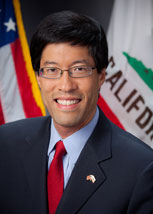
Richard Pan
DDemocratic
Ask Maddy
·
AI policy assistant
Ask Maddy about SB 525
Scope: CA
Hi! I can help you understand SB 525. What would you like to know?
Try one of these
i
Maddy answers using official bill text and legislative records. Always verify before sharing.
Sources cited inline