

Local sales taxes: online sales: place of delivery.
Summary
The Bradley-Burns Uniform Local Sales and Use Tax Law authorizes counties and cities to impose a local sales and use tax in accordance with that law for tangible personal property sold at retail in the county or city, or purchased for storage, use, or other consumption in the county or city. Existing law requires the city tax rate to be credited against the county rate so that the combined rate does not exceed 1.25%. Existing law requires the county or city to contract with the California Department of Tax and Fee Administration for the administration of the taxes and requires the department to transmit that tax to the city or county. The Bradley-Burns Uniform Local Sales and Use Tax Law provides that for the purpose of a local sales tax adopted pursuant to that law, all retail sales are consummated at the place of business of the retailer unless otherwise specified. Existing law provides that these local sales taxes are allocated to the place where the sale is deemed to take place. This bill would instead provide that, in the case of a sale of tangible personal property by a qualified retailer, as defined, that is transacted online, the place at which the retail sale of that tangible personal property is consummated for the purpose of a local sales tax imposed pursuant to the Bradley-Burns Uniform Local Sales and Use Tax Law is the point of the delivery of that tangible personal property to the purchaser's address or any other address designated by the purchaser. The California Constitution prohibits the Legislature from enacting a statute that would change the method of distributing revenues derived under the Bradley-Burns Uniform Local Sales and Use Tax Law, as that law read on November 3, 2004, except the Legislature may change that law by statute to allow the state to participate in an interstate compact or to comply with federal law. This bill would become operative only if Senate Constitutional Amendment 20 of the 2017–18 Regular Session is approved by the voters and, in that event, would become operative on January 1, 2020.
Bill status
in committee
1 of 4 stages cleared
Introduction
Feb 2018
Committee Review
Floor Vote
Governor
Introduced Feb 16, 2018
Last action Apr 11, 2018
Floor votes
How they voted
No floor votes recorded yet.
Full legislative history
Actions timeline
Total actions
8
Key actions
0
Committee
2
Apr 4, 2018
Committee
Re-referred to Com. on GOV. & F.
upper
Mar 8, 2018
Committee
Referred to Com. on RLS.
upper
Feb 16, 2018
Introduced
Introduced. Read first time. To Com. on RLS. for assignment. To print.
upper
1 primary · 2 co-sponsors
Sponsors
Role
Legislator
Party
State
District
P

Steve Glazer
DDemocratic
Co
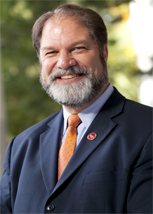
John M. W. Moorlach
RRepublican
Co
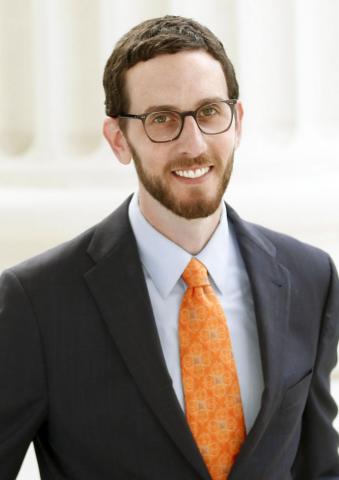
Scott Wiener
DDemocratic
Ask Maddy
·
AI policy assistant
Ask Maddy about SB 1466
Scope: CA
Hi! I can help you understand SB 1466. What would you like to know?
Try one of these
i
Maddy answers using official bill text and legislative records. Always verify before sharing.
Sources cited inline