

Transportation network companies: accessibility for persons with disabilities.
Summary
The Passenger Charter-party Carriers' Act defines a transportation network company as an organization, whether a corporation, partnership, sole proprietor, or other form, operating in California that provides prearranged transportation services for compensation using an online-enabled platform to connect passengers with drivers using their personal vehicles. The act also defines a participating driver or driver as any person who uses a vehicle in connection with a transportation network company's online-enabled application or platform to connect with passengers. A violation of the act or a rule of the Public Utilities Commission with regard to charter-party carriers is generally a misdemeanor and subject to a fine of not less than $1,000 and not more than $5,000 or by imprisonment in a county jail for not more than 3 months, or by both that fine and imprisonment. Existing rules of the Public Utilities Commission require a transportation network company to allow passengers to indicate whether they require a wheelchair-accessible vehicle or a vehicle otherwise accessible to individuals with disabilities and requires the transportation network company to submit a specified report to the Public Utilities Commission detailing the number and percentage of their customers who requested accessible vehicles and how often the transportation network company was able to comply with requests for accessible vehicles. This bill would require the commission, as part of its regulation of transportation network companies (TNCs) , to establish a program in a new or existing proceeding relating to accessibility for persons with disabilities, including wheelchair users who need a wheelchair accessible vehicle (WAV) . As part of the program, the bill would require the commission, by January 1, 2019, to begin conducting workshops with stakeholders in order to determine community WAV demand and WAV supply and to develop and provide recommendations regarding specified topics for programs for on-demand services and partnerships. The bill would require each TNC, by July 1, 2019, to pay on a quarterly basis to the commission an amount equivalent to, at a minimum, $0.05 for each TNC trip completed using the TNC's online-enabled application or platform that originates in one of the geographic areas selected by the commission for inclusion in the program and would authorize the commission to adjust that fee in each geographic area to different levels based on the cost of providing adequate WAV service within the geographic area. The bill would exempt a TNC from payment of the fee in a geographic area if the TNC meets the level of WAV service designated by the commission for that geographic area, as specified, and would require the commission to reduce the amount of money a TNC is required to pay if it meets certain requirements. The bill would require moneys collected by the commission to be deposited in the TNC Access for All Fund, which the bill would create, and would continuously appropriate moneys deposited in the fund to the commission for purposes of the program. The bill would require the commission to distribute funds from the TNC Access for All Fund on a competitive basis to access providers that establish on-demand transportation programs or partnerships to meet the needs of persons with disabilities in the geographic areas selected by the commission. The bill would require the commission to authorize no more than 2% of existing funds collected from TNCs and deposited in the Public Utilities Commission Transportation Reimbursement Account to be distributed to accessibility advocates who provide a substantial contribution to the proceeding, thereby making an appropriation. The bill would require the commission to report to the Legislature by January 1, 2024, on the compliance with these provisions and on the effectiveness of the on-demand transportation programs or partnerships funded pursuant to these provisions. The bill would authorize the commission to hire an independent entity to administer the program and to complete the report to the Legislature. This bill would repeal these provisions on January 1, 2026. Because a violation of the rules adopted by the commission would be a crime, this bill would impose a state-mandated local program. The California Constitution requires the state to reimburse local agencies and school districts for certain costs mandated by the state. Statutory provisions establish procedures for making that reimbursement. This bill would provide that no reimbursement is required by this act for a specified reason. This bill would include a change in state statute that would result in a taxpayer paying a higher tax within the meaning of Section 3 of Article XIIIA of the California Constitution, and thus would require for passage the approval of 23 of the membership of each house of the Legislature.
Bill status
signed
all 5 stages cleared
Introduction
Feb 2018
Committee Review
Aug 2018
Senate Passage
May 2018
Assembly Passage
Aug 2018
Signed into Law
Sep 2018
Introduced Feb 16, 2018
Signed Sep 22, 2018
Floor votes · Senate Aug 30, 2018 · Assembly Aug 29, 2018
How they voted
28–6
Passed · 1 other
Total votes 35
Aug 30, 2018
D
Democratic24
100% Yea
R
Republican11
54% Nay
Vote distribution
All Yea
All Nay
Mixed
No data
Full legislative history
Actions timeline
Total actions
41
Key actions
14
Committee
14
Amendments
2
Sep 22, 2018
Signed into law
Approved by the Governor.
legislature
Aug 30, 2018
Senate · Passed
Senate Vote: pass (28-6-1)
senate
Aug 30, 2018
Upper · Passed
Assembly amendments concurred in. (Ayes 30. Noes 8. Page 6021.) Ordered to engrossing and enrolling.
upper
Aug 29, 2018
Assembly · Passed
Assembly Vote: pass (51-13-9)
assembly
Aug 29, 2018
Upper · Passed
From committee: That the Assembly amendments be concurred in. (Ayes 9. Noes 0. Page 6198.)
upper
Aug 29, 2018
Upper · Passed
From committee: Be re-referred to Com. on E., U. & C. pursuant to Senate Rule 29.10(d). (Ayes 5. Noes 0. Page 5927.) Re-referred to Com. on E., U. & C.
upper
Aug 29, 2018
Committee
Re-referred to Com. on RLS. pursuant to Senate Rule 29.10(d).
upper
Aug 28, 2018
Introduced
In Senate. Concurrence in Assembly amendments pending.
upper
Aug 23, 2018
Lower · Passed
Read third time and amended. (Ayes 54. Noes 22. Page 6483.)
lower
Aug 16, 2018
Lower · Passed
From committee: Do pass. (Ayes 12. Noes 3.) (August 16).
lower
Jun 26, 2018
Lower · Passed
From committee: Do pass and re-refer to Com. on APPR. (Ayes 10. Noes 0.) (June 25). Re-referred to Com. on APPR.
lower
Jun 20, 2018
Lower · Passed
From committee: Do pass and re-refer to Com. on TRANS. (Ayes 9. Noes 1.) (June 20). Re-referred to Com. on TRANS.
lower
Jun 7, 2018
Committee
Referred to Coms. on C. & C. and TRANS.
lower
May 25, 2018
Upper · Passed
From committee: Do pass. (Ayes 7. Noes 0. Page 4309.) (May 25).
upper
May 10, 2018
Upper · Passed
May 14 hearing postponed by committee.
upper
Apr 25, 2018
Upper · Passed
From committee: Do pass and re-refer to Com. on APPR. with recommendation: To consent calendar. (Ayes 11. Noes 0. Page 4823.) (April 24). Re-referred to Com. on APPR.
upper
Apr 18, 2018
Upper · Passed
From committee: Do pass and re-refer to Com. on T. & H. (Ayes 10. Noes 0. Page 4718.) (April 17). Re-referred to Com. on T. & H.
upper
Apr 4, 2018
Committee
Re-referred to Coms. on E., U. & C. and T. & H.
upper
Mar 8, 2018
Committee
Referred to Com. on RLS.
upper
Feb 16, 2018
Introduced
Introduced. Read first time. To Com. on RLS. for assignment. To print.
upper
1 primary · 0 co-sponsors
Sponsors
Role
Legislator
Party
State
District
P
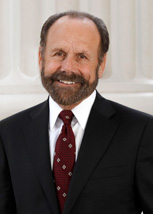
Jerry Hill
DDemocratic
Ask Maddy
·
AI policy assistant
Ask Maddy about SB 1376
Scope: CA
Hi! I can help you understand SB 1376. What would you like to know?
Try one of these
i
Maddy answers using official bill text and legislative records. Always verify before sharing.
Sources cited inline