

Postmortem examination or autopsy: unidentified body or human remains: medical examiner: attending physician and surgeon.
Summary
Existing law makes it the duty of a coroner to inquire into and determine the circumstances, manner, and cause of deaths under prescribed conditions, including deaths under such circumstances as to afford a reasonable ground to suspect that the death was caused by the criminal act of another or if the surviving spouse of the deceased requests the coroner to do so in writing. Existing law makes a postmortem examination or autopsy conducted at the discretion of a coroner, medical examiner, or other agency upon an unidentified human body or human remains subject to certain specified provisions of law. This bill would authorize an agency tasked with the exhumation of a body or skeletal remains of a deceased person that has suffered significant deterioration or decomposition, where the circumstances surrounding the death afford a reasonable basis to suspect that the death was caused by or related to the criminal act of another, to perform the exhumation in consultation with a board-certified forensic pathologist and would authorize that board-certified forensic pathologist to suggest to the agency tasked with an exhumation to consider retaining the services of an anthropologist, as specified. Existing law requires a postmortem examination or autopsy to include certain procedures, including, but not limited to, a dental examination that is authorized to be conducted by a qualified dentist as determined by the coroner. Existing law authorizes the postmortem examination or autopsy of the unidentified body or remains to include full body X-rays. This bill would instead provide that the dental examination is authorized to be conducted by a qualified dentist as determined by the coroner or medical examiner. The bill would additionally authorize the postmortem examination or autopsy of the unidentified body or remains to include computed tomography scans. Existing law, unless the coroner, medical examiner, or other agency performing a postmortem examination or autopsy determines the body of the unidentified deceased person has suffered significant deterioration or decomposition, prohibits the jaws from being removed until immediately before the body is cremated or buried and requires the coroner, medical examiner, or other agency to retain the jaws and other tissue samples for a specified period of time. This bill would require the coroner, medical examiner, or other agency to, instead, retain the appropriate samples of tissue and bone for that specified period of time. Existing law prohibits the body of an unidentified deceased person from being cremated or buried until the jaws and other tissue samples are retained for future possible use. This bill would eliminate that prohibition and would prohibit the unidentified body or human remains from being cremated or buried until the appropriate samples of tissue and bone are retained for future possible use. By placing new requirements on local governments for performing postmortem examinations or autopsies, this bill would impose a state-mandated local program. The California Constitution requires the state to reimburse local agencies and school districts for certain costs mandated by the state. Statutory provisions establish procedures for making that reimbursement. This bill would provide that, if the Commission on State Mandates determines that the bill contains costs mandated by the state, reimbursement for those costs shall be made pursuant to the statutory provisions noted above.
Bill status
signed
all 5 stages cleared
Introduction
Feb 2018
Committee Review
Aug 2018
Senate Passage
May 2018
Assembly Passage
Aug 2018
Signed into Law
Sep 2018
Introduced Feb 14, 2018
Signed Sep 29, 2018
Floor votes · Senate Aug 31, 2018 · Assembly Aug 30, 2018
How they voted
32–0
Passed
Total votes 32
Aug 31, 2018
D
Democratic21
100% Yea
R
Republican11
100% Yea
Vote distribution
All Yea
All Nay
Mixed
No data
Full legislative history
Actions timeline
Total actions
31
Key actions
9
Committee
8
Amendments
2
Sep 29, 2018
Signed into law
Approved by the Governor.
legislature
Aug 31, 2018
Senate · Passed
Senate Vote: pass (32-0)
senate
Aug 31, 2018
Upper · Passed
Assembly amendments concurred in. (Ayes 39. Noes 0. Page 6116.) Ordered to engrossing and enrolling.
upper
Aug 30, 2018
Assembly · Passed
Assembly Vote: pass (69-0-1)
assembly
Aug 30, 2018
Introduced
In Senate. Concurrence in Assembly amendments pending.
upper
Aug 24, 2018
Lower · Passed
Read third time and amended.
lower
Aug 8, 2018
Lower · Passed
From committee: Do pass. Ordered to consent calendar. (Ayes 17. Noes 0.) (August 8).
lower
Jun 12, 2018
Lower · Passed
From committee: Do pass and re-refer to Com. on APPR. (Ayes 6. Noes 0.) (June 12). Re-referred to Com. on APPR.
lower
May 17, 2018
Committee
Referred to Com. on PUB. S.
lower
May 7, 2018
Upper · Passed
From committee: Be ordered to second reading pursuant to Senate Rule 28.8 and ordered to consent calendar.
upper
Apr 25, 2018
Upper · Passed
From committee: Do pass and re-refer to Com. on APPR. with recommendation: To consent calendar. (Ayes 7. Noes 0. Page 4818.) (April 24). Re-referred to Com. on APPR.
upper
Apr 12, 2018
Committee
Re-referred to Com. on PUB. S.
upper
Feb 22, 2018
Committee
Referred to Com. on RLS.
upper
Feb 14, 2018
Introduced
Introduced. Read first time. To Com. on RLS. for assignment. To print.
upper
1 primary · 0 co-sponsors
Sponsors
Role
Legislator
Party
State
District
P
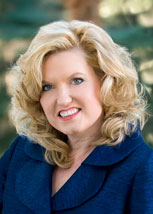
Cathleen Galgiani
DDemocratic
Ask Maddy
·
AI policy assistant
Ask Maddy about SB 1163
Scope: CA
Hi! I can help you understand SB 1163. What would you like to know?
Try one of these
i
Maddy answers using official bill text and legislative records. Always verify before sharing.
Sources cited inline