

Wrongful convictions.
Summary
Existing law authorizes a person who is unlawfully imprisoned or restrained of his or her liberty to prosecute a writ of habeas corpus to inquire into the cause of that imprisonment or restraint, and requires the discharge of that person if no legal cause is shown for his or her imprisonment or restraint. Under existing law, if the district attorney or Attorney General stipulates to or does not contest the factual allegations underlying one or more of the grounds for granting a writ of habeas corpus or a motion to vacate a judgment, the facts underlying the basis for the court's ruling or order are binding on the Attorney General, the factfinder, and the California Victim Compensation Board. Existing law also requires the express factual findings made by the court in considering a petition for habeas corpus, a motion to vacate judgment on the basis of newly discovered evidence relating to misconduct by a government official, as specified, or an application for a certificate of factual innocence, to be binding on the Attorney General, the factfinder, and the board. This bill would make those provisions inapplicable to specified cases in which the board is required to recommend to the Legislature that an appropriation be made and a claim be paid to compensate a person for a wrongful conviction. Existing law authorizes a person who has been convicted of a felony, imprisoned or incarcerated, and granted a pardon because either the crime was not committed or the person was innocent of the crime to present a claim against the state to the board for the pecuniary injury sustained by him or her through the erroneous conviction and imprisonment or incarceration. Under existing law, in a contested proceeding, if a court has granted a writ of habeas corpus or vacates a judgment, and if the court has found that the person is factually innocent, that finding is binding on the board, as provided. Under existing law, if a court grants a writ of habeas corpus but does not find the person factually innocent or if the court vacates a judgment due to new evidence of innocence, the person may move for a finding of factual innocence by a preponderance of the evidence. Existing law requires the board, under any of those circumstances, if the court makes a finding that the petitioner has proven his or her factual innocence, upon application by the person, and without a hearing, to recommend to the Legislature that an appropriation be made and the claim paid, as specified. This bill would make those provisions applicable to cases in which newly discovered evidence of actual innocence exists that requires vacation of a conviction. The bill would additionally require the board, if a state or federal court has granted a writ of habeas corpus and reversed a conviction or if a state court has granted a motion to vacate a conviction, as specified, and as a result of either of those actions, the charges were subsequently dismissed or the person was acquitted of the charges on retrial, upon application by the person, and without a hearing, to recommend to the Legislature that an appropriation be made and the claim paid, as provided. Existing law requires the claim for compensation for wrongful convictions to be presented to the board within 2 years after the judgment of acquittal, pardon granted, or release from custody. This bill would specify that the 2-year deadline applies to whichever action occurs later. The bill would also apply the 2-year deadline to the dismissal of charges. Existing law requires the board, if a conviction is set aside based upon a determination that the person was factually innocent of the charge, as provided, to calculate the compensation within 30 days of the presentation of the claim. Under existing law, if the evidence shows that the crime was either not committed at all, or if committed, was not committed by the claimant, and that the claimant has sustained injury through the erroneous conviction and imprisonment, the board is required to report the facts of the case and its conclusions to the next Legislature with a recommendation that the Legislature make an appropriation for the purpose indemnifying the claimant, as specified. This bill would also apply these requirements to cases in which a state or federal court has granted a writ of habeas corpus or a state court has granted a motion to vacate, as specified.
Bill status
passed
3 of 5 stages cleared
Introduction
Feb 2018
Committee Review
Aug 2018
Senate Passage
May 2018
Assembly Passage
Governor
Introduced Feb 13, 2018
Last action Aug 16, 2018
Floor votes · Senate May 31, 2018
How they voted
31–0
Passed
Total votes 31
May 31, 2018
D
Democratic21
100% Yea
R
Republican10
100% Yea
Vote distribution
All Yea
All Nay
Mixed
No data
Full legislative history
Actions timeline
Total actions
22
Key actions
6
Committee
6
Amendments
1
Aug 16, 2018
Lower · Passed
August 16 hearing: Held in committee and under submission.
lower
Jun 26, 2018
Lower · Passed
From committee: Do pass and re-refer to Com. on APPR. with recommendation: To consent calendar. (Ayes 7. Noes 0.) (June 26). Re-referred to Com. on APPR.
lower
Jun 7, 2018
Committee
Referred to Com. on PUB. S.
lower
May 31, 2018
Senate · Passed
Senate Vote: pass (31-0)
senate
May 25, 2018
Upper · Passed
From committee: Do pass. (Ayes 7. Noes 0. Page 4303.) (May 25).
upper
Apr 26, 2018
Upper · Passed
Read second time and amended. Re-referred to Com. on APPR.
upper
Apr 25, 2018
Upper · Passed
From committee: Do pass as amended and re-refer to Com. on APPR. (Ayes 7. Noes 0. Page 4699.) (April 17).
upper
Feb 22, 2018
Committee
Referred to Com. on PUB. S.
upper
Feb 13, 2018
Introduced
Introduced. Read first time. To Com. on RLS. for assignment. To print.
upper
1 primary · 2 co-sponsors
Sponsors
Role
Legislator
Party
State
District
P
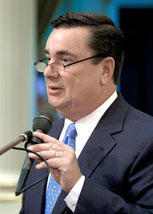
Joel Anderson
RRepublican
Co

Nancy Skinner
DDemocratic
Co

Steve Glazer
DDemocratic
Ask Maddy
·
AI policy assistant
Ask Maddy about SB 1094
Scope: CA
Hi! I can help you understand SB 1094. What would you like to know?
Try one of these
i
Maddy answers using official bill text and legislative records. Always verify before sharing.
Sources cited inline