

Transmission planning: energy storage and demand response.
Summary
Existing law vests the Public Utilities Commission with jurisdiction over the delivery of electrical services. Existing law provides for the establishment of an Independent System Operator (ISO) as a nonprofit public benefit corporation and requires the ISO to make certain filings with the Federal Energy Regulatory Commission (FERC) and to seek authority from FERC as needed to give the ISO the ability to secure generating and transmission resources necessary to guarantee achievement of planning and operating reserve criteria no less stringent than those established by the Western Electricity Coordinating Council and the North American Electric Reliability Council. This bill would require the commission, in its oversight of large electrical corporations and its participation in the ISO's transmission planning process, to promote the consideration of the use of nonwire alternatives, as defined, as means to address the state's transmission needs before the use of transmission wires. The bill would require the commission to ensure that transmission facility owners take certain actions in the transmission planning process regarding nonwire alternatives. The bill would require the commission to ensure that large electrical corporations include nonwire alternatives for consideration and select a nonwire alternative if it is the most cost effective or provides net benefits when compared with traditional transmission solutions. The Public Utilities Act makes any public utility that violates the act, or that fails to comply with any part of any order, decision, rule, direction, demand, or requirement of the commission, guilty of a crime. Because the provisions of this bill would be a part of the act and because a violation of an order or decision of the commission implementing its requirements would be a crime, the bill would impose a state-mandated local program by creating a new crime. The California Constitution requires the state to reimburse local agencies and school districts for certain costs mandated by the state. Statutory provisions establish procedures for making that reimbursement. This bill would provide that no reimbursement is required by this act for a specified reason.
Bill status
failed
1 of 4 stages cleared
Introduction
Feb 2017
Committee Review
Floor Vote
Governor
Introduced Feb 16, 2017
Last action Feb 1, 2018
Floor votes
How they voted
No floor votes recorded yet.
Full legislative history
Actions timeline
Total actions
8
Key actions
0
Committee
4
Amendments
1
Feb 1, 2018
Assembly · Failed
From committee: Filed with the Chief Clerk pursuant to Joint Rule 56.
Jan 31, 2018
Assembly · Failed
Died pursuant to Art. IV, Sec. 10(c) of the Constitution.
Mar 29, 2017
Assembly · Reported by committee
In committee: Set, first hearing. Hearing canceled at the request of author.
Mar 21, 2017
Assembly · Referred to committee
Re-referred to Com. on U. & E.
Mar 20, 2017
Assembly · Amendment offered
From committee chair, with author's amendments: Amend, and re-refer to Com. on U. & E. Read second time and amended.
Mar 2, 2017
Assembly · Referred to committee
Referred to Com. on U. & E.
Feb 17, 2017
Assembly · Reported by committee
From printer. May be heard in committee March 19.
1 primary · 0 co-sponsors
Sponsors
Role
Legislator
Party
State
District
P
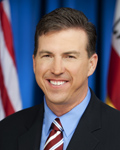
Kevin Mullin
DDemocratic
Ask Maddy
·
AI policy assistant
Ask Maddy about AB 914
Scope: CA
Hi! I can help you understand AB 914. What would you like to know?
Try one of these
i
Maddy answers using official bill text and legislative records. Always verify before sharing.
Sources cited inline