

Office of Emergency Services: disaster programs.
Summary
Existing law requires the Office of Emergency Services, in coordination with all interested state agencies with designated response roles in the State Emergency Plan and interested local emergency management agencies, to jointly establish by regulation a Standardized Emergency Management System for use by all emergency response agencies, as specified. Existing law requires all state agencies to use the Standardized Emergency Management System to coordinate multiple jurisdiction or multiple agency emergency and disaster operations. Existing law requires the Office of Emergency Services, in coordination with the Office of the State Fire Marshal, the Department of the California Highway Patrol, the Commission on Peace Officer Standards and Training, the Emergency Medical Services Authority, and all other interested state agencies with designated response roles in the State Emergency Plan, to jointly develop an approved course of instruction for use in training all emergency response personnel, consisting of the concepts and procedures associated with the Standardized Emergency Management System. This bill would appropriate $3,000,000 from the General Fund to the Office of Emergency Services to fund current disaster preparedness, resiliency, and response programs in underserved neighborhoods and communities that may be subject to earthquake, fire, or other disaster. The bill would require the office to distribute the funds on or before June 31, 2018, to a qualified charitable organization, as defined, that provides a regional disaster preparedness, response, and resilience program to underserved neighborhoods and communities that meets specified criteria, including that it have, among other things, an educational component that aims to educate underserved neighborhoods and communities on the risks that make them more susceptible to disasters and emergencies, and have a focus on increasing reliance with a volunteer workforce to support disaster response.
Bill status
failed
1 of 4 stages cleared
Introduction
Feb 2017
Committee Review
Floor Vote
Governor
Introduced Feb 16, 2017
Last action Feb 1, 2018
Floor votes
How they voted
No floor votes recorded yet.
Full legislative history
Actions timeline
Total actions
13
Key actions
3
Committee
7
Amendments
2
May 26, 2017
Lower · Passed
In committee: Held under submission.
lower
Apr 26, 2017
Committee
In committee: Set, first hearing. Referred to APPR. suspense file.
lower
Apr 19, 2017
Lower · Passed
From committee: Do pass and re-refer to Com. on APPR. (Ayes 15. Noes 2.) (April 19). Re-referred to Com. on APPR.
lower
Apr 17, 2017
Committee
Re-referred to Com. on G.O.
lower
Apr 6, 2017
Introduced
From committee chair, with author's amendments: Amend, and re-refer to Com. on G.O. Read second time and amended.
lower
Mar 22, 2017
Committee
Re-referred to Com. on G.O.
lower
Mar 21, 2017
Introduced
From committee chair, with author's amendments: Amend, and re-refer to Com. on G.O. Read second time and amended.
lower
Mar 20, 2017
Committee
Referred to Com. on G.O.
lower
Feb 17, 2017
Lower · Passed
From printer. May be heard in committee March 19.
lower
1 primary · 3 co-sponsors
Sponsors
Role
Legislator
Party
State
District
P

Miguel Santiago
DDemocratic
Co
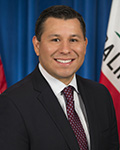
Eduardo Garcia
DDemocratic
Co
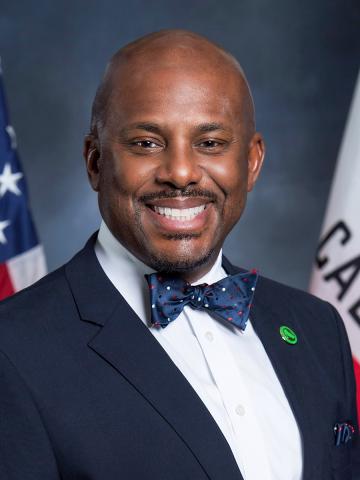
Mike Gipson
DDemocratic
Co
TG
Todd Gloria
DDemocratic
Ask Maddy
·
AI policy assistant
Ask Maddy about AB 871
Scope: CA
Hi! I can help you understand AB 871. What would you like to know?
Try one of these
i
Maddy answers using official bill text and legislative records. Always verify before sharing.
Sources cited inline