

Political Reform Act of 1974: political party committee disclosures.
Summary
(1) The Political Reform Act of 1974 provides for the comprehensive regulation of campaign financing. The act requires elected officers, candidates, and committees, including political party committees, to file various reports at specified periods, including semiannual reports, preelection statements, and supplemental preelection statements. The act defines a "political party committee" as the state central committee or county central committee of an organization that meets the requirements for recognition as a political party under law. This bill would additionally require political party committees that received or contributed $50,000 or more in the current or previous two-year election cycle to file monthly reports, as specified. (2) The act generally limits contributions made or received by elected officers, candidates, and committees. The act does not limit the contributions of a political party committee to a candidate for elective state office. The act also authorizes a political party committee to receive higher levels of contributions than other committees. In addition, political party committees are not controlled committees for purposes of the act. This bill would expand the definition of "political party committee" to include a legislative caucus committee. The bill would authorize the caucus of each political party of each house of the Legislature to create a legislative caucus committee directed by the caucus leader, as specified. The bill would provide that funds received by a legislative caucus committee shall be held in trust to advance the interests of the caucus and may be used to make expenditures associated with the election of members to the Legislature and for caucus expenses. The bill would also provide that a legislative caucus committee is not a controlled committee and that a bank account established for a legislative caucus committee is not a campaign contribution account of any candidate. (3) The act prohibits a lobbyist from making a contribution to an elected state officer or candidate for elected state office if the lobbyist is registered to lobby the governmental agency of the officer or for which the candidate is seeking election. This bill would similarly prohibit a lobbyist from making a contribution to a legislative caucus committee if the lobbyist is registered to lobby the Legislature. (4) Because a violation of the act is punishable as a misdemeanor, this bill would impose a state-mandated local program. The California Constitution requires the state to reimburse local agencies and school districts for certain costs mandated by the state. Statutory provisions establish procedures for making that reimbursement. This bill would provide that no reimbursement is required by this act for a specified reason. (5) The Political Reform Act of 1974, an initiative measure, provides that the Legislature may amend the act to further the act's purposes upon a 23 vote of each house of the Legislature and compliance with specified procedural requirements. This bill would declare that it furthers the purposes of the act. (6) This bill would declare that it is to take effect immediately as an urgency statute, but would become operative 14 days after its effective date.
Bill status
passed
3 of 5 stages cleared
Introduction
Jan 2017
Committee Review
Aug 2018
Assembly Passage
May 2017
Senate Passage
Governor
Introduced Jan 5, 2017
Last action Aug 27, 2018
Floor votes · Assembly May 4, 2017
How they voted
48–18
Passed · 8 other
Total votes 74
May 4, 2017
D
Democratic52
88% Yea
I
Independent1
100% Nay
R
Republican21
71% Nay
Vote distribution
All Yea
All Nay
Mixed
No data
Full legislative history
Actions timeline
Total actions
28
Key actions
8
Committee
12
Amendments
3
Aug 16, 2018
Upper · Passed
From committee: Be ordered to second reading pursuant to Senate Rule 28.8.
upper
Aug 14, 2018
Upper · Passed
From committee: Do pass and re-refer to Com. on APPR. (Ayes 3. Noes 2.) (August 14). Re-referred to Com. on APPR.
upper
Aug 8, 2018
Committee
Re-referred to Com. on E. & C.A.
upper
Aug 6, 2018
Upper · Passed
From committee chair, with author's amendments: Amend, and re-refer to committee. Read second time, amended, and re-referred to Com. on RLS.
upper
Aug 6, 2018
Committee
Re-referred to Com. on RLS. pursuant to Senate Rule 29.10(c).
upper
Jul 13, 2017
Upper · Passed
From committee: Do pass. (Ayes 4. Noes 0.) (July 12).
upper
Jun 5, 2017
Upper · Passed
In committee: Set, first hearing. Hearing canceled at the request of author.
upper
May 18, 2017
Committee
Referred to Com. on E. & C.A.
upper
May 4, 2017
Assembly · Passed
Assembly Vote: pass (48-18-8)
assembly
Apr 27, 2017
Lower · Passed
From committee: Do pass. (Ayes 6. Noes 1.) (April 26).
lower
Apr 20, 2017
Committee
Re-referred to Com. on E. & R.
lower
Apr 19, 2017
Introduced
From committee chair, with author's amendments: Amend, and re-refer to Com. on E. & R. Read second time and amended.
lower
Mar 22, 2017
Committee
Re-referred to Com. on E. & R.
lower
Mar 21, 2017
Introduced
From committee chair, with author's amendments: Amend, and re-refer to Com. on E. & R. Read second time and amended.
lower
Mar 20, 2017
Committee
Referred to Com. on E. & R.
lower
Jan 6, 2017
Lower · Passed
From printer. May be heard in committee February 5.
lower
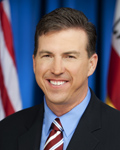
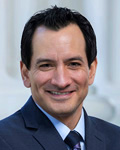
1 primary · 1 co-sponsor
Sponsors
Ask Maddy
·
AI policy assistant
Ask Maddy about AB 84
Scope: CA
Hi! I can help you understand AB 84. What would you like to know?
Try one of these
i
Maddy answers using official bill text and legislative records. Always verify before sharing.
Sources cited inline