

California Global Warming Solutions Act of 2006: market-based compliance mechanisms: fire prevention fees: sales and use tax manufacturing exemption.
Summary
(1) The California Global Warming Solutions Act of 2006 establishes the State Air Resources Board as the state agency responsible for monitoring and regulating sources emitting greenhouse gases. The act requires the state board to approve a statewide greenhouse gas emissions limit equivalent to the statewide greenhouse gas emissions level in 1990 to be achieved by 2020 and to ensure that statewide greenhouse gas emissions are reduced to at least 40% below the 1990 level by 2030. The act authorizes the state board to include the use of market-based compliance mechanisms. The act requires the state board to prepare and approve a scoping plan for achieving the maximum technologically feasible and cost-effective reductions in greenhouse gas emissions and to update the scoping plan at least once every 5 years. The act authorizes the state board to adopt a regulation that establishes a system of market-based declining annual aggregate emissions limits for sources or categories of sources that emit greenhouse gases, applicable from January 1, 2012, to December 31, 2020, inclusive, as specified. This bill would require the state board, no later than January 1, 2018, to update the scoping plan, as specified. The bill would require all greenhouse gas rules and regulations adopted by the state board to be consistent with the scoping plan. This bill would, until January 1, 2031, extend the applicability of a regulation that establishes a system of market-based declining annual aggregate emissions limits for sources or categories of sources that emit greenhouse gases to December 31, 2030. This bill would, until January 1, 2031, require the state board to include specified price ceilings, price containment points, offset credit compliance limits, and industry assistance factors for allowance allocation as part of a regulation that establishes a system of market-based declining annual aggregate emissions limits for sources or categories of sources that emit greenhouse gases from January 1, 2021, to December 31, 2030, inclusive. The bill, until January 1, 2031, additionally would require the state board to develop approaches to increase offset projects in the state and to make specified reports to the Legislature as part of that regulation. This bill would, until January 1, 2031, establish the Compliance Offsets Protocol Task Force, with a specified membership, to provide guidance to the state board in approving new offset protocols for a market-based compliance mechanism for the purposes of increasing offset projects with direct environmental benefits in the state while prioritizing disadvantaged communities, Native American or tribal lands, and rural and agricultural regions. This bill would, until January 1, 2031, establish the Independent Emissions Market Advisory Committee with a specified membership and would require the advisory committee to at least annually hold a public meeting and report to both the state board and the Joint Legislative Committee on Climate Change Policies on the environmental and economic performance of a specified market-based compliance mechanism and other relevant climate policies. This bill would, until January 1, 2031, require the California Workforce Development Board, in consultation with the state board, to submit a specified report to the Legislature, no later than January 1, 2019, on the need for increased education, career technical education, job training, and workforce development resources or capacity to help industry, workers, and communities transition to economic and labor-market changes related to specified statewide greenhouse gas emissions reduction goals. This bill would, until January 1, 2031, require the Legislative Analyst's Office to annually report to the Legislature on the economic impacts and benefits of specified greenhouse gas emissions targets. (2) Existing law requires all moneys, except for fines and penalties, collected by the state board as part of a market-based compliance mechanism to be deposited in the Greenhouse Gas Reduction Fund and to be available upon appropriation. Existing law continuously appropriates 60% of the annual proceeds of the fund for transit, affordable housing, sustainable communities, and high-speed rail purposes. This bill would declare the intent of the Legislature that moneys collected pursuant to the market-based compliance mechanism be appropriated in accordance with a specified order of priorities. (3) Existing law provides that the California Global Warming Solutions Act of 2006 does not limit or expand the existing authority of air pollution control and air quality management districts. This bill instead would, until January 1, 2031, prohibit an air district from adopting or implementing an emission reduction rule for carbon dioxide from stationary sources that are also subject to a specified market-based compliance mechanism. (4) Existing law provides that the state has the primary financial responsibility for preventing and suppressing fires in areas that the State Board of Forestry and Fire Protection has determined are state responsibility areas, as defined. Existing law requires that a fire prevention fee be charged on each habitable structure on a parcel that is within a state responsibility area, to be used for specified fire prevention activities. This bill, until January 1, 2031, would suspend the fire prevention fee. The bill would declare that it is the intent of the Legislature that moneys derived from the auction or sale of allowances pursuant to the market-based compliance mechanism described under (1) replace the fire prevention fee to continue the funding of the fire prevention activities. The bill would repeal those provisions requiring the payment of the fire prevention fee on January 1, 2031. (5) Existing law, commencing July 1, 2017, provides that the California Department of Tax and Fee Administration is responsible for the administration of the Sales and Use Tax Law, which was previously administered by the State Board of Equalization. Existing sales and use tax laws impose taxes on retailers measured by the gross receipts from the sale of tangible personal property sold at retail in this state, or on the storage, use, or other consumption in this state of tangible personal property purchased from a retailer for storage, use, or other consumption in this state, and provide various exemptions from those taxes. Existing law exempts from those taxes, on and after July 1, 2014, and before July 1, 2022, the gross receipts from the sale of, and the storage, use, or other consumption of, qualified tangible personal property purchased by a qualified person for use primarily in manufacturing, processing, refining, fabricating, or recycling of tangible personal property, as specified; qualified tangible personal property purchased for use by a qualified person to be used primarily in research and development, as provided; qualified tangible personal property purchased for use by a qualified person to be used primarily to maintain, repair, measure, or test any qualified tangible personal property, as provided; and qualified tangible personal property purchased by a contractor purchasing that property for use in the performance of a construction contract for the qualified person, that will use that property as an integral part of specified processes. This bill would, on and after July 1, 2014, and before July 1, 2030, additionally exempt from those taxes qualified tangible personal property purchased for use by a qualified person to be used primarily in the generation or production, as defined, or storage and distribution, as defined, of electric power or purchased for use by a contractor for the qualified person, as specified. The bill, on and after January 1, 2018, and until July 1, 2030, would also exempt from those taxes special purpose buildings and foundations used for the generation or production or storage and distribution of electric power. The bill, on and after January 1, 2018, and until July 1, 2030, would expand the definition of qualified person to include, among others, a person primarily engaged in the business of electric power generation. Under existing law, no later than each March 1 next following a calendar year for which these provisions provide an exemption, the California Department of Tax and Fee Administration is required to provide to the Joint Legislative Budget Committee a report of the total dollar amount of exemptions taken for the immediately preceding calendar year. This bill would require the department to also provide that exemption report to the Department of Finance. The bill would require the total dollar amount, as reported by the department, with the concurrence of the Department of Finance, to be transferred from the Greenhouse Gas Reduction Fund to the General Fund, as provided. This bill would also make various nonsubstantive and conforming changes and would repeal this exemption on January 1, 2031. (6) This bill would declare that it is to take effect immediately as an urgency statute.
Bill status
signed
all 5 stages cleared
Introduction
Feb 2017
Committee Review
Jul 2017
Assembly Passage
Jun 2017
Senate Passage
Jul 2017
Signed into Law
Jul 2017
Introduced Feb 9, 2017
Signed Jul 25, 2017
Floor votes · Senate Jul 18, 2017 · Assembly Jul 18, 2017
How they voted
25–10
Passed
Total votes 35
Jul 18, 2017
D
Democratic25
100% Yea
R
Republican10
100% Nay
Vote distribution
All Yea
All Nay
Mixed
No data
Full legislative history
Actions timeline
Total actions
32
Key actions
11
Committee
9
Amendments
6
Jul 25, 2017
Signed into law
Approved by the Governor.
legislature
Jul 18, 2017
Assembly · Passed
Assembly Vote: pass (51-20-2)
assembly
Jul 18, 2017
Senate · Passed
Senate Vote: pass (25-10)
senate
Jul 17, 2017
Lower · Passed
Urgency clause adopted. Senate amendments concurred in. To Engrossing and Enrolling. (Ayes 55. Noes 22. Page 2588.).
lower
Jul 17, 2017
Introduced
In Assembly. Concurrence in Senate amendments pending. May be considered on or after July 19 pursuant to Assembly Rule 77.
lower
Jul 17, 2017
Upper · Passed
From committee: Do pass. (Ayes 5. Noes 2.) (July 17).
upper
Jul 14, 2017
Upper · Passed
From committee chair, with author's amendments: Amend, and re-refer to committee. Read second time, amended, and re-referred to Com. on APPR.
upper
Jul 13, 2017
Upper · Passed
From committee: Do pass and re-refer to Com. on APPR. (Ayes 5. Noes 2.) (July 13). Re-referred to Com. on APPR.
upper
Jul 10, 2017
Upper · Passed
From committee chair, with author's amendments: Amend, and re-refer to committee. Read second time, amended, and re-referred to Com. on EQ.
upper
Jun 14, 2017
Committee
Referred to Com. on EQ.
upper
May 26, 2017
Lower · Passed
From committee: Amend, and do pass as amended. (Ayes 16. Noes 0.) (May 26).
lower
May 17, 2017
Committee
In committee: Set, first hearing. Referred to APPR. suspense file.
lower
Apr 18, 2017
Committee
Re-referred to Com. on APPR.
lower
Apr 6, 2017
Lower · Passed
From committee: Amend, and do pass as amended and re-refer to Com. on APPR. (Ayes 10. Noes 0.) (April 3).
lower
Mar 29, 2017
Committee
Re-referred to Com. on NAT. RES.
lower
Mar 28, 2017
Introduced
From committee chair, with author's amendments: Amend, and re-refer to Com. on NAT. RES. Read second time and amended.
lower
Feb 21, 2017
Committee
Referred to Com. on NAT. RES.
lower
Feb 10, 2017
Lower · Passed
From printer. May be heard in committee March 12.
lower
1 primary · 17 co-sponsors
Sponsors
Role
Legislator
Party
State
District
P
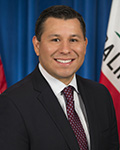
Eduardo Garcia
DDemocratic
Co

Adrin Nazarian
DDemocratic
Co
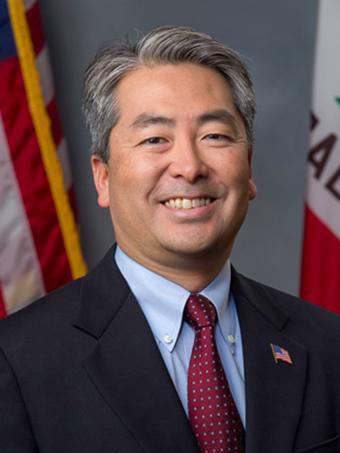
Al Muratsuchi
DDemocratic
Co
Bill Quirk
DDemocratic
Co

Cristina Garcia
DDemocratic
Co
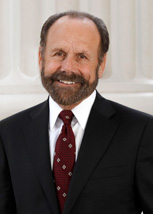
Jerry Hill
DDemocratic
Co
JW
Jim Wood
DDemocratic
Co

Kansen Chu
DDemocratic
Co
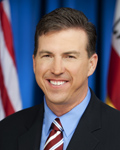
Kevin Mullin
DDemocratic
Co

Marc Levine
DDemocratic
Co
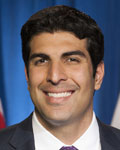
Matthew Dababneh
DDemocratic


Ask Maddy
·
AI policy assistant
Ask Maddy about AB 398
Scope: CA
Hi! I can help you understand AB 398. What would you like to know?
Try one of these
i
Maddy answers using official bill text and legislative records. Always verify before sharing.
Sources cited inline