

School finance: special education funding.
Summary
Existing law establishes a public school financing system that requires state funding for county superintendents of schools, school districts, and charter schools to be calculated pursuant to a local control funding formula. Existing law requires the Superintendent of Public Instruction to determine the amount of funding to be provided for each special education local plan area in accordance with specified calculations. Existing law requires the Superintendent, for the 2013–14 fiscal year, to compute an equalization adjustment for each special education local plan area, as specified. This bill would require the Superintendent to compute that equalization adjustment commencing with the first fiscal year after funds are apportioned pursuant to a specified formula and for each fiscal year thereafter in which an equalization appropriation is made, as specified. The bill would require the Superintendent to make certain computations following each year in which an equalization appropriation is made. The bill would require, commencing with the first fiscal year after funds are apportioned pursuant to a specified formula, a special education local plan area that reports serving children 3 or 4 years of age who meet the definition of an "individual with exceptional needs" to count twice all units of average daily attendance generated by children enrolled in kindergarten less those children eligible for transitional kindergarten, for purposes of calculating units of average daily attendance. By adding to the duties of special education local plan areas, the bill would impose a state-mandated local program. The California Constitution requires the state to reimburse local agencies and school districts for certain costs mandated by the state. Statutory provisions establish procedures for making that reimbursement. This bill would provide that, if the Commission on State Mandates determines that the bill contains costs mandated by the state, reimbursement for those costs shall be made pursuant to the statutory provisions noted above.
Bill status
failed
1 of 4 stages cleared
Introduction
Feb 2017
Committee Review
Floor Vote
Governor
Introduced Feb 6, 2017
Last action Feb 1, 2018
Floor votes
How they voted
No floor votes recorded yet.
Full legislative history
Actions timeline
Total actions
9
Key actions
3
Committee
5
Amendments
1
Apr 27, 2017
Lower · Passed
From committee: Do pass and re-refer to Com. on APPR. (Ayes 7. Noes 0.) (April 26). Re-referred to Com. on APPR.
lower
Mar 22, 2017
Lower · Passed
In committee: Hearing postponed by committee.
lower
Mar 1, 2017
Committee
Re-referred to Com. on ED.
lower
Feb 28, 2017
Introduced
From committee chair, with author's amendments: Amend, and re-refer to Com. on ED. Read second time and amended.
lower
Feb 27, 2017
Committee
Referred to Com. on ED.
lower
Feb 7, 2017
Lower · Passed
From printer. May be heard in committee March 9.
lower
1 primary · 0 co-sponsors
Sponsors
Role
Legislator
Party
State
District
P
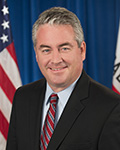
Patrick O'Donnell
DDemocratic
Ask Maddy
·
AI policy assistant
Ask Maddy about AB 312
Scope: CA
Hi! I can help you understand AB 312. What would you like to know?
Try one of these
i
Maddy answers using official bill text and legislative records. Always verify before sharing.
Sources cited inline