

Wills: electronic wills and electronic records.
Summary
Existing law generally requires a will to be in writing and satisfy specified requirements of the Probate Code. Existing law requires a will to be signed by the testator or in the testator's name by some other person in the testator's presence and by the testator's direction. A will that fails to meet those requirements may be valid as a holographic will. Existing law also allows for the execution of a California statutory will. This bill would authorize a testator to execute an electronic will that, among other things, is created and maintained as an electronic record, as defined, contains the electronic signature of the testator, contains the date and time of the electronic signature, and includes an authentication method, as defined, that is attached to or logically associated with the electronic will to identify the testator. The bill would authorize the electronic document, as defined, to be retained in the custody of a qualified custodian, authorized by the testator, that meets specified requirements and would prescribe methods to change the qualified custodian, including requiring specified affidavits to be made by the qualified custodian. By requiring affidavits that are made under oath, this bill would expand the crime of perjury and would impose a state-mandated local program. The bill would authorize an electronic will to be converted into a certified paper original, as specified. The bill would define new terms for these purposes, and would make conforming changes to related provisions. Among other things, existing law authorizes a writing in existence when a will is executed to be incorporated by reference if the language of the will manifests this intent and describes the writing sufficiently to permit its identification. Existing law authorizes a will to refer to a writing that directs disposition of tangible personal property not otherwise specifically disposed of by the will, if certain criteria are met. This bill would expand the application of those provisions to electronic records and allow electronic records to be used instead of writings for those purposes, among others. The bill would authorize, among others, a video recording or other electronic record to be admissible as evidence of the proper execution of a will, the intentions of a testator, the mental state or capacity of a testator, the authenticity of the will, and matters that are determined by the court to be relevant to the probate of a will. The bill would make conforming changes to related provisions. The California Constitution requires the state to reimburse local agencies and school districts for certain costs mandated by the state. Statutory provisions establish procedures for making that reimbursement. This bill would provide that no reimbursement is required by this act for a specified reason.
Bill status
in committee
1 of 4 stages cleared
Introduction
Feb 2018
Committee Review
Floor Vote
Governor
Introduced Feb 16, 2018
Last action Apr 2, 2018
Floor votes
How they voted
No floor votes recorded yet.
Full legislative history
Actions timeline
Total actions
5
Key actions
1
Committee
3
Amendments
1
Apr 2, 2018
Committee
Re-referred to Com. on JUD.
lower
Mar 22, 2018
Introduced
From committee chair, with author's amendments: Amend, and re-refer to Com. on JUD. Read second time and amended.
lower
Mar 22, 2018
Committee
Referred to Com. on JUD.
lower
Feb 17, 2018
Lower · Passed
From printer. May be heard in committee March 19.
lower
1 primary · 0 co-sponsors
Sponsors
Role
Legislator
Party
State
District
P
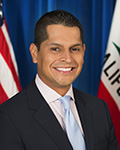
Miguel Santiago
DDemocratic
Ask Maddy
·
AI policy assistant
Ask Maddy about AB 3095
Scope: CA
Hi! I can help you understand AB 3095. What would you like to know?
Try one of these
i
Maddy answers using official bill text and legislative records. Always verify before sharing.
Sources cited inline