

Medi-Cal: California Special Supplemental Nutrition Program for Women, Infants, and Children.
Summary
Existing law establishes the Medi-Cal program, which is administered by the State Department of Health Care Services and under which qualified low-income individuals receive health care services. The Medi-Cal program is, in part, governed and funded by federal Medicaid program provisions. Existing law establishes the Medi-Cal Access Program, which provides health care services to a woman who is pregnant or in her postpartum period and whose household income is within specified thresholds of the federal poverty level, and to a child under 2 years of age who is delivered by a mother enrolled in the program, as specified. Existing federal law authorizes a state to provide in its Medicaid state plan that in determining eligibility under the federal Medicaid program for a child, the state is authorized to rely on a finding made within a reasonable period from an Express Lane agency, as defined, when it determines whether a child satisfies one or more components of eligibility for medical assistance under the federal Medicaid program. Existing law establishes the California Special Supplemental Nutrition Program for Women, Infants, and Children (WIC Program) , which is administered by the State Department of Public Health and counties and under which nutrition and other assistance are provided to eligible low-income pregnant women, low-income postpartum and lactating women, and low-income infants and children under 5 years of age, who have been determined to be at nutritional risk. Existing law requires the former Managed Risk Medical Insurance Board and former State Department of Health Services, in collaboration with program offices for the WIC Program and other designated entities, to design, promulgate, and implement policies and procedures for an automated enrollment gateway system, subject to appropriation, allowing children applying to the WIC Program to obtain presumptive eligibility for, and to facilitate application for enrollment in, the Medi-Cal program or the former Healthy Families Program, to the extent federal financial participation is available, as specified. This bill would delete the above-described provisions relating to the automated enrollment gateway system and would instead require the State Department of Health Care Services, in collaboration with the same designated entities, to design, promulgate, and implement policies and procedures for an automated enrollment gateway system, operational no later than January 1, 2020, allowing children applying to the WIC Program to obtain express lane eligibility for, and to facilitate application for enrollment in, the Medi-Cal program, and allowing pregnant women applying to the WIC Program to obtain presumptive eligibility for the Medi-Cal program or the Medi-Cal Access Program, to the extent federal financial participation is available. The bill would also require the system to perform specified functions relating to the eligibility of those persons under the programs. The bill would require the department to seek approval of any amendments to the state plan necessary to implement these provisions, and would condition the implementation of the provisions on the department obtaining all necessary federal approvals. Because counties are responsible for making eligibility determinations under the Medi-Cal program, by revising eligibility requirements, this bill would impose a state-mandated local program. The California Constitution requires the state to reimburse local agencies and school districts for certain costs mandated by the state. Statutory provisions establish procedures for making that reimbursement. This bill would provide that, if the Commission on State Mandates determines that the bill contains costs mandated by the state, reimbursement for those costs shall be made pursuant to the statutory provisions noted above.
Bill status
passed
3 of 5 stages cleared
Introduction
Feb 2018
Committee Review
Aug 2018
Assembly Passage
May 2018
Senate Passage
Governor
Introduced Feb 15, 2018
Last action Aug 16, 2018
Floor votes · Assembly May 30, 2018
How they voted
74–1
Passed
Total votes 75
May 30, 2018
D
Democratic52
100% Yea
I
Independent1
100% Yea
R
Republican22
95% Yea
Vote distribution
All Yea
All Nay
Mixed
No data
Full legislative history
Actions timeline
Total actions
19
Key actions
7
Committee
9
Amendments
3
Aug 16, 2018
Upper · Passed
In committee: Held under submission.
upper
Aug 6, 2018
Committee
In committee: Referred to APPR. suspense file.
upper
Jun 26, 2018
Upper · Passed
Read second time and amended. Re-referred to Com. on APPR.
upper
Jun 25, 2018
Upper · Passed
From committee: Amend, and do pass as amended and re-refer to Com. on APPR. (Ayes 8. Noes 0.) (June 20).
upper
Jun 7, 2018
Committee
Referred to Com. on HEALTH.
upper
May 30, 2018
Assembly · Passed
Assembly Vote: pass (74-1)
assembly
May 25, 2018
Lower · Passed
From committee: Do pass. (Ayes 15. Noes 1.) (May 25).
lower
May 23, 2018
Committee
In committee: Set, first hearing. Referred to APPR. suspense file.
lower
Apr 18, 2018
Lower · Passed
From committee: Do pass and re-refer to Com. on APPR. (Ayes 15. Noes 0.) (April 17). Re-referred to Com. on APPR.
lower
Apr 2, 2018
Committee
Re-referred to Com. on HEALTH.
lower
Mar 23, 2018
Introduced
From committee chair, with author's amendments: Amend, and re-refer to Com. on HEALTH. Read second time and amended.
lower
Mar 22, 2018
Committee
Referred to Com. on HEALTH.
lower
Feb 16, 2018
Lower · Passed
From printer. May be heard in committee March 18.
lower
1 primary · 3 co-sponsors
Sponsors
Role
Legislator
Party
State
District
P

Autumn R. Burke
DDemocratic
Co
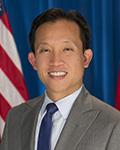
David Chiu
DDemocratic
Co
JW
Jim Wood
DDemocratic
Co

Laura Friedman
DDemocratic
Ask Maddy
·
AI policy assistant
Ask Maddy about AB 2579
Scope: CA
Hi! I can help you understand AB 2579. What would you like to know?
Try one of these
i
Maddy answers using official bill text and legislative records. Always verify before sharing.
Sources cited inline