

Transportation funding.
Summary
(1) Existing law provides various sources of funding for transportation purposes, including funding for the state highway system and the local street and road system. These funding sources include, among others, fuel excise taxes, commercial vehicle weight fees, local transactions and use taxes, and federal funds. Existing law imposes certain registration fees on vehicles, with revenues from these fees deposited in the Motor Vehicle Account and used to fund the Department of Motor Vehicles and the Department of the California Highway Patrol. Existing law provides for the monthly transfer of excess balances in the Motor Vehicle Account to the State Highway Account. This bill would create the Traffic Relief and Road Improvement Program to address traffic congestion and deferred maintenance on the state highway system and the local street and road system. The bill would provide for the deposit of various existing sources of revenue in the Traffic Relief and Road Improvement Account, which the bill would create in the State Transportation Fund, including revenues attributable to the sales and use tax on motor vehicles, revenues attributable to automobile and motor vehicle insurance policies from the insurer gross premiums tax, revenues from certain diesel fuel sales and use taxes, revenues from certain vehicle registration fees, and certain miscellaneous State Highway Account revenues. This bill would continuously appropriate the revenues in the account, after deductions for administration, with 40% of the revenues to be allocated to the Department of Transportation for maintenance of the state highway system or for purposes of the State Highway Operation and Protection Program, 40% of the revenues to be apportioned by the Controller to cities and counties for road purposes pursuant to a specified formula, and 20% to fund projects in the State Transportation Improvement Program that create measurable reductions in traffic congestion. The bill would require the California Transportation Commission to adopt performance criteria and metrics for expenditure of certain of these revenues, and would impose various requirements on cities and counties in order to receive apportionments. The bill would also require the department to implement efficiency measures with the goal of generating $100,000,000 annually in savings at the department and to propose, from the identified savings, an appropriation to be included in the annual Budget Act of up to $100,000,000 from the State Highway Account for expenditure on the Active Transportation Program. (2) Existing law provides for various loans of transportation revenues to the General Fund, and requires repayment of these loans by June 30, 2021. This bill would instead require these loans to be repaid by December 31, 2018. (3) Article XXII of the California Constitution provides that the State of California and all other governmental entities shall be allowed the choice to contract for architectural and engineering services for all public works of improvement as an alternative to the employment of civil service employees to perform those services. This bill would require the Department of Transportation to increase its annual use of contract staff resources so that 20% of its capital outlay staff consists of contract resources by the 2020–21 fiscal year. (4) Article XIX of the California Constitution requires gasoline excise tax revenues from motor vehicles traveling upon public streets and highways to be deposited in the Highway Users Tax Account, for allocation to city, county, and state transportation purposes. Existing law generally provides for statutory allocation of gasoline excise tax revenues attributable to other modes of transportation, including aviation, boats, agricultural vehicles, and off-highway vehicles, to particular accounts and funds for expenditure on purposes associated with those other modes, except that a specified portion of these gasoline excise tax revenues is deposited in the General Fund. Expenditure of the gasoline excise tax revenues attributable to those other modes is not restricted by Article XIX of the California Constitution. This bill, commencing January 1, 2019, would instead transfer to the Highway Users Tax Account for allocation to state and local transportation purposes under a specified formula most of the gasoline excise tax revenues currently being deposited in the General Fund that are attributable to boats, agricultural vehicles, and off-highway vehicles. Because that account is continuously appropriated, the bill would make an appropriation. The bill would also delete a monthly transfer to the General Fund of $833,000 in gasoline excise taxes attributable to off-highway vehicles, thereby retaining those revenues for off-highway vehicle programs. (5) Existing law imposes weight fees on the registration of commercial motor vehicles and provides for the deposit of net weight fee revenues into the State Highway Account. Existing law provides for the transfer of certain weight fee revenues from the State Highway Account to the Transportation Debt Service Fund to reimburse the General Fund for payment of debt service on general obligation bonds issued for certain transportation purposes. Existing law also provides for the transfer of specified weight fee revenues to the Transportation Bond Direct Payment Account for direct payment of debt service on designated bonds, which are defined to be certain transportation general obligation bonds issued pursuant to Proposition 1B of 2006. Existing law also provides for loans of weight fee revenues to the General Fund to the extent the revenues are not needed for bond debt service purposes, with the loans to be repaid when the revenues are later needed for those purposes, as specified. This bill would repeal these provisions, thereby eliminating the use of the weight fee revenues for transportation general obligation bond debt service and retaining those revenues in the State Highway Account. The bill would make other conforming changes in that regard. (6) Article XIX of the California Constitution restricts the expenditure of revenues from taxes imposed by the state on fuels used in motor vehicles upon public streets and highways to street and highway and certain mass transit purposes. Existing law requires certain miscellaneous revenues deposited in the State Highway Account that are not restricted as to expenditure by Article XIX of the California Constitution to be transferred to the Transportation Debt Service Fund in the State Transportation Fund, as specified, and requires the Controller to transfer from the fund to the General Fund an amount of those revenues necessary to offset the current year debt service made from the General Fund on general obligation transportation bonds issued pursuant to Proposition 116 of 1990. This bill would delete the transfer of these miscellaneous revenues to the Transportation Debt Service Fund, and would instead require the miscellaneous revenues to be transferred to the Traffic Relief and Road Improvement Account for expenditure pursuant to (1) above. (7) Existing law requires all moneys, except for fines and penalties, collected by the State Air Resources Board from the auction or sale of allowances as part of a market-based compliance mechanism relative to reduction of greenhouse gas emissions to be deposited in the Greenhouse Gas Reduction Fund. Existing law continuously appropriates 60% of the annual proceeds of the fund to various transportation and housing programs. This bill would require certain amounts of revenue to be made available for specified purposes from the Greenhouse Gas Reduction Fund to the extent revenues are available after funding existing programs, and would require specified diesel sales and use tax revenues and certain vehicle registration fee revenues to be transferred to the Traffic Relief and Road Improvement Account for expenditure pursuant to (1) above. The bill, beyond the backfill required for the Public Transportation Account, would additionally provide for an additional transfer from the Greenhouse Gas Reduction Fund to the Public Transportation Account, as specified. Because certain revenues in the Public Transportation Account are continuously appropriated, this bill would make an appropriation in that regard. The bill would exempt funds transferred from the Greenhouse Gas Reduction Fund to the Public Transportation Account from statutory restrictions and limitations otherwise applicable to expenditures from the Greenhouse Gas Reduction Fund, as specified. The bill would also require backfill of vehicle registration fee revenues otherwise to be allocated to the Air Quality Improvement Fund, the Alternative and Renewable Fuel and Vehicle Technology Fund, and the Enhanced Fleet Modernization Subaccount, as specified. (8) Existing law establishes in state government the Transportation Agency, which includes various departments and state entities, including the California Transportation Commission. Existing law vests the California Transportation Commission with specified powers, duties, and functions relative to transportation matters. Existing law requires the commission to retain independent authority to perform the duties and functions prescribed to it under any provision of law. This bill would exclude the California Transportation Commission from the Transportation Agency, establish it as an independent entity in state government, and require it to act in an independent oversight role. The bill would also make conforming changes. (9) Existing law creates the Independent Office of Audits and Investigations within the department, with specified powers and duties. Existing law provides for the Governor to appoint the director of the office for a 6-year term, subject to confirmation by the Senate, and provides that the director, who is known as the Inspector General, may not be removed from office during the term except for good cause. Existing law specifies the duties and responsibilities of the Inspector General with respect to the office and local agencies receiving state and federal transportation funds through the department, and requires an annual report to the Legislature and Governor. This bill would rename that entity the Independent Office of Audits and Investigations for Transportation and would make it an independent office that would not be a subdivision of any other government entity to ensure that state and local agencies expending state transportation funds are operating efficiently, effectively, and in compliance with applicable federal and state laws. The bill would require the Inspector General to annually conduct an audit of all state transportation megaprojects. (10) Existing law authorizes the Department of Transportation and regional transportation agencies, as defined, to enter into comprehensive development lease agreements with public and private entities, or consortia of those entities, for certain transportation projects that may charge certain users of those projects tolls and user fees, subject to various terms and requirements. These arrangements are commonly known as public-private partnerships. Existing law provides that a lease agreement may not be entered into under these provisions on or after January 1, 2017. This bill would authorize lease agreements under these provisions to be entered into until January 1, 2030. The bill would include the Santa Clara Valley Transportation Authority within the definition of regional transportation agency for this these purposes. The bill would make other revisions to these provisions. (11) The California Environmental Quality Act (CEQA) requires a lead agency, as defined, to prepare, or cause to be prepared, and certify the completion of, an environmental impact report on a project that it proposes to carry out or approve that may have a significant effect on the environment or to adopt a negative declaration if it finds that the project will not have that effect. CEQA also requires a lead agency to prepare a mitigated negative declaration for a project that may have a significant effect on the environment if revisions in the project would avoid or mitigate that effect and there is no substantial evidence that the project, as revised, would have a significant effect on the environment, with certain exceptions. This bill would provide that CEQA does not apply to a project, or the issuance of a permit for a project, that consists of the inspection, maintenance, repair, rehabilitation, replacement, or removal of existing transportation infrastructure, as specified, or to the addition of an auxiliary lane or bikeway to existing transportation infrastructure under certain conditions. (12) Existing law requires the Office of Planning and Research to prepare, develop, and transmit to the Secretary of the Natural Resources Agency for certification and adoption proposed revisions to guidelines implementing the California Environmental Quality Act establishing criteria for determining the significance of transportation impacts for projects within transit priority areas that promote the reduction of greenhouse gas emissions, the development of multimodal transportation networks, and a diversity of land uses. Existing law authorizes the office to adopt guidelines to establish alternative metrics to the metrics used for traffic levels of service for transportation impacts outside transit priority areas. This bill would eliminate the authority of the office to adopt guidelines establishing alternative metrics for transportation impacts outside transit priority areas. (13) This bill would declare that it is to take effect immediately as an urgency statute.
Bill status
in committee
1 of 4 stages cleared
Introduction
Jan 2018
Committee Review
Floor Vote
Governor
Introduced Jan 12, 2018
Last action Jan 29, 2018
Floor votes
How they voted
No floor votes recorded yet.
Full legislative history
Actions timeline
Total actions
3
Key actions
0
Committee
2
Jan 29, 2018
Assembly · Referred to committee
Referred to Com. on TRANS.
Jan 13, 2018
Assembly · Reported by committee
From printer. May be heard in committee February 12.
0 primary · 1 co-sponsor
Sponsors
Role
Legislator
Party
State
District
Co
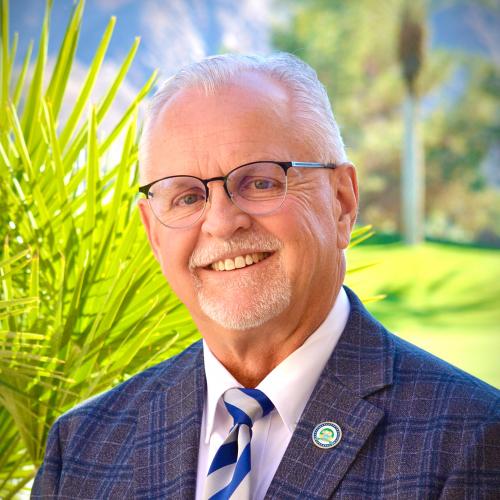
Tom Lackey
RRepublican
Ask Maddy
·
AI policy assistant
Ask Maddy about AB 1866
Scope: CA
Hi! I can help you understand AB 1866. What would you like to know?
Try one of these
i
Maddy answers using official bill text and legislative records. Always verify before sharing.
Sources cited inline