

Food donations.
Summary
Existing law specifies that a food facility that donates any food that is fit for human consumption at the time it was donated to a nonprofit charitable organization or a food bank is not liable for any damage or injury resulting from the consumption of the donated food, unless the injury resulted from negligence or a willful act in the preparation or handling of the donated food. This bill, the California Good Samaritan Food Donation Act, would expand these provisions to persons and gleaners who donate food, as defined. The bill would narrow the exception to protection from liability to injury resulting from gross negligence or intentional misconduct. The bill would specify that the immunity from civil liability provided by these provisions applies to the donation of food that is fit for human consumption and that has exceeded the labeled shelf life date recommended by the manufacturer, provided, in instances of perishable food, the person that distributes the food to the end recipient makes a good faith evaluation that the food is wholesome. The bill would authorize food facilities to donate food directly to end recipients for consumption. Existing law specifies that a nonprofit charitable organization or food bank is not liable for an injury or death from distributing food without charge that is fit for human consumption unless the injury or death is a direct result of negligence, recklessness, or intentional misconduct. This bill would narrow the exception to protection from liability to injury or death as a direct result of gross negligence or intentional misconduct. Existing law authorizes a person engaged in the business of processing, distributing, or selling an agricultural product to donate, free of charge, a product that is in a condition that it may be used as food for human beings, to a nonprofit charitable organization. Existing law limits the liability of a county, its agencies, and persons who donate agricultural products. Existing law provides that these provisions do not relieve any nonprofit charitable organization from any liability for any injury, including, but not limited to, injury resulting from the ingesting of an agricultural product, as a result of receiving, accepting, gathering, or removing any donated agricultural product. This bill would expand this provision to include a gleaner and also authorize food facilities to donate food directly to end recipients for consumption. The bill would specify that these donations are protected under this act if the donated food has exceeded the labeled shelf life date recommended by the manufacturer, provided, in instances of perishable food, the person that distributes the food to the end recipient makes a good faith evaluation that the food is wholesome. The bill would repeal these provisions relating to not relieving nonprofit charitable organizations from liability for injuries. Existing law authorizes a food facility to donate food to a food bank or to any other nonprofit charitable organization for distribution to persons free of charge. Existing law exempts a food facility that donates food from civil or criminal liability or penalty for violation of any laws, regulations, or ordinances regulating the labeling or packaging of the donated product or, with respect to any other laws, regulations, or ordinances, for a violation occurring after the time of the donation. This bill would also authorize a person or gleaner to donate food to a food bank or to a nonprofit charitable organization and exempt the person or gleaner from civil or criminal liability relating to the donated food. The bill would also expand these provisions to include the donation of food by food facilities directly to end recipients. The bill would specify that the immunity from civil or criminal liability or penalty applies to the donation of food that has exceeded the labeled shelf life date recommended by the manufacturer, provided, in instances of perishable food, the person that distributes the food to the end recipient makes a good faith evaluation that the food is wholesome. The bill would require enforcement officers to promote the recovery of food fit for human consumption, as specified. Because the bill would require local officials to perform additional duties, the bill would impose a state-mandated local program. The bill would make other conforming and nonsubstantive changes. The California Constitution requires the state to reimburse local agencies and school districts for certain costs mandated by the state. Statutory provisions establish procedures for making that reimbursement. This bill would provide that, if the Commission on State Mandates determines that the bill contains costs mandated by the state, reimbursement for those costs shall be made pursuant to the statutory provisions noted above.
Bill status
signed
all 5 stages cleared
Introduction
Feb 2017
Committee Review
Sep 2017
Assembly Passage
May 2017
Senate Passage
Sep 2017
Signed into Law
Oct 2017
Introduced Feb 17, 2017
Signed Oct 9, 2017
Floor votes · Senate Sep 12, 2017 · Assembly May 4, 2017
How they voted
31–0
Passed · 1 other
Total votes 32
Sep 12, 2017
D
Democratic22
95% Yea
R
Republican10
100% Yea
Vote distribution
All Yea
All Nay
Mixed
No data
Full legislative history
Actions timeline
Total actions
38
Key actions
14
Committee
9
Amendments
9
Oct 9, 2017
Signed into law
Approved by the Governor.
legislature
Sep 13, 2017
Lower · Passed
Senate amendments concurred in. To Engrossing and Enrolling. (Ayes 79. Noes 0. Page 3302.).
lower
Sep 12, 2017
Senate · Passed
Senate Vote: pass (31-0-1)
senate
Sep 12, 2017
Introduced
In Assembly. Concurrence in Senate amendments pending. May be considered on or after September 14 pursuant to Assembly Rule 77.
lower
Sep 5, 2017
Upper · Passed
Read third time and amended. Ordered to second reading.
upper
Aug 24, 2017
Introduced
In Assembly. Concurrence in Senate amendments pending. May be considered on or after August 26 pursuant to Assembly Rule 77.
lower
Aug 21, 2017
Upper · Passed
From committee: Be placed on second reading file pursuant to Senate Rule 28.8 and ordered to consent calendar.
upper
Jul 18, 2017
Upper · Passed
Read second time and amended. Re-referred to Com. on APPR.
upper
Jul 17, 2017
Upper · Passed
From committee: Amend, and do pass as amended and re-refer to Com. on APPR. with recommendation: To Consent Calendar. (Ayes 7. Noes 0.) (July 11).
upper
Jun 22, 2017
Upper · Passed
From committee: Do pass and re-refer to Com. on JUD. with recommendation: To Consent Calendar. (Ayes 9. Noes 0.) (June 21). Re-referred to Com. on JUD.
upper
Jun 13, 2017
Upper · Passed
From committee chair, with author's amendments: Amend, and re-refer to committee. Read second time, amended, and re-referred to Com. on HEALTH.
upper
May 18, 2017
Committee
Referred to Coms. on HEALTH and JUD.
upper
May 4, 2017
Assembly · Passed
Assembly Vote: pass (64-0-6)
assembly
May 1, 2017
Lower · Passed
Read third time and amended. Ordered to third reading. (Page 1305.)
lower
Apr 26, 2017
Lower · Passed
From committee: Do pass. (Ayes 16. Noes 0.) (April 26).
lower
Apr 4, 2017
Committee
Re-referred to Com. on APPR.
lower
Mar 30, 2017
Lower · Passed
From committee: Amend, and do pass as amended and re-refer to Com. on APPR. (Ayes 11. Noes 0.) (March 28).
lower
Mar 22, 2017
Committee
Re-referred to Com. on JUD.
lower
Mar 21, 2017
Introduced
From committee chair, with author's amendments: Amend, and re-refer to Com. on JUD. Read second time and amended.
lower
Mar 9, 2017
Committee
Referred to Com. on JUD.
lower
Feb 19, 2017
Lower · Passed
From printer. May be heard in committee March 21.
lower
1 primary · 10 co-sponsors
Sponsors
Role
Legislator
Party
State
District
P
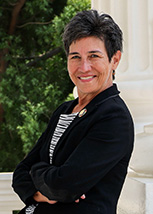
Susan Eggman
DDemocratic
Co
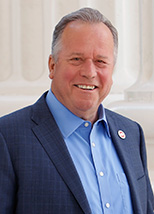
Bill Dodd
DDemocratic
Co

Cristina Garcia
DDemocratic
Co

David Chiu
DDemocratic
Co

Devon Mathis
RRepublican
Co
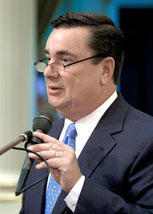
Joel Anderson
RRepublican
Co

Marie Waldron
RRepublican
Co
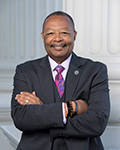
Reggie Jones-Sawyer
DDemocratic
Co

Robert M. Hertzberg
DDemocratic
Co
RJ
Rocky J. Chávez
RRepublican
Co
Tom Lackey
RRepublican
Ask Maddy
·
AI policy assistant
Ask Maddy about AB 1219
Scope: CA
Hi! I can help you understand AB 1219. What would you like to know?
Try one of these
i
Maddy answers using official bill text and legislative records. Always verify before sharing.
Sources cited inline