

Criminal cases: exhibits: retention.
Summary
(1) Existing law requires the clerk of the court to retain all exhibits introduced or filed in a criminal action or proceeding, except as specified, until final determination of the actions or proceedings. Existing law authorizes the court, if requested by a party, to order an exhibit delivered to that party if no prejudice will be suffered by either party, a full and complete photographic record is made of the exhibits, and release of the exhibit is not prohibited by law. Existing law requires the court to return an exhibit to the party offering it when the exhibit poses a security, storage, or safety problem, as specified. This bill would declare the intent of the Legislature to ensure that exhibits are preserved by the court in cases that may be reviewed in a postconviction, judicial, or extrajudicial process, and that biological evidence is retained for potential testing and retesting. The bill would require the court to retain in its custody and control any exhibit introduced or filed in a criminal action or proceeding, as specified. The bill would authorize a party to whom an exhibit is released, either upon request, or for security, storage, or safety reasons, to make a digital record instead of a photographic record of the exhibit. (2) Existing law prohibits a court from ordering the destruction of an exhibit before the final determination of an action or proceeding, as specified. Existing law requires the clerk of the court to dispose of all exhibits, as specified, 60 days after that final determination. Existing law requires the court to notify specified parties, not less than 15 days before any proposed disposition of an exhibit, of the proposed disposition, and authorizes the party to prepare a photographic record of the exhibit at his or her own expense. This bill would prohibit a court from ordering the destruction of an exhibit before the expiration of a specified time period. In a case charging a violent felony, a specified sex offense, an aggravated assault on a child, or any charge that results in a life sentence, the bill would prohibit the court from ordering the destruction of an exhibit before one year after the term of imprisonment ends. The bill would require the clerk of the court to dispose of all exhibits, as specified, 60 days after the expiration of a specified time period. The bill would authorize a party to make a digital record instead of a photographic record of any exhibit when the court notifies specified parties of an order to destroy the exhibit. To the extent that a governmental entity may be required to retain certain evidence for a greater period of time under related provisions, the bill would impose a state-mandated local program. (3) Existing law requires the appropriate governmental entity to retain all biological material that is secured in connection with a criminal case for the period of time that any person remains incarcerated in connection with that case, except as specified. Existing law authorizes the governmental entity to dispose of the biological material while a person remains incarcerated if the entity notifies specified persons of its intention to dispose of the material and does not receive a response, as specified, within 180 days of sending the notification. This bill would require the governmental entity, when notifying a person who is serving a term of imprisonment and who remains incarcerated of the intention to dispose of any object or material that contains or includes biological material while the person remains incarcerated, to obtain proof of service of that notice. The bill would authorize the governmental entity to dispose of any object or material that contains or includes biological material that entity it does not receive a response, as specified, within one year of sending the notification. Because the bill would require the governmental entity to obtain proof of service of notice under these provisions, the bill would impose a state-mandated local program. (4) The bill would make conforming changes. (5) The California Constitution requires the state to reimburse local agencies and school districts for certain costs mandated by the state. Statutory provisions establish procedures for making that reimbursement. This bill would provide that, if the Commission on State Mandates determines that the bill contains costs mandated by the state, reimbursement for those costs shall be made pursuant to the statutory provisions noted above.
Bill status
failed
1 of 4 stages cleared
Introduction
Feb 2017
Committee Review
Floor Vote
Governor
Introduced Feb 17, 2017
Last action Feb 1, 2018
Floor votes
How they voted
No floor votes recorded yet.
Full legislative history
Actions timeline
Total actions
13
Key actions
4
Committee
8
Amendments
2
May 26, 2017
Lower · Passed
In committee: Held under submission.
lower
May 17, 2017
Committee
In committee: Set, first hearing. Referred to APPR. suspense file.
lower
Apr 19, 2017
Lower · Passed
From committee: Do pass and re-refer to Com. on APPR. (Ayes 7. Noes 0.) (April 18). Re-referred to Com. on APPR.
lower
Apr 18, 2017
Committee
Re-referred to Com. on PUB. S.
lower
Apr 17, 2017
Introduced
From committee chair, with author's amendments: Amend, and re-refer to Com. on PUB. S. Read second time and amended.
lower
Mar 28, 2017
Lower · Passed
In committee: Set, first hearing. Hearing canceled at the request of author.
lower
Mar 23, 2017
Committee
Re-referred to Com. on PUB. S.
lower
Mar 22, 2017
Introduced
From committee chair, with author's amendments: Amend, and re-refer to Com. on PUB. S. Read second time and amended.
lower
Mar 6, 2017
Committee
Referred to Com. on PUB. S.
lower
Feb 19, 2017
Lower · Passed
From printer. May be heard in committee March 21.
lower
1 primary · 0 co-sponsors
Sponsors
Role
Legislator
Party
State
District
P
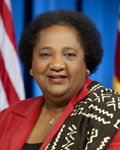
Shirley N. Weber
DDemocratic
Ask Maddy
·
AI policy assistant
Ask Maddy about AB 1128
Scope: CA
Hi! I can help you understand AB 1128. What would you like to know?
Try one of these
i
Maddy answers using official bill text and legislative records. Always verify before sharing.
Sources cited inline