

Multifamily residential housing: energy programs.
Summary
The Warren-Alquist State Energy Resources Conservation and Development Act establishes the State Energy Resources Conservation and Development Commission (Energy Commission) and requires the Energy Commission to carry out studies, technical assessments, research projects, and data collection directed to reducing wasteful, inefficient, unnecessary, or uneconomic uses of energy. The Energy Conservation Act of 2001 states the intent of the Legislature to establish incentives in the form of grants and loans to low-income residents, small businesses, and residential property owners for constructing and retrofitting buildings to be more energy efficient. The act requires the Energy Commission, in consultation with the Public Utilities Commission (PUC) , to undertake certain actions for the purpose of full or partial funding of an eligible construction or retrofit project. The Clean Energy and Pollution Reduction Act of 2015 requires the Energy Commission to establish annual targets for statewide energy efficiency savings and demand reduction that will achieve a cumulative doubling of statewide energy efficiency savings in electricity and natural gas final end uses of retail customers by January 1, 2030, including measures specific to disadvantaged communities, as specified. Existing law requires the Energy Commission, by March 1, 2010, to establish a regulatory proceeding to develop and implement a comprehensive program to achieve greater energy savings in California's existing residential and nonresidential building stock. The California Renewables Portfolio Standard Program requires the PUC to establish a renewables portfolio standard requiring all retail sellers, as defined, to procure a minimum quantity of electricity products from eligible renewable energy resources, as defined, so that the total kilowatthours of those products sold to their retail end-use customers achieves 25% of retail sales by December 31, 2016, 33% by December 31, 2020, 40% by December 31, 2024, 45% by December 31, 2027, and 50% by December 31, 2030, with the 2024 to 2030 requirements imposed by the Clean Energy and Pollution Reduction Act of 2015. This bill would require the Energy Commission, by January 1, 2020, and in consultation with relevant state agencies and the public, to establish nonbinding statewide targets that are cost effective and feasible for reducing energy consumption and emissions of greenhouse gases from multifamily residential properties by January 1, 2030, taking into consideration the state's requirements for reducing emissions of greenhouse gases and the climate equity, doubling of energy efficiency, and increased use of renewable energy resources requirements set forth in the Clean Energy and Pollution Reduction Act of 2015. The bill would require the Energy Commission, as part of its ongoing comprehensive program to achieve greater energy savings in California's existing residential and nonresidential building stock, to consult with relevant entities, including, among others, an expert advisory committee established by the Energy Commission pursuant to the bill. The bill would, pursuant to that consultation, require the Energy Commission to do all of the following: (1) by January 1, 2020, develop statewide strategies and recommendations to better leverage existing and new programs and funding resources to accelerate integrated distributed energy resource, water, and health and safety improvement programs available to multifamily residential properties and low-income multifamily properties to achieve the state's requirements for reducing emissions of greenhouse gases and the climate equity, doubling of energy efficiency, and increased use of renewable energy resources requirements of the Clean Energy and Pollution Reduction Act of 2015, (2) by January 1, 2020, identify best practices from model programs, funding mechanisms, workforce development strategies, and a recommended action plan, and (3) by January 1, 2020, identify and implement ways to enhance the Energy Upgrade California Web site, or other appropriate statewide Web sites, to create a statewide Web site subcomponent for owners of multifamily residential properties and for residents of multifamily residential properties that identifies applicable distributed energy resource and water programs and points of contact. The bill would require the Energy Commission, in consultation with the expert advisory committee, to report to the Legislature, by January 1, 2019, on the strategies developed pursuant to this requirement along with any recommendations for legislative action that may need to be taken to implement those strategies. The bill would require the Energy Commission, the Department of Housing and Community Development, the PUC, the State Water Resources Control Board, the Department of Community Services and Development, and other relevant entities, to develop strategies by January 1, 2019, for standardized income eligibility verification processes for distributed energy resources and water programs and would require the Energy Commission to include the strategies and progress made in implementing them in its report to the Legislature. The bill would enact other related provisions.
Bill status
passed
3 of 5 stages cleared
Introduction
Feb 2017
Committee Review
Sep 2017
Assembly Passage
May 2017
Senate Passage
Governor
Introduced Feb 17, 2017
Last action Sep 1, 2017
Floor votes · Assembly Jun 1, 2017
How they voted
57–15
Passed · 5 other
Total votes 77
Jun 1, 2017
D
Democratic54
98% Yea
I
Independent1
100% Nay
R
Republican22
63% Nay
Vote distribution
All Yea
All Nay
Mixed
No data
Full legislative history
Actions timeline
Total actions
27
Key actions
13
Committee
12
Amendments
8
Sep 1, 2017
Upper · Passed
In committee: Held under submission.
upper
Aug 28, 2017
Committee
In committee: Referred to APPR. suspense file.
upper
Aug 21, 2017
Upper · Passed
From committee chair, with author's amendments: Amend, and re-refer to committee. Read second time, amended, and re-referred to Com. on APPR.
upper
Aug 21, 2017
Upper · Passed
In committee: Hearing postponed by committee.
upper
Jul 18, 2017
Upper · Passed
Read second time and amended. Re-referred to Com. on APPR.
upper
Jul 17, 2017
Upper · Passed
From committee: Amend, and do pass as amended and re-refer to Com. on APPR. (Ayes 11. Noes 1.) (July 11).
upper
Jul 10, 2017
Upper · Passed
Read second time and amended. Re-referred to Com. on T. & H.
upper
Jul 6, 2017
Upper · Passed
From committee: Amend, and do pass as amended and re-refer to Com. on T. & H. (Ayes 9. Noes 0.) (July 3).
upper
Jun 14, 2017
Committee
Referred to Coms. on E., U. & C. and T. & H.
upper
Jun 1, 2017
Assembly · Passed
Assembly Vote: pass (57-15-5)
assembly
May 26, 2017
Lower · Passed
From committee: Do pass. (Ayes 12. Noes 4.) (May 26).
lower
May 17, 2017
Committee
In committee: Set, first hearing. Referred to APPR. suspense file.
lower
May 3, 2017
Committee
Re-referred to Com. on APPR.
lower
May 1, 2017
Lower · Passed
From committee: Amend, and do pass as amended and re-refer to Com. on APPR. (Ayes 13. Noes 1.) (April 26).
lower
Apr 20, 2017
Committee
Re-referred to Com. on U. & E.
lower
Apr 18, 2017
Lower · Passed
From committee: Amend, and do pass as amended and re-refer to Com. on U. & E. (Ayes 7. Noes 2.) (April 17).
lower
Apr 3, 2017
Lower · Passed
In committee: Hearing postponed by committee.
lower
Mar 29, 2017
Committee
Re-referred to Com. on NAT. RES.
lower
Mar 28, 2017
Introduced
From committee chair, with author's amendments: Amend, and re-refer to Com. on NAT. RES. Read second time and amended.
lower
Mar 9, 2017
Committee
Referred to Coms. on NAT. RES. and H. & C.D.
lower
Feb 19, 2017
Lower · Passed
From printer. May be heard in committee March 21.
lower
1 primary · 0 co-sponsors
Sponsors
Role
Legislator
Party
State
District
P
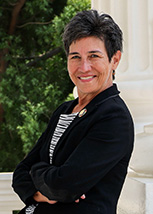
Susan Eggman
DDemocratic
Ask Maddy
·
AI policy assistant
Ask Maddy about AB 1088
Scope: CA
Hi! I can help you understand AB 1088. What would you like to know?
Try one of these
i
Maddy answers using official bill text and legislative records. Always verify before sharing.
Sources cited inline