

Attorneys: State Bar: board of trustees.
Summary
The State Bar Act provides for the licensure and regulation of attorneys by the State Bar of California, a public corporation governed by a board of trustees. That act requires 6 members of the 19-member board to be attorneys elected from State Bar Districts. That act requires protection of the public to be the highest priority for the State Bar and the board of trustees in exercising their licensing, regulatory, and disciplinary functions and requires protection of the public to be paramount whenever the protection of the public is inconsistent with any other interest sought to be promoted. That act prohibits the State Bar from awarding a contract for goods, services, or both, for an aggregate amount in excess of $50,000, or for information technology goods, services, or both, for an aggregate amount in excess of $100,000, except pursuant to specified public contracting provisions. That act provides that the State Bar is subject to the Bagley-Keene Open Meeting Act and the California Public Records Act, as specified. That act, until January 1, 2017, requires the board to charge an annual membership fee for active members of up to $315 for 2016. The act requires the board of trustees to elect or select the president, vice president, and treasurer of the State Bar, as specified. Existing law prohibits the Legislature, when the board of trustees places a charge upon or otherwise makes available all or any portion of the income or revenue from membership fees for the payment of security of an obligation of the State Bar and so long as any obligation remains unpaid, from reducing the maximum membership fee below the maximum in effect at the time the obligation is created or incurred and provides that this provision constitutes a covenant to the holder of such an obligation. The act requires the board of trustees to contract with the California State Auditor's Office to conduct a performance audit of the State Bar's operations, as specified. That act establishes the State Bar Court to act in the place of the board of trustees in the determination of disciplinary proceedings, as specified. That act authorizes the State Bar to raise additional revenue by any lawful means, including, but not limited to, the creation of foundations or not-for-profit corporations. That act requires the board to establish and administer a Client Security Fund to relieve or mitigate pecuniary losses caused by dishonest conduct of active members of the State Bar, as specified. This bill would provide that the board of trustees consists of no more than 19 members and no fewer than 13 members and would require the board to transition to a 13-member board, as specified. The bill would remove from the board attorney members elected from State Bar Districts and would make conforming changes. The bill would require each appointing authority, when making appointments to the board after December 31, 2016, to consider appointing members who have demonstrated education or experience, or both, in one of 6 specified areas, including public finance. The bill would require that a minimum of 7 members of the board be public members, as appointed by specified entities, and would require members of the board to serve a term of 4 years. The bill would require the California Supreme Court to review the substance of any anticompetitive decision made by the board and specifies that California Supreme Court has the power to veto, modify, or take other appropriate actions over those decisions. The bill would require the California Supreme Court to select from the members of the board a chair and vice chair of the State Bar and would require the chair's term to be 2 years. This bill would require protection of the public as the highest priority for the State Bar and set the priority of the regulatory functions of the State Bar, as specified. This bill would require the Attorney General to appoint a State Bar enforcement program monitor prior to March 31, 2017, and would require the enforcement program monitor to evaluate the disciplinary system and procedures of the State Bar, as specified. The bill would require the enforcement program monitor to submit an initial report no later than October 1, 2019, and to issue a final report before March 31, 2020. The bill would make these provisions inoperative on March 31, 2020, and would repeal the provisions as of January 1, 2021. This bill would require the board of trustees to engage the services of an independent national or regional public accounting firm with at least 5 years of experience in governmental auditing for an audit of its revenues, expenditures, reserves, and its financial statements for each fiscal year and would require the California State Auditor, for the performance audit due in January 2017, to review all of the State Bar's expenses, including, but not limited to, executive salaries, and would require that audit to also include a recommendation by the California State Auditor of the appropriate methodology for the State Bar to calculate the portion of administrative costs that are appropriately allocated to the sections of the State Bar. The bill would also require the California State Auditor to conduct a performance audit evaluating the State Bar's progress in certain areas, including correcting any issues raised in prior California State Auditor audits, and would require the California State Auditor to report its findings and recommendations, as specified. This bill would provide that access to records of the State Bar Court is subject to the rules and laws applicable to the judiciary instead of the California Public Records Act and would exempt the State Bar Court from the Bagley-Keene Open Meeting Act. This bill would allow, beginning on and after January 1, 2016, the disclosure of specified information submitted by an applicant to the State Bar for admission and license to practice. This bill, until January 1, 2018, would require the board to charge an annual membership fee in a specified amount for 2017. The bill would repeal the provision prohibiting the Legislature from reducing the maximum membership fee and would prohibit the State Bar from creating any foundation or nonprofit corporations, as specified. The bill would require the State Bar to conduct a thorough analysis of the Client Security Fund and to submit a report to the Legislature on its analysis of that fund by March 15, 2017, as specified. Existing constitutional provisions require that a statute that limits the right of access to the meetings of public bodies or the writings of public officials and agencies be adopted with findings demonstrating the interest protected by the limitation and the need for protecting that interest. This bill would make legislative findings to that effect.
Bill status
passed both
4 of 5 stages cleared
Introduction
Jan 2016
Committee Review
Aug 2016
Senate Passage
Apr 2016
Assembly Passage
Aug 2016
Governor
Introduced Jan 7, 2016
Last action Aug 30, 2016
Floor votes · Senate Apr 14, 2016 · Assembly Aug 30, 2016
How they voted
22–8
Passed · 3 other
Total votes 33
Apr 14, 2016
D
Democratic23
95% Yea
R
Republican10
80% Nay
Vote distribution
All Yea
All Nay
Mixed
No data
Full legislative history
Actions timeline
Total actions
27
Key actions
3
Committee
7
Aug 30, 2016
Assembly · Passed
Assembly Vote: pass (71-0)
assembly
Aug 30, 2016
Committee
Referred to Com. on RLS.
upper
Aug 25, 2016
Lower · Passed
From committee: Do pass. (Ayes 8. Noes 0.) (August 24).
lower
Aug 19, 2016
Committee
Re-referred to Com. on JUD. pursuant to Assembly Rule 77.2.
lower
Jun 14, 2016
Committee
From committee with author's amendments. Read second time and amended. Re-referred to Com. on BUDGET.
lower
May 25, 2016
Committee
From committee with author's amendments. Read second time and amended. Re-referred to Com. on BUDGET.
lower
May 2, 2016
Committee
Referred to Com. on BUDGET.
lower
Apr 14, 2016
Senate · Passed
Senate Vote: pass (22-8-3)
senate
Jan 11, 2016
Committee
Referred to Com. on B. & F.R.
upper
Jan 7, 2016
Introduced
Introduced. Read first time. To Com. on RLS. for assignment. To print.
upper
1 primary · 10 co-sponsors
Sponsors
Role
Legislator
Party
State
District
P
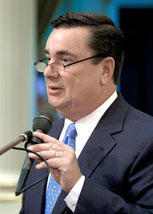
Joel Anderson
RRepublican
Co
BM
Brian Maienschein
DDemocratic
Co
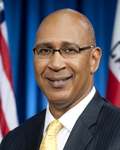
Chris Holden
DDemocratic
Co

Cristina Garcia
DDemocratic
Co
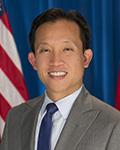
David Chiu
DDemocratic
Co
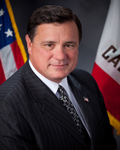
Donald Wagner
RRepublican
Co
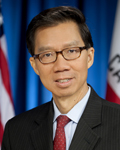
Ed Chau
DDemocratic
Co

James Gallagher
RRepublican
Co
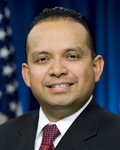
Luis Alejo
DDemocratic
Co

Mark Stone
DDemocratic
Co
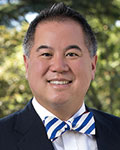
Phil Ting
DDemocratic
Ask Maddy
·
AI policy assistant
Ask Maddy about SB 846
Scope: CA
Hi! I can help you understand SB 846. What would you like to know?
Try one of these
i
Maddy answers using official bill text and legislative records. Always verify before sharing.
Sources cited inline